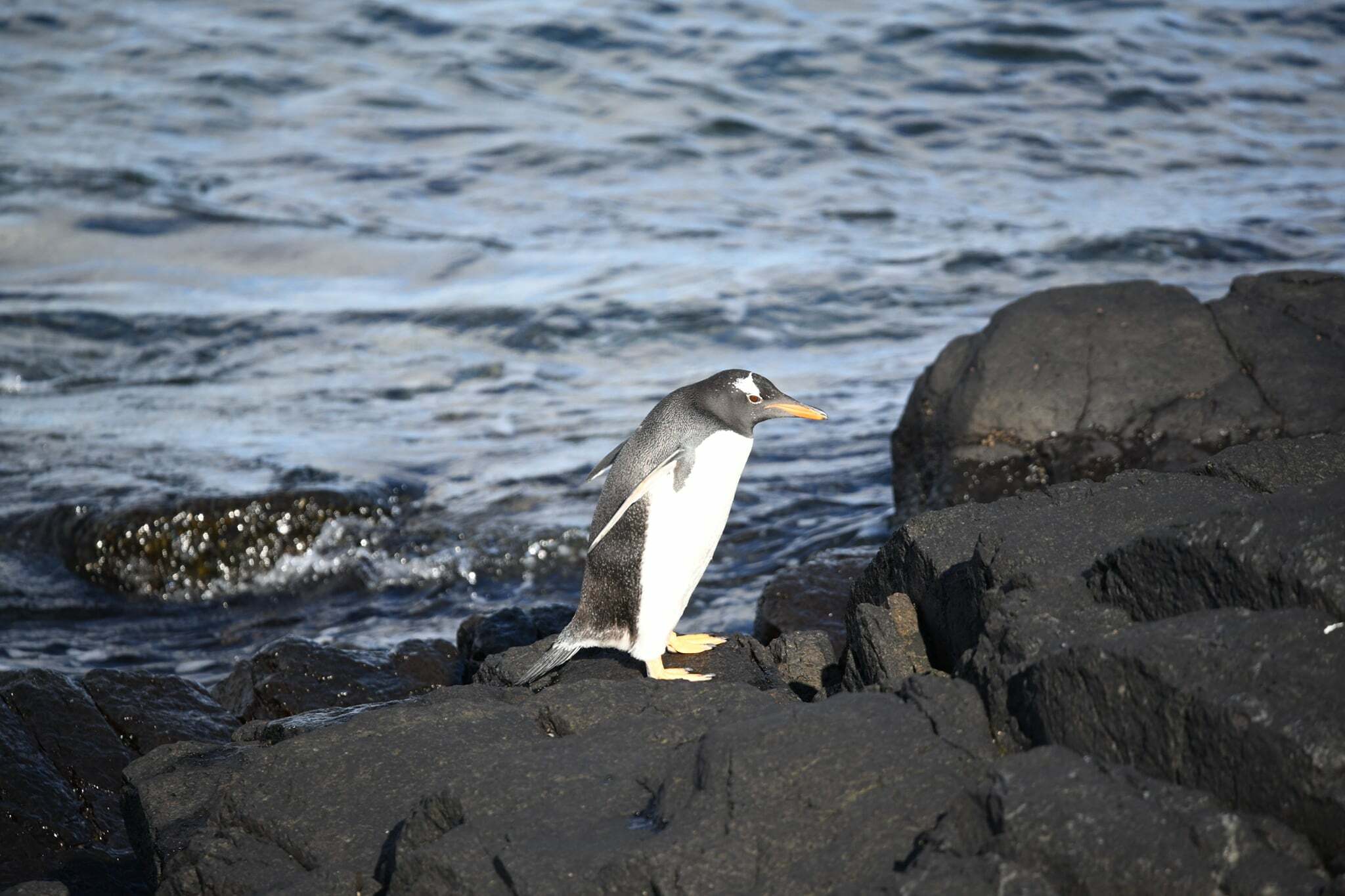
Scientists have named a new penguin species, which the team behind the study describes as the first in more than a century. Nobody found it on an unexplored shore. It was standing in full view on the Kerguelen Islands, counted for generations as an ordinary gentoo. Its DNA says otherwise, and the same study warns that it may already be running out of room.
The penguin nobody was looking for
The Kerguelen Islands sit in the southern Indian Ocean, about as far from anywhere as land gets. Gentoo penguins have nested there for as long as anyone has kept records, and for all that time they were filed under one name with every other gentoo on Earth.
In 2026 a study in the journal Communications Biology argued that this was a mistake. The Kerguelen birds, it says, are their own species: the southeastern gentoo, Pygoscelis kerguelensis. The research team describes it as the first new penguin species named in more than 100 years.
One penguin becomes four
The work was led by researchers in Chile and at the University of California, Berkeley, with first author Daly Noll of the University of Chile and biologists from nine other countries. They read the whole genomes of 64 penguins from 10 breeding colonies, covering nearly the entire gentoo range for the first time, and compared colour, calls, breeding schedules, diet and feeding behaviour alongside the DNA.
Their conclusion is that the gentoo is not one species but four:
Southeastern gentoo (Pygoscelis kerguelensis), the new one: Kerguelen, and probably nearby Heard Island
Southern gentoo (Pygoscelis ellsworthi): the Antarctic Peninsula, coastal Antarctica and South Georgia. The most numerous, and the only one that lives in Antarctica
Eastern gentoo (Pygoscelis taeniata): the Crozet, Marion and Macquarie Islands
Northern gentoo (Pygoscelis papua): the Falkland Islands and Martillo Island in South America
The study estimates the four went their separate ways between 300,000 and 500,000 years ago, kept apart by distance and by the Antarctic Polar Front, the boundary where cold polar water meets warmer water to the north.
Why it stayed hidden
The southeastern gentoo is what biologists call a cryptic species. To the eye it is a gentoo like any other, with only slight differences in body size and voice. The difference is in the genome, which is why it took whole-genome sequencing to see it.
"There's probably no species of penguin where the taxonomy has been more debated than the gentoo penguin," said Rauri Bowie of UC Berkeley, one of the senior authors. Earlier researchers had proposed as many as six subspecies without ever agreeing.
Why a name matters
Counted as a single species, the gentoo is listed as Least Concern. A single healthy total can hide a small island population in trouble, and the study describes the Kerguelen population as relatively small.
The warning in the paper is about the islands. Under a moderate warming scenario, the researchers' climate models suggest the three island-living gentoos could lose suitable habitat on every island they occupy by 2050, with few or no islands nearby to move to. The southern gentoo, in Antarctica, may be affected far less and could even spread.
"But the gentoo is of most concern in the sub-Antarctic region," said senior author Juliana Vianna of Andrés Bello National University in Chile.
What is not settled yet
A scientific paper proposes a species. The world bird lists that conservation bodies work from decide for themselves whether to follow. A 2020 study had already argued for splitting the gentoo, and the main international list kept those birds as subspecies. Whether this stronger evidence changes that is the next chapter.
Either way, something real has shifted. A penguin that was hiding in a crowd now has a name, and a population with a name can be counted, watched and protected for itself.
_Photo: a wild gentoo penguin on the Kerguelen Islands, August 2021. Flavien Saboureau, CC BY 4.0, via iNaturalist._
_Sources: Noll et al., "Integrative evidence reveals adaptive divergence and speciation in gentoo penguins", Communications Biology, 2026. University of California, Berkeley, press release, September 2026._