Superb Fairywren: a two-minute wildlife lesson
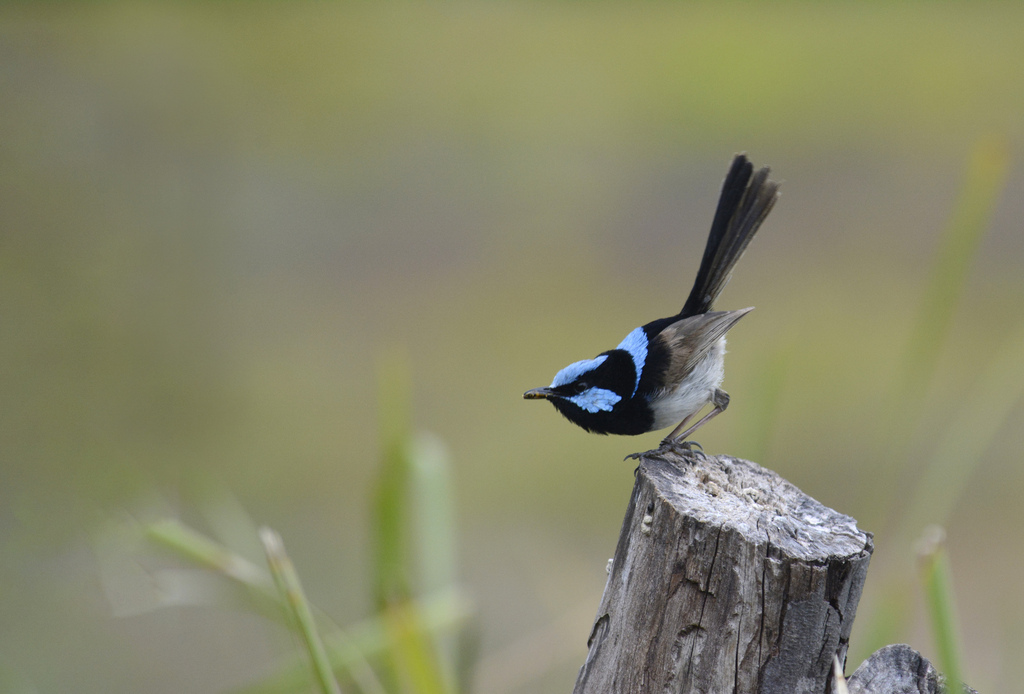
To win a mate, the male fairywren picks yellow petals and shows them off to females. The yellow stands out against his blue feathers.
Bright Little Birds · day 1 of 7
Five facts
- To win a mate, the male fairywren picks yellow petals and shows them off to females. The yellow stands out against his blue feathers.
- The male's blue feathers bounce back ultraviolet light. Fairywrens can see that light, so he may look even brighter to them than to us.
- Parents seem to teach their chicks a sound that works like a password. It may help them tell their own chicks apart from cuckoo chicks.
- To lead a predator away from its chicks, a fairywren can pretend to be a mouse: head low, feathers fluffed, it scurries off calling.
- Young fairywrens often stay home for a year or more as helpers. They feed the next chicks and chase off cuckoos and predators.
The quiz
1. What does a male superb fairywren show to females?
- Shiny pebbles
- Yellow petals (correct)
- Blue berries
- Snail shells
He picks yellow petals and shows them to females.
2. What kind of light do the male's blue feathers strongly reflect?
- Infrared light
- Moonlight only
- Ultraviolet light (correct)
- No light at all
The blue feathers reflect ultraviolet light, which fairywrens can see.
3. What may the chicks' sound 'password' help parents avoid?
- Cuckoo chicks (correct)
- Losing their nest
- Getting lost at night
- Cold weather
The password sound seems to help them avoid cuckoo chicks.
4. What animal does a fairywren act like to lure a predator from its nest?
- A snake
- A butterfly
- A frog
- A rodent (correct)
In its 'rodent-run' it runs low and fluffed up, calling, to distract the predator.
5. What do young fairywrens often do for a year or more?
- Fly to another continent
- Live completely alone
- Stay and help raise the next chicks (correct)
- Sleep through the winter
They stay in the family group as helpers and feed later broods.
More about the Superb Fairywren
Same week
Today’s lesson is waiting
Two minutes a day, a new wild animal. Free on iPhone, Android and the web.
Hear them, don't just read about them
Feravox is a free wildlife app: 4,400+ species with real recorded sounds, 11 nature games and a free Daily 5, 1v1 quiz duels, conservation wins, and a safe Kids mode.