Feravox · The Voice of the Wild
Southern Right Whale: a two-minute wildlife lesson
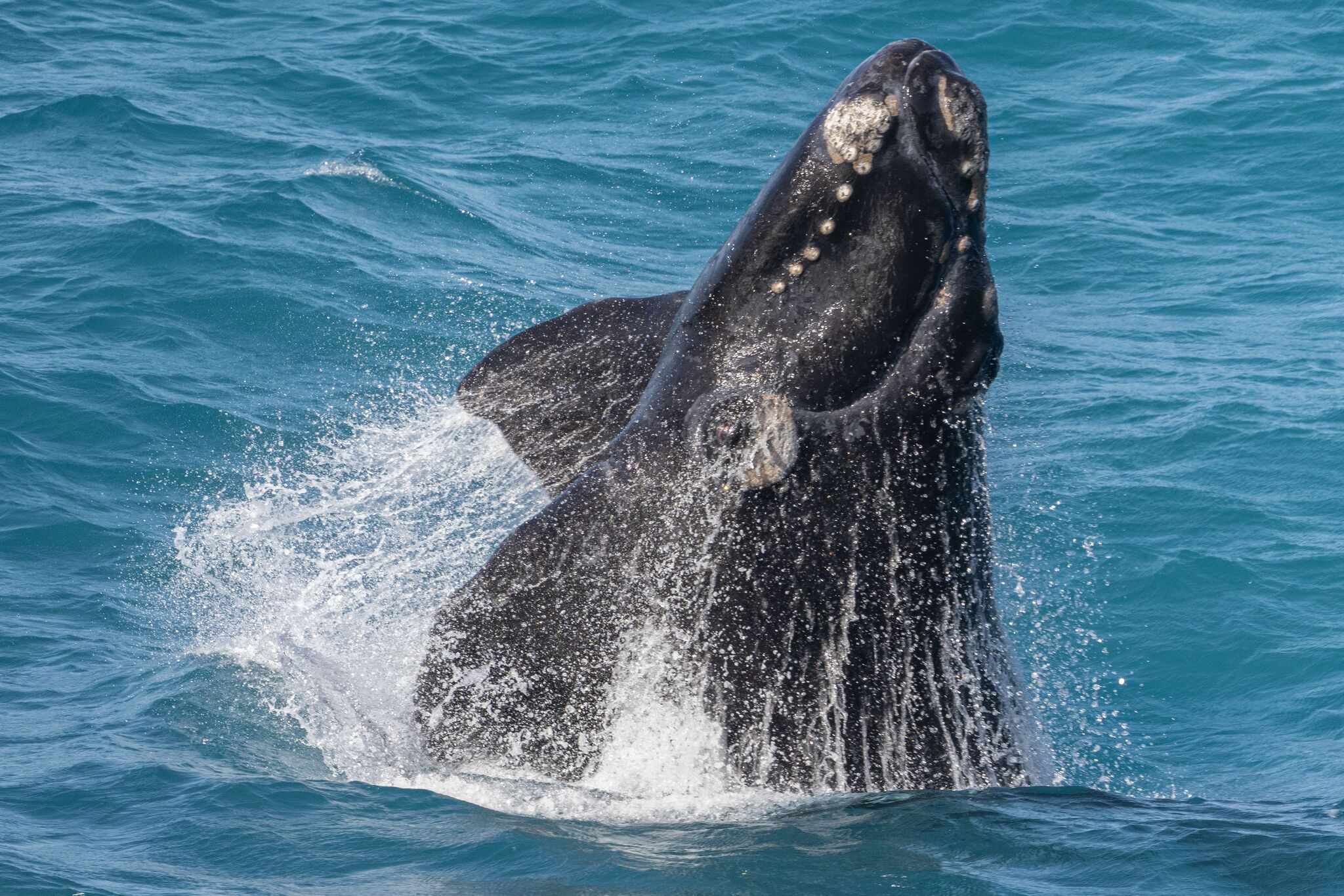
Southern right whales do 'tail sailing': they raise their flukes to catch the wind and stay in one spot for a considerable time.
Giants of the Deep · day 5 of 7
Five facts
- Southern right whales do 'tail sailing': they raise their flukes to catch the wind and stay in one spot for a considerable time.
- A right whale's callosities look white because of large colonies of cyamids, also called whale lice.
- Each side of a right whale's upper jaw has 200-270 baleen plates, and baleen can reach up to 2.8 m long.
- They feed just under the surface, swimming along with their mouths half open to strain the water.
- A calf is born after one year of gestation, 4-6 m long. It usually stays with its mother for a year and doubles in length.
The quiz
1. What do right whales catch with their raised flukes in tail sailing?
- The wind (correct)
- Fish
- Waves
- Sunlight
In tail sailing, the whales raise their flukes to catch the wind.
2. What makes a right whale's callosities look white?
- Salt crystals
- Bleached skin
- Barnacle shells
- Large colonies of whale lice (correct)
Large colonies of cyamids, or whale lice, make the callosities look white.
3. About how many baleen plates are on each side of the upper jaw?
- 20-27
- 200-270 (correct)
- 80-120
- 500-600
Each side of the upper jaw has 200-270 baleen plates.
4. How do southern right whales feed?
- Diving to the sea floor
- Swimming upside down
- Skimming water just beneath the surface, mouths partly open (correct)
- Only at night
They feed just beneath the surface with their mouths partly open.
5. How long is the gestation of a southern right whale?
- One year (correct)
- Six months
- Two years
- Nine months
A calf is born after one year of gestation.
More about the Southern Right Whale
Same week
Today’s lesson is waiting
Two minutes a day, a new wild animal. Free on iPhone, Android and the web.
Hear them, don't just read about them
Feravox is a free wildlife app: 4,400+ species with real recorded sounds, 11 nature games and a free Daily 5, 1v1 quiz duels, conservation wins, and a safe Kids mode.
Nature documentaries
Blue Planet III2026 · BBC OnePlanet Earth III2023 · BBC OneBlue Planet II2017 · BBC OnePlanet Earth II2016 · BBC OneFrozen Planet II2022 · BBC OneSeven Worlds, One Planet2019 · BBC OneMammals2024 · BBC OneSecret Garden2026 · BBC OneWild Isles2023 · BBC OneOur Planet2019 · NetflixOur Planet II2023 · NetflixThe Blue Planet2001 · BBC One