Feravox · The Voice of the Wild
Sika Deer: a two-minute wildlife lesson
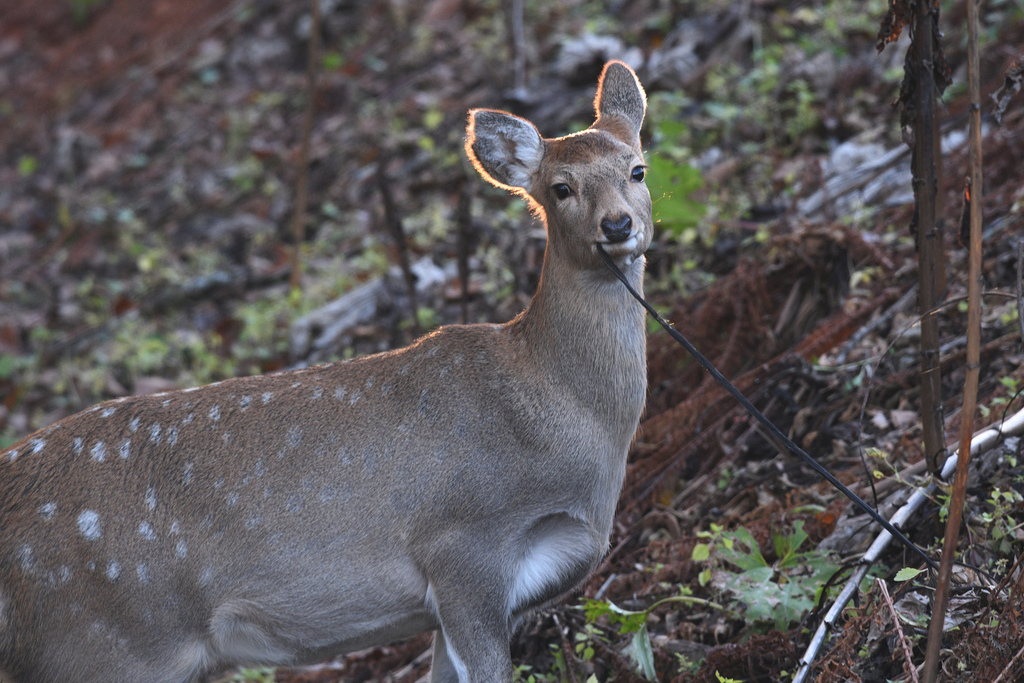
Most deer lose their spots as they grow up. The sika is one of the few that keeps them as an adult.
Deer and Pronghorn · day 3 of 7
Five facts
- Most deer lose their spots as they grow up. The sika is one of the few that keeps them as an adult.
- In Chinese it is called the plum blossom deer, because the white spots on its back look like plum flowers.
- In Nara, Japan, sika deer have learned to bow their heads before visitors feed them special deer crackers.
- The sika is a real chatterbox, with more than 10 different calls, from soft whistles to loud screams.
- Where a red deer would run off, a sika often hides instead. It has been seen squatting or lying flat on its belly when danger is near.
The quiz
1. What is unusual about an adult sika deer's coat?
- It turns white every summer
- It keeps its spots (correct)
- It has zebra stripes
- It stays the same colour all winter
It is one of the few deer that keeps its spots as an adult.
2. What is the sika deer called in Chinese?
- The moon deer
- The bamboo deer
- The snow deer
- The plum blossom deer (correct)
Its white spots look like plum blossoms.
3. What do the sika deer of Nara do before being fed crackers?
- They bow their heads (correct)
- They stand on their hind legs
- They ring a bell
- They lie down
They have learned to bow, so they are called bowing deer.
4. How many different sounds can the sika deer make?
- Only one
- Two
- More than 10 (correct)
- None, it is silent
It has over 10 calls, from soft whistles to loud screams.
5. What does a sika often do when danger threatens?
- Climbs onto rocks
- Squats or lies flat to hide (correct)
- Swims away
- Rolls in the mud
It tends to hide, squatting or lying belly-flat.
Same week
Today’s lesson is waiting
Two minutes a day, a new wild animal. Free on iPhone, Android and the web.
Hear them, don't just read about them
Feravox is a free wildlife app: 4,400+ species with real recorded sounds, 11 nature games and a free Daily 5, 1v1 quiz duels, conservation wins, and a safe Kids mode.
Nature documentaries
Blue Planet III2026 · BBC OnePlanet Earth III2023 · BBC OneBlue Planet II2017 · BBC OnePlanet Earth II2016 · BBC OneFrozen Planet II2022 · BBC OneSeven Worlds, One Planet2019 · BBC OneMammals2024 · BBC OneSecret Garden2026 · BBC OneWild Isles2023 · BBC OneOur Planet2019 · NetflixOur Planet II2023 · NetflixThe Blue Planet2001 · BBC One