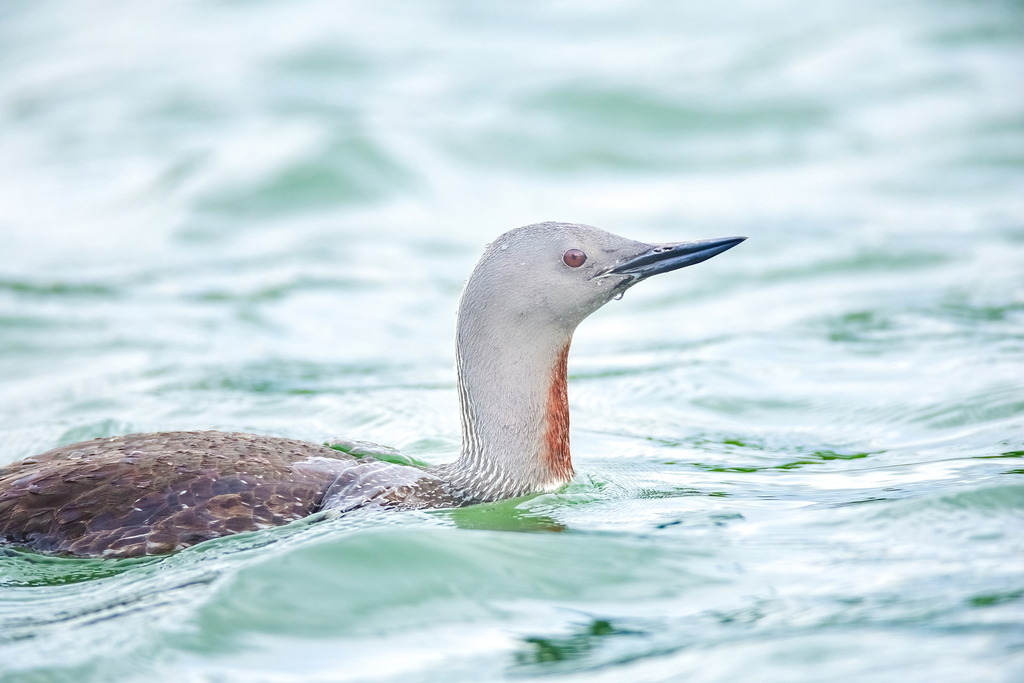
Red-throated Loon: a two-minute wildlife lesson
Loons are clumsy on land, but the red-throated loon is the one loon species that can take off straight from the ground.
On the Lake · day 1 of 7
Five facts
- Loons are clumsy on land, but the red-throated loon is the one loon species that can take off straight from the ground.
- It often nests on tiny freshwater ponds, then flies off to bigger lakes or the sea to catch its fish.
- Partners sing a harsh, rising and falling "long call" together as a duet, which is unusual for loons. The female's part is longer and softer.
- In Scotland's Orkney and Shetland islands it is still called the "rain goose", because people believed it could predict the weather.
- Once a year it drops all its flight feathers at the same time, and it cannot fly for three to four weeks.
The quiz
1. What can the red-throated loon do that other loons cannot?
- Dive underwater
- Eat fish
- Take off straight from land (correct)
- Fly
No other loon can lift off straight from the ground.
2. Where does the red-throated loon usually find its food?
- In larger lakes or the sea (correct)
- Only in its tiny nesting pond
- In forests
- In desert sand
It nests on small lakes but feeds in larger lakes or the sea.
3. What is special about the loon pair's "long call"?
- Only chicks make it
- It is silent
- It can only be heard underwater
- The pair often sings it together as a duet (correct)
The long call is often given as a duet, which is unusual among loons.
4. What nickname does it have in Orkney and Shetland?
- Snow duck
- Rain goose (correct)
- Sea owl
- Storm hen
People there call it the "rain goose" because they thought it predicted the weather.
5. What happens when the loon moults its wing feathers?
- It loses them all at once and cannot fly for weeks (correct)
- It loses one feather a day
- It grows a second pair of wings
- Its feathers turn bright blue
It drops all its flight feathers at once and is flightless for three to four weeks.
More about the Red-throated Loon
Same week
Today’s lesson is waiting
Two minutes a day, a new wild animal. Free on iPhone, Android and the web.
Hear them, don't just read about them
Feravox is a free wildlife app: 4,400+ species with real recorded sounds, 11 nature games and a free Daily 5, 1v1 quiz duels, conservation wins, and a safe Kids mode.