Feravox · The Voice of the Wild
Rakali: a two-minute wildlife lesson
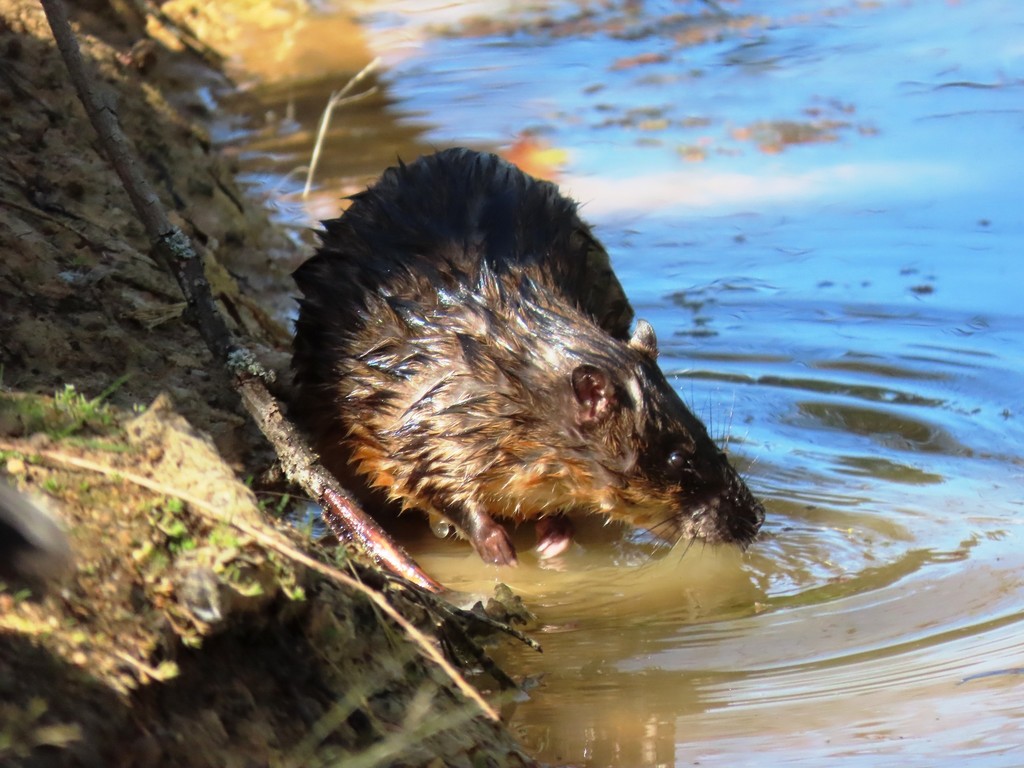
Built for water, this rodent has partly webbed back feet, waterproof fur and long whiskers. Look for the white tip on its dark tail.
Little Mammals · day 7 of 7
Five facts
- Built for water, this rodent has partly webbed back feet, waterproof fur and long whiskers. Look for the white tip on its dark tail.
- Where invasive cane toads have arrived, rakali hunt them safely: they flip the toad on its back to avoid the poison glands on its shoulders.
- Near towns, rakali make homes in surprising places: drainage pipes, old rubber tyres and even the exhaust pipes of moored boats.
- It may live in water, but a rakali can run twice as fast as its top swimming speed, and moving on land uses less oxygen.
- Long called the water-rat or 'Australian otter', it now goes by rakali, a Ngarrindjeri name chosen to help people see it in a kinder light.
The quiz
1. What marks the end of a rakali's dark tail?
- A red stripe
- A white tip (correct)
- A flat paddle of scales
- A tuft of yellow fur
Its dark tail ends in a white tip.
2. How do rakali avoid the poison of cane toads?
- They wash the toads in mud first
- They never go near cane toads
- They wait for the toads to dry out
- They flip the toads onto their backs (correct)
Flipping the toad over keeps the rakali away from its poisonous shoulder glands.
3. Which of these has a rakali been found using as a shelter?
- The exhaust pipe of a moored boat (correct)
- A rooftop chimney
- A bird box on a pole
- A car engine on the road
Rakali have used drainage pipes, tyres and exhaust pipes in moored boats.
4. How does a rakali's running speed compare with its top swimming speed?
- It is half as fast
- It cannot run at all
- It is twice as fast (correct)
- It is ten times as fast
Rakali can run at twice their maximum swimming speed.
5. Where does the name 'rakali' come from?
- A Latin word for water
- The Ngarrindjeri people (correct)
- A river in France
- A sailor's nickname
Rakali is a Ngarrindjeri name, adopted to encourage a positive public attitude.
Same week
Today’s lesson is waiting
Two minutes a day, a new wild animal. Free on iPhone, Android and the web.
Hear them, don't just read about them
Feravox is a free wildlife app: 4,400+ species with real recorded sounds, 11 nature games and a free Daily 5, 1v1 quiz duels, conservation wins, and a safe Kids mode.
Nature documentaries
Blue Planet III2026 · BBC OnePlanet Earth III2023 · BBC OneBlue Planet II2017 · BBC OnePlanet Earth II2016 · BBC OneFrozen Planet II2022 · BBC OneSeven Worlds, One Planet2019 · BBC OneMammals2024 · BBC OneSecret Garden2026 · BBC OneWild Isles2023 · BBC OneOur Planet2019 · NetflixOur Planet II2023 · NetflixThe Blue Planet2001 · BBC One