Marsh Fritillary: a two-minute wildlife lesson
A female can lay up to 350 eggs in one batch. The eggs change colour as they develop: yellow, then crimson, then dark grey before hatching.
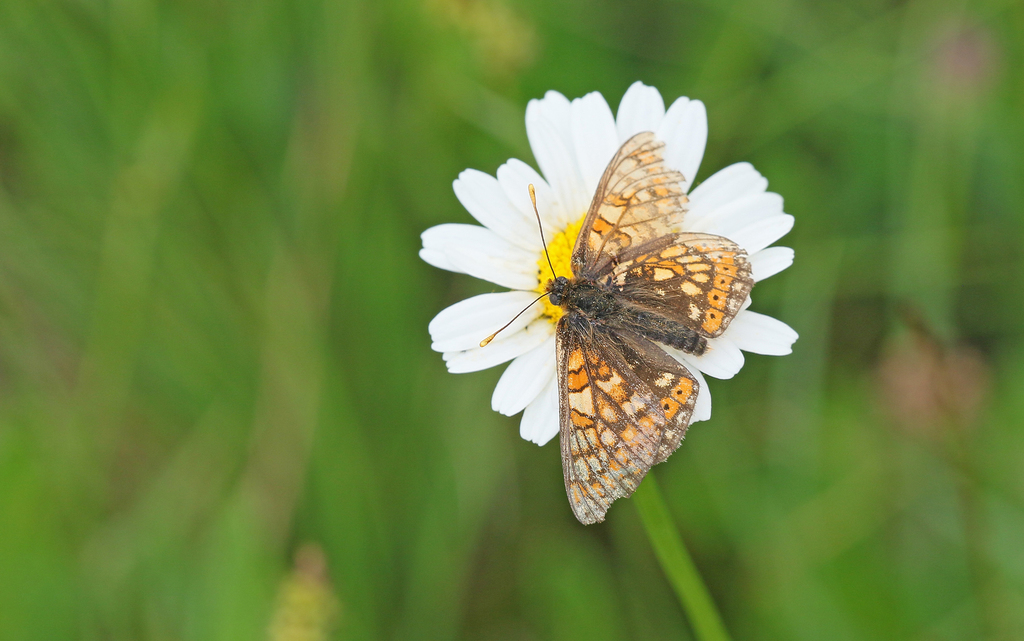
Butterflies of Europe · day 1 of 7
Five facts
- A female can lay up to 350 eggs in one batch. The eggs change colour as they develop: yellow, then crimson, then dark grey before hatching.
- The caterpillars live together in a silk web spun around their food plant, and they spend the whole winter sheltered inside it.
- In spring, the caterpillars sunbathe. Soaking up the sun's heat warms their bodies, which helps them grow faster even when the air is cool.
- Mothers are picky. Studies suggest they look for the greenest, healthiest leaves to lay their eggs on.
- After many months as a caterpillar, the adult butterfly lives a short life, usually about two weeks.
The quiz
1. What colour are marsh fritillary eggs just before they hatch?
- Bright green
- Dark grey (correct)
- Pure white
- Sky blue
They go from yellow to crimson and finally dark grey just before hatching.
2. Where do the caterpillars spend the winter?
- Each one alone, deep underground
- Under the bark of trees
- Together inside a silk web (correct)
- As adult butterflies in caves
They hibernate together inside a web built around their host plant.
3. Why do the caterpillars bask in the sun in spring?
- To warm up and grow faster (correct)
- To dry out their web
- To attract birds
- To find a mate
The sun's heat raises their body temperature, which speeds up their development.
4. Which leaves do females seek out for their eggs?
- The driest
- The smallest
- The yellowest
- The greenest (correct)
Females use their eyes to find the greenest leaves.
5. How long does an adult marsh fritillary usually live?
- One day
- Six months
- About two weeks (correct)
- Two years
Adults have short lives, usually about two weeks.
More about the Marsh Fritillary
Same week
Today’s lesson is waiting
Two minutes a day, a new wild animal. Free on iPhone, Android and the web.
Hear them, don't just read about them
Feravox is a free wildlife app: 4,400+ species with real recorded sounds, 11 nature games and a free Daily 5, 1v1 quiz duels, conservation wins, and a safe Kids mode.