Feravox · The Voice of the Wild
Comma: a two-minute wildlife lesson
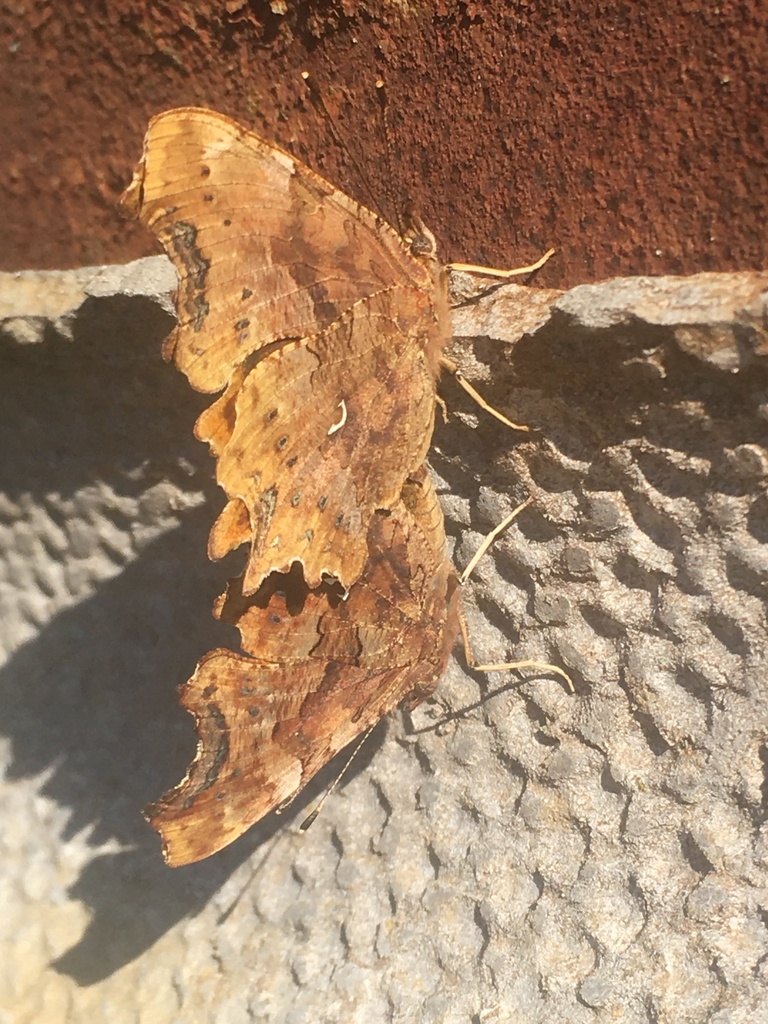
Look under its wings and you'll find a small white mark shaped like a C. It looks like a comma, which gives the butterfly its name.
Butterflies of Europe · day 3 of 7
Five facts
- Look under its wings and you'll find a small white mark shaped like a C. It looks like a comma, which gives the butterfly its name.
- With its ragged wing edges and leaf-like underside, a resting comma with folded wings looks just like a fallen leaf.
- Its caterpillar has a clever disguise: a white stripe along its back makes it look like bird droppings. It also grows strong spines.
- The female often lays her eggs one by one, checking other plants before choosing where the next goes. Each egg hatches in four to five days.
- The caterpillars prefer stinging nettles: on these plants they develop faster than on any other they eat.
The quiz
1. Where does the comma butterfly get its name?
- From its curled antennae
- From a small white C-shaped mark under its wings (correct)
- From its zigzag flight
- From the shape of its caterpillar
The small white C under its wings looks like a comma.
2. What does a comma look like when it rests with its wings closed?
- A wasp
- A flower
- A fallen leaf (correct)
- A bird's eye
The underside and ragged edges of its wings mimic a fallen leaf.
3. What does the white stripe on the comma caterpillar's back imitate?
- Bird droppings (correct)
- Snow
- Spider silk
- A flower petal
The white marking makes the caterpillar look like bird droppings.
4. How does a female comma often lay her eggs?
- In big piles of hundreds
- In the soil
- In ponds
- One at a time, checking other plants in between (correct)
She often lays them singly and scouts other plants before laying the next.
5. On which plant do comma caterpillars develop fastest?
- Downy birch
- Stinging nettle (correct)
- Goat willow
- Gooseberry
Larvae on stinging nettle need the shortest development time.
Same week
Today’s lesson is waiting
Two minutes a day, a new wild animal. Free on iPhone, Android and the web.
Hear them, don't just read about them
Feravox is a free wildlife app: 4,400+ species with real recorded sounds, 11 nature games and a free Daily 5, 1v1 quiz duels, conservation wins, and a safe Kids mode.
Nature documentaries
Blue Planet III2026 · BBC OnePlanet Earth III2023 · BBC OneBlue Planet II2017 · BBC OnePlanet Earth II2016 · BBC OneFrozen Planet II2022 · BBC OneSeven Worlds, One Planet2019 · BBC OneMammals2024 · BBC OneSecret Garden2026 · BBC OneWild Isles2023 · BBC OneOur Planet2019 · NetflixOur Planet II2023 · NetflixThe Blue Planet2001 · BBC One