Feravox · The Voice of the Wild
Great Hammerhead: a two-minute wildlife lesson
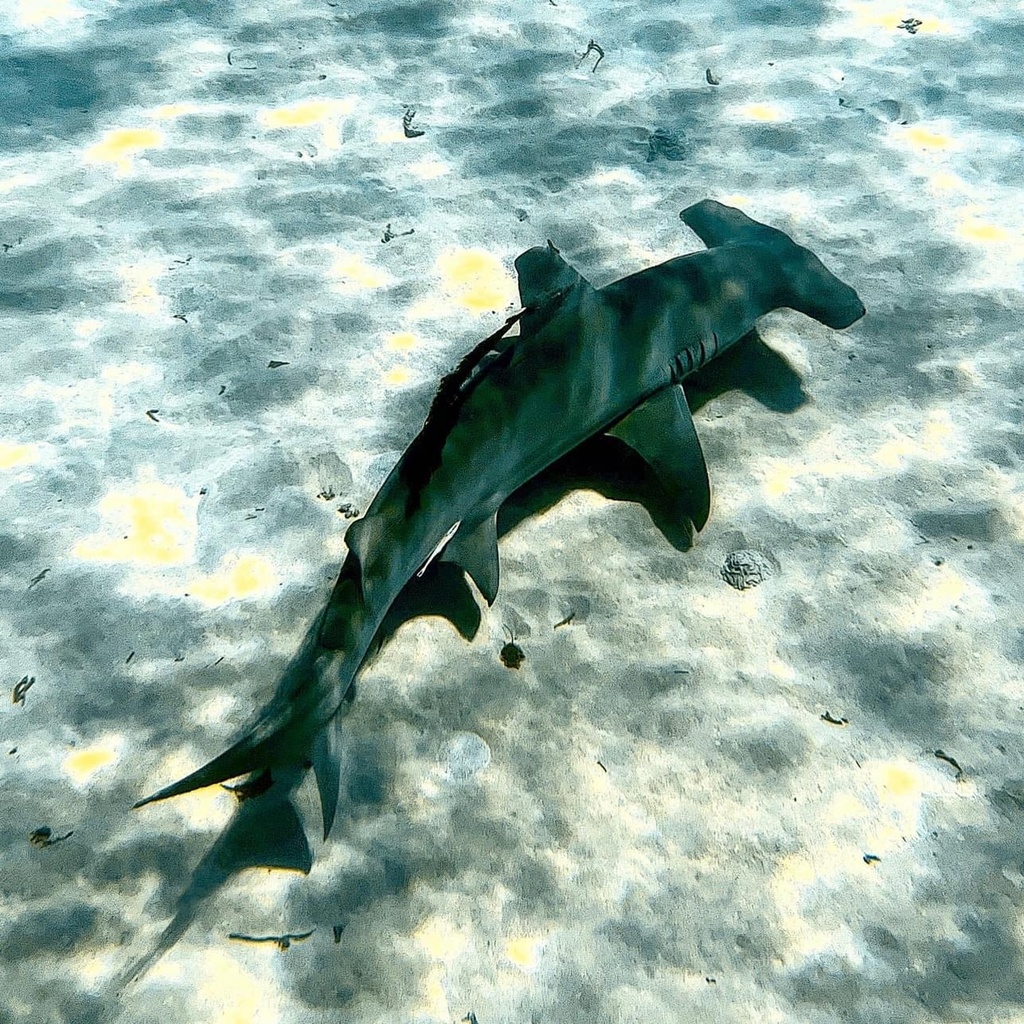
This is the biggest of all hammerhead sharks. It averages 4.6 m long and can reach 6.2 m.
Fish and Sharks · day 7 of 7
Five facts
- This is the biggest of all hammerhead sharks. It averages 4.6 m long and can reach 6.2 m.
- At dawn and dusk it sweeps its wide head over the seabed like a metal detector, sensing the electric signals of stingrays hidden in the sand.
- Stingray spines often end up stuck in its mouth, yet they do not seem to bother it. One shark had 96 of them.
- It often swims tilted on its side, using its tall back fin for lift. It can spend up to 90% of its time like this, saving energy.
- Yellow jacks, a kind of fish, have been seen rubbing against its sides, possibly to scrape off parasites.
The quiz
1. What is the longest a great hammerhead can grow?
- 2 m
- 12 m
- 6.2 m (correct)
- 20 m
It averages 4.6 m and reaches a maximum of 6.2 m.
2. What is it sensing when it sweeps its head over the seabed?
- Electric signals of stingrays hidden in the sand (correct)
- The noise of passing ships
- Warm water from underwater volcanoes
- Light from glowing fish
Sensors under its head pick up the electric signals of buried stingrays.
3. How many stingray spines were found in and around one great hammerhead's mouth?
- 2
- 15
- 500
- 96 (correct)
One shark caught off Florida had 96 spines, and they did not seem to bother it.
4. How does the great hammerhead save energy while swimming?
- By swimming backwards
- By swimming tilted on its side (correct)
- By resting upside down
- By riding on whales
Rolled onto its side, it cuts drag by about 10%.
5. What have yellow jacks been seen doing around great hammerheads?
- Biting their fins
- Riding on top of their heads
- Rubbing against their sides (correct)
- Laying eggs on their tails
They rub against the shark's sides, perhaps to get rid of parasites.
Same week
Today’s lesson is waiting
Two minutes a day, a new wild animal. Free on iPhone, Android and the web.
Hear them, don't just read about them
Feravox is a free wildlife app: 4,400+ species with real recorded sounds, 11 nature games and a free Daily 5, 1v1 quiz duels, conservation wins, and a safe Kids mode.
Nature documentaries
Blue Planet III2026 · BBC OnePlanet Earth III2023 · BBC OneBlue Planet II2017 · BBC OnePlanet Earth II2016 · BBC OneFrozen Planet II2022 · BBC OneSeven Worlds, One Planet2019 · BBC OneMammals2024 · BBC OneSecret Garden2026 · BBC OneWild Isles2023 · BBC OneOur Planet2019 · NetflixOur Planet II2023 · NetflixThe Blue Planet2001 · BBC One