Bluegill: a two-minute wildlife lesson
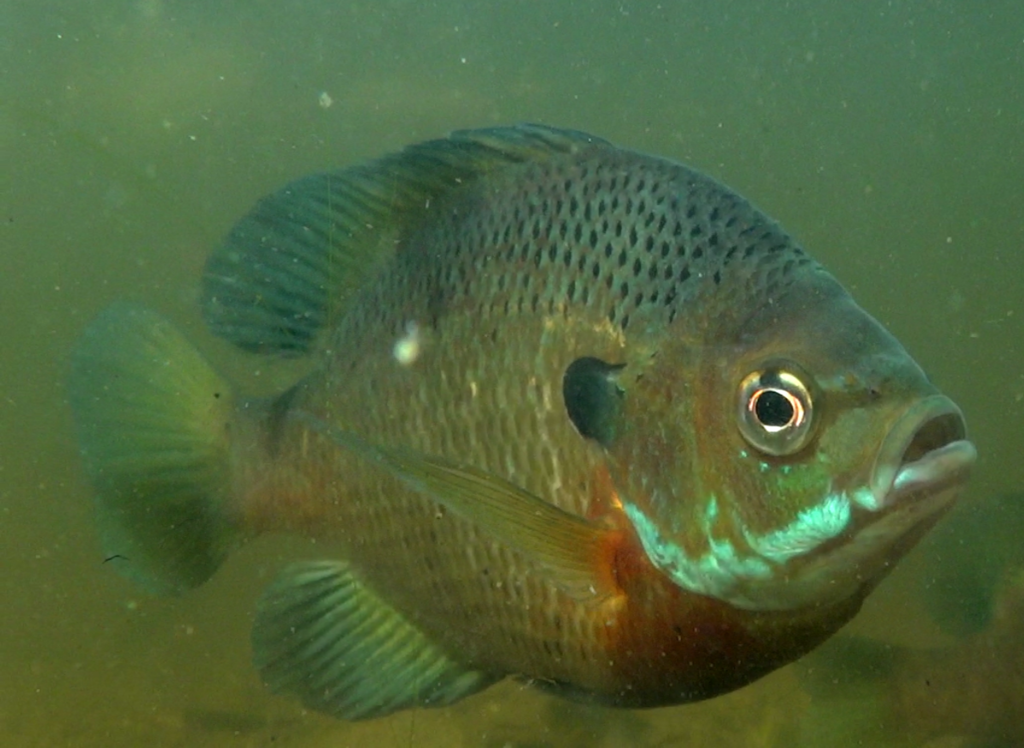
Its name comes from the dark blue on the sides of its head and chin. It also wears a black flap, called an ear, at the back of each gill cover.
Fish and Sharks · day 3 of 7
Five facts
- Its name comes from the dark blue on the sides of its head and chin. It also wears a black flap, called an ear, at the back of each gill cover.
- It feeds by sucking prey in with a quick gulp of water. The suction is short, so it has to get within 1.75 cm of its target.
- Males dig bowl-shaped nests on the lake floor, side by side. One colony was found with up to 272 nests.
- When a female swims close, the male starts circling her and making grunting sounds to win her over.
- A male guards his nest fiercely. Small as they are, some bluegills even go after snorkelers who come to the edge of the nest.
The quiz
1. Where does the bluegill get its blue colour?
- On its tail fin only
- On its belly
- On the sides of its head and chin (correct)
- Along its back fin
Its chin and the sides of its face are dark blue, which gave it its name.
2. How close must a bluegill get to suck in its prey?
- Within 1.75 cm (correct)
- Within 20 cm
- Within 50 cm
- Within 1 m
Its suction only reaches a short way, so it must get within 1.75 cm.
3. What do bluegill nests look like?
- Floating balls of weed
- Rafts of bubbles at the surface
- Tunnels dug into the bank
- Bowl-shaped hollows in the lake floor (correct)
Males dig bowl-shaped hollows in the lake floor, often in big colonies.
4. What does a male bluegill do when a female comes near?
- He buries himself in the sand
- He circles her and makes grunting sounds (correct)
- He turns completely white
- He leaps out of the water
The male circles and grunts, and this seems to attract females.
5. What might a guarding bluegill do if a snorkeler swims to the edge of its nest?
- Attack the snorkeler (correct)
- Leave the nest for good
- Play dead on the bottom
- Hide the eggs in its mouth
Despite their small size, some bluegills attack snorkelers near the nest.
Same week
Today’s lesson is waiting
Two minutes a day, a new wild animal. Free on iPhone, Android and the web.
Hear them, don't just read about them
Feravox is a free wildlife app: 4,400+ species with real recorded sounds, 11 nature games and a free Daily 5, 1v1 quiz duels, conservation wins, and a safe Kids mode.