Fork-tailed Drongo: a two-minute wildlife lesson
This African bird is a trickster. It usually warns other animals of real danger, but sometimes it cries wolf so they flee and leave their food behind.
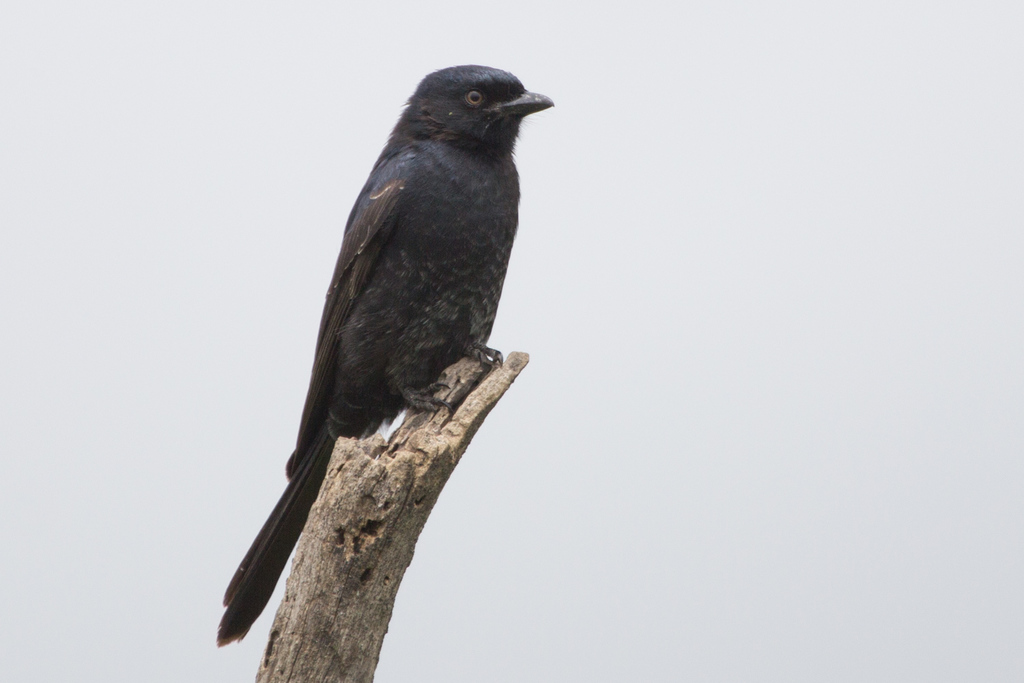
Birds of Asia, Africa and Australia · day 6 of 7
Five facts
- This African bird is a trickster. It usually warns other animals of real danger, but sometimes it cries wolf so they flee and leave their food behind.
- It is a great copycat. Besides the calls of many birds, it has been heard copying a cat's mew and the warning cries of meerkats.
- After a fake alarm, it sends an 'all clear' call, then gives more real warnings, which helps it win back the other animals' trust.
- It tags along behind elephants and giraffes. As these giants walk, they stir up insects, and the drongo is ready to catch them.
- Cuckoos try to sneak their eggs into its nest, but the drongo is hard to fool. In experiments, it spotted and rejected 93.7% of planted eggs.
The quiz
1. Why does the fork-tailed drongo sometimes give a false alarm call?
- To attract a mate
- To make animals flee so it can take their food (correct)
- To find its way at night
- To call its chicks home
A false alarm makes other animals run off, and the drongo steals their food.
2. Besides birds, which animals' sounds has it been heard copying?
- None, it only copies birds
- Only other drongos
- Only owls
- Cats and meerkats (correct)
It has copied the mew of a cat and the warning cries of meerkats.
3. What does the drongo do after a fake alarm?
- Gives an 'all clear' call (correct)
- Leaves the area for good
- Hides its food underground
- Stays silent for the rest of the year
It follows up with an 'all clear' signal and more genuine alarms.
4. Why does it follow elephants and giraffes?
- To ride on their backs to new places
- To drink from their footprints
- To catch insects they stir up (correct)
- To sleep in their shade at night
Large mammals disturb insects as they walk, flushing out prey for the drongo.
5. In experiments, what share of planted eggs did drongos reject?
- About 5%
- None
- About 50%
- 93.7% (correct)
Drongos detected and rejected 93.7% of the introduced eggs.
More about the Fork-tailed Drongo
Same week
Today’s lesson is waiting
Two minutes a day, a new wild animal. Free on iPhone, Android and the web.
Hear them, don't just read about them
Feravox is a free wildlife app: 4,400+ species with real recorded sounds, 11 nature games and a free Daily 5, 1v1 quiz duels, conservation wins, and a safe Kids mode.