Feravox · The Voice of the Wild
Figeater Beetle: a two-minute wildlife lesson
Its grubs are nicknamed back crawlers. Instead of walking on their legs, they flip over and wriggle along on rows of bristles.
Beetles and Friends · day 3 of 7
Five facts
- Its grubs are nicknamed back crawlers. Instead of walking on their legs, they flip over and wriggle along on rows of bristles.
- Unlike most beetles, it makes its own heat with its flight muscles. Even in the shade, its chest can stay up to 12 °C warmer than the air.
- Its jaws are too weak for tough fruit skins, so it prefers soft figs and peaches. If needed, it rips the skin open with the horn on its head.
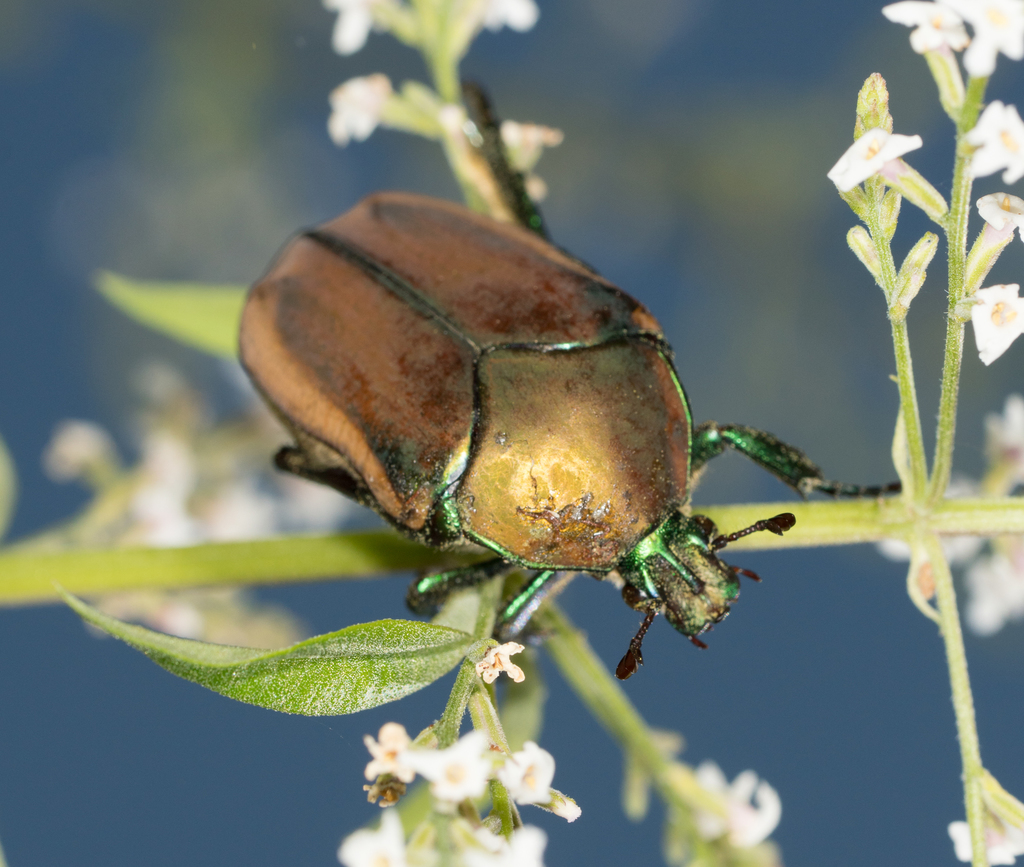
- Its shiny shell can change colour as you move around it: the same beetle may look red from one side and green from another.
- Tiny pseudoscorpions sometimes hide under its wing covers and hitch a ride, travelling much farther than they could on their own.
The quiz
1. How do figeater beetle grubs move around?
- They fly short hops
- They walk fast on six legs
- They roll onto their backs and wriggle (correct)
- They swim through mud
They flip over and push along with rows of bristles.
2. What makes the figeater beetle unusual among beetles?
- It makes its own body heat (correct)
- It lives only underwater
- It has no wings
- It sleeps all summer
It warms itself using its flight muscles.
3. What does it use to tear open fruit skin?
- Its back legs
- Its antennae
- Its wing covers
- The horn on its head (correct)
When it finds no damaged fruit, it uses its head horn.
4. Why can the same figeater beetle look red or green?
- It changes colour with its mood
- Its colour shifts with the viewing angle (correct)
- It paints itself with pollen
- It sheds its shell every day
Its colour changes depending on the angle you look from.
5. Which tiny animals ride under its wing covers?
- Ants
- Baby snails
- Pseudoscorpions (correct)
- Fleas
Pseudoscorpions hitch rides to travel farther.
More about the Figeater Beetle
Same week
Today’s lesson is waiting
Two minutes a day, a new wild animal. Free on iPhone, Android and the web.
Hear them, don't just read about them
Feravox is a free wildlife app: 4,400+ species with real recorded sounds, 11 nature games and a free Daily 5, 1v1 quiz duels, conservation wins, and a safe Kids mode.
Nature documentaries
Blue Planet III2026 · BBC OnePlanet Earth III2023 · BBC OneBlue Planet II2017 · BBC OnePlanet Earth II2016 · BBC OneFrozen Planet II2022 · BBC OneSeven Worlds, One Planet2019 · BBC OneMammals2024 · BBC OneSecret Garden2026 · BBC OneWild Isles2023 · BBC OneOur Planet2019 · NetflixOur Planet II2023 · NetflixThe Blue Planet2001 · BBC One