Feravox · The Voice of the Wild
European Earwig: a two-minute wildlife lesson
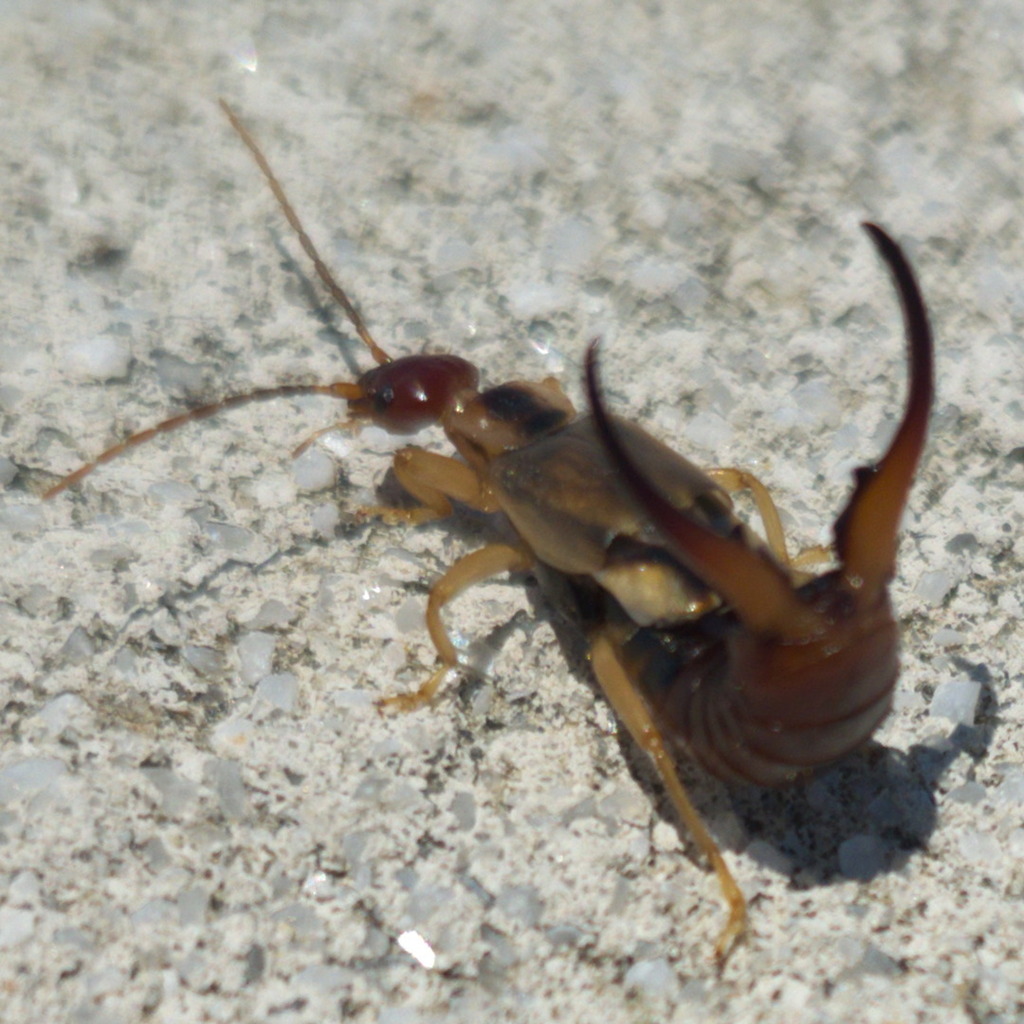
Its name comes from its back wings: unfolded, they look like human ears. Its Latin name, auricularia, points to the same thing.
Beetles and Friends · day 6 of 7
Five facts
- Its name comes from its back wings: unfolded, they look like human ears. Its Latin name, auricularia, points to the same thing.
- Males and females both carry pincers at the tip of the body. A male's are big and curved, while a female's are straight.
- It has good wings but hardly ever flies. Instead it hitches rides on clothes, plants, wood and even bundles of newspapers.
- A mother lays about 50 eggs in an underground nest and stays with them, cleaning each one with her mouth to keep mould away.
- An earwig mother can tell her own eggs from others by their family scent, yet she cares for foreign eggs just as well.
The quiz
1. What gave the earwig its name?
- Its hind wings look like human ears (correct)
- It lives inside ears
- It has huge ears
- It hears very well
Unfolded, its hind wings look like human ears.
2. How are a male earwig's pincers different from a female's?
- Only females have pincers
- They are big and curved (correct)
- They are much shorter
- They are hidden under the wings
Males have large, curved pincers; females have straight ones.
3. How does the European earwig mostly travel to new places?
- By flying long distances
- By swimming
- By riding on clothes and goods (correct)
- By rolling in the wind
It rarely flies and is carried around on clothing and products.
4. Why does an earwig mother keep cleaning her eggs?
- To make them hatch faster
- To change their colour
- To make them smaller
- To keep mould and germs away (correct)
Cleaning removes fungal spores and germs.
5. What does an earwig mother do with eggs that are not her own?
- She pushes them out of the nest
- She cares for them like her own (correct)
- She eats them
- She ignores them
She grooms and defends foreign eggs just like her own.
More about the European Earwig
Same week
Today’s lesson is waiting
Two minutes a day, a new wild animal. Free on iPhone, Android and the web.
Hear them, don't just read about them
Feravox is a free wildlife app: 4,400+ species with real recorded sounds, 11 nature games and a free Daily 5, 1v1 quiz duels, conservation wins, and a safe Kids mode.
Nature documentaries
Blue Planet III2026 · BBC OnePlanet Earth III2023 · BBC OneBlue Planet II2017 · BBC OnePlanet Earth II2016 · BBC OneFrozen Planet II2022 · BBC OneSeven Worlds, One Planet2019 · BBC OneMammals2024 · BBC OneSecret Garden2026 · BBC OneWild Isles2023 · BBC OneOur Planet2019 · NetflixOur Planet II2023 · NetflixThe Blue Planet2001 · BBC One