Feravox · The Voice of the Wild
Black Stork: a two-minute wildlife lesson
Black storks have been seen shading the water with their wings while hunting.
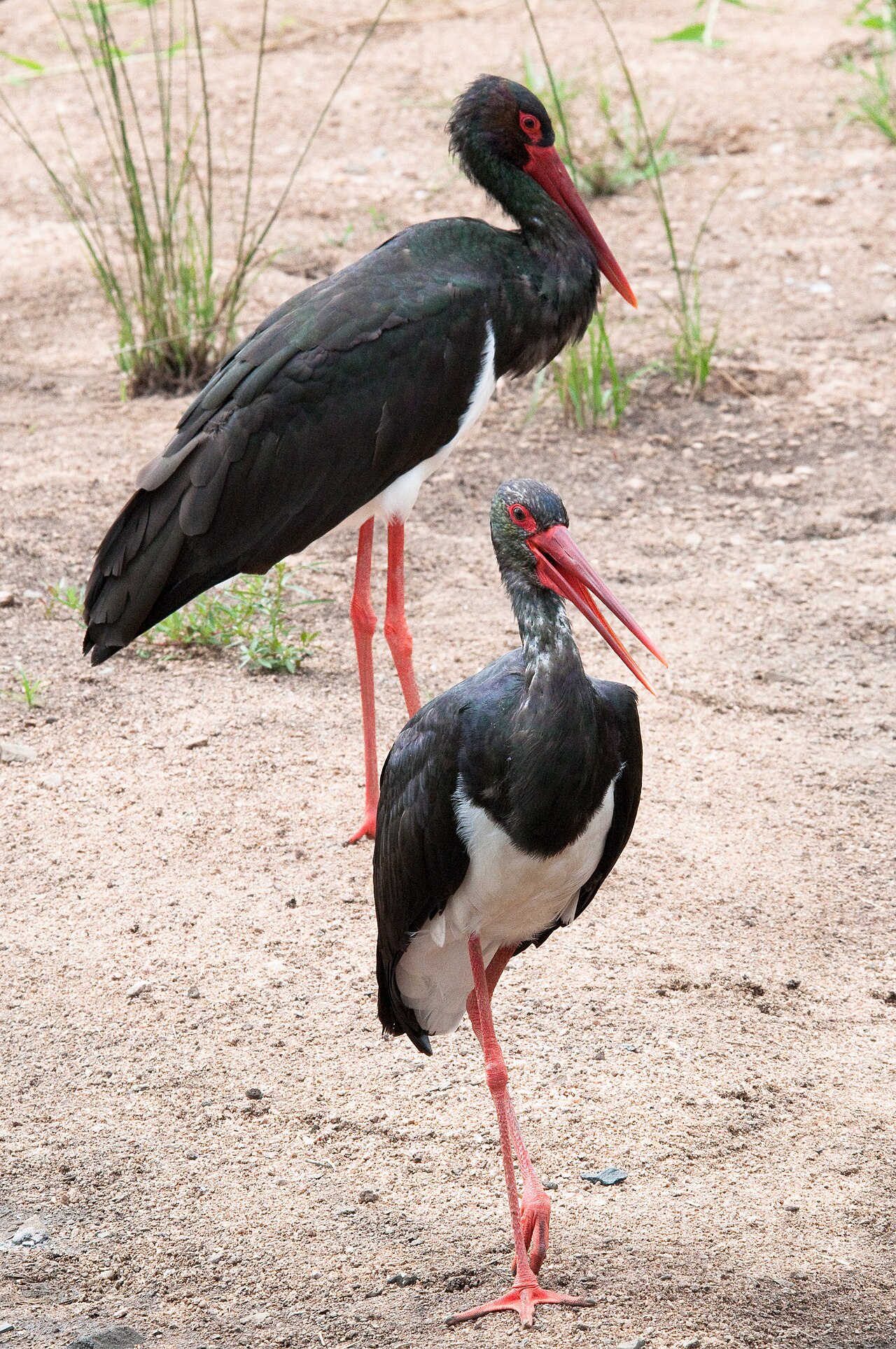
Storks and Shorebirds · day 2 of 7
Five facts
- Black storks have been seen shading the water with their wings while hunting.
- Unlike its cousin the white stork, the black stork is shy and wary. Look for it alone or in pairs, often near marshes.
- Thermals only form over land, so black storks must cross the Mediterranean at its narrowest points.
- The trip south is around 5,667 km by the western route and 7,000 km by the eastern one, taking 37 and 80 days on average.
- A black stork warns or threatens with a hissing call. Its main call, a chee leee, sounds like a loud inhalation.
The quiz
1. What does a black stork do with its wings while hunting?
- Splashes the fish
- Shades the water (correct)
- Flaps to scare the prey
- Folds them over its head
Black storks have been seen shading the water with their wings while hunting.
2. How does the black stork differ from the white stork?
- It is shy and wary (correct)
- It is bold and sociable
- It lives in big flocks all year
- It never visits marshes
Unlike the white stork, the black stork is shy and wary, seen singly or in pairs.
3. Why must black storks cross the Mediterranean at narrow points?
- They cannot fly over water at night
- Fish are easier to catch there
- The wind is stronger there
- Thermals only form over land (correct)
Thermals only form over land, so storks cross at the narrowest points.
4. How long is the western migration route of black storks?
- About 7,000 km
- About 3,000 km
- About 5,667 km (correct)
- About 37 km
The western route is around 5,667 km and the eastern one 7,000 km.
5. What sound does a black stork make as a warning or threat?
- A hiss (correct)
- A roar
- A howl
- A bark
When it wants to warn or threaten, it hisses.
Same week
Today’s lesson is waiting
Two minutes a day, a new wild animal. Free on iPhone, Android and the web.
Hear them, don't just read about them
Feravox is a free wildlife app: 4,400+ species with real recorded sounds, 11 nature games and a free Daily 5, 1v1 quiz duels, conservation wins, and a safe Kids mode.
Nature documentaries
Blue Planet III2026 · BBC OnePlanet Earth III2023 · BBC OneBlue Planet II2017 · BBC OnePlanet Earth II2016 · BBC OneFrozen Planet II2022 · BBC OneSeven Worlds, One Planet2019 · BBC OneMammals2024 · BBC OneSecret Garden2026 · BBC OneWild Isles2023 · BBC OneOur Planet2019 · NetflixOur Planet II2023 · NetflixThe Blue Planet2001 · BBC One