Black-browed Albatross: a two-minute wildlife lesson
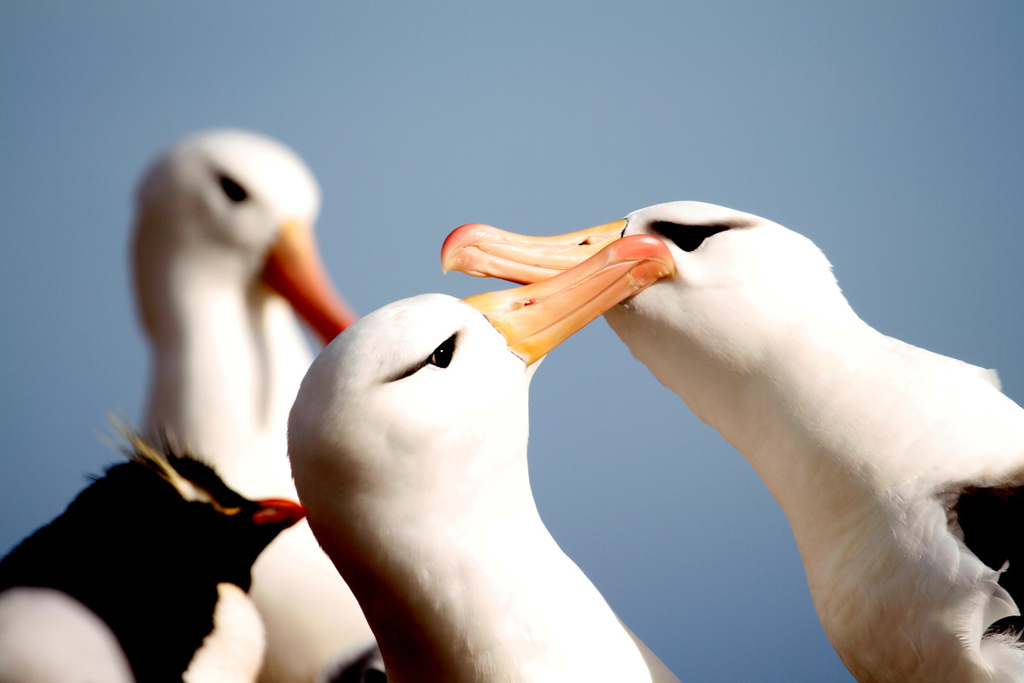
A dark stripe through its eye looks like a frowning eyebrow, which gives it its name. It can live for more than 70 years.
Seabirds · day 7 of 7
Five facts
- A dark stripe through its eye looks like a frowning eyebrow, which gives it its name. It can live for more than 70 years.
- Flapping its long wings soon wears it out. Instead it rides the wind, gliding in great rising and falling circles.
- Young albatrosses come back to the colony after two or three years just to practise courtship. They only start breeding at around 10.
- Like its relatives, it makes an oily liquid in its stomach. It feeds this rich oil to its chicks and uses it as fuel on long flights.
- One albatross, nicknamed Albert, was blown far north in 1967 and spent summers in Scottish gannet colonies for years.
The quiz
1. What gives the black-browed albatross its name?
- Its black feet
- A dark stripe by its eye (correct)
- Its black tail
- Its dark beak
Its dark eye stripe, like an eyebrow, gives the bird its name.
2. How does it usually travel over the ocean?
- By flapping hard all the time
- By swimming underwater
- By gliding on the wind (correct)
- By riding on ships
Flapping tires it quickly, so it glides on the wind, rarely beating its wings.
3. Why do young albatrosses first return to the colony?
- To lay their first egg
- To practise courtship (correct)
- To find their parents
- To moult their feathers
They come back after two or three years only to practise, and breed at around 10.
4. What does it use its stomach oil for?
- Waterproofing its eggs
- Building its nest
- Cleaning its beak
- Feeding chicks and fuelling long flights (correct)
The oil is an energy-rich food for chicks and for adults on long flights.
5. Where did Albert the albatross spend his summers?
- In Scottish gannet colonies (correct)
- On a ship's deck
- In Antarctic ice caves
- In a city park
Blown off course in 1967, he summered among gannets in Scotland for years.
More about the Black-browed Albatross
Same week
Today’s lesson is waiting
Two minutes a day, a new wild animal. Free on iPhone, Android and the web.
Hear them, don't just read about them
Feravox is a free wildlife app: 4,400+ species with real recorded sounds, 11 nature games and a free Daily 5, 1v1 quiz duels, conservation wins, and a safe Kids mode.