African Buffalo: a two-minute wildlife lesson
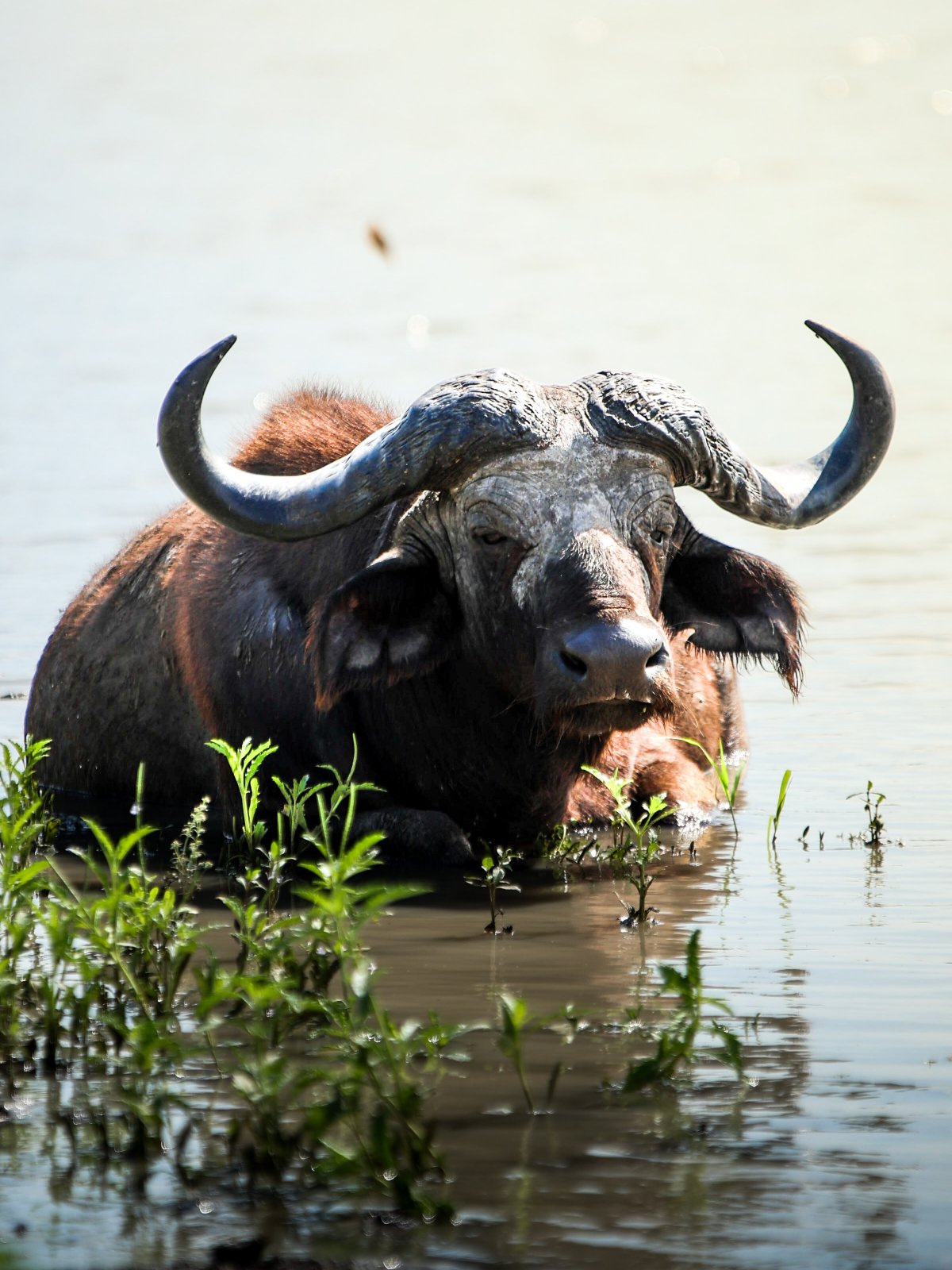
On floodplains in southern and eastern Africa, Cape buffaloes can form huge herds of up to 2,000 animals.
Giants of Africa · day 5 of 7
Five facts
- On floodplains in southern and eastern Africa, Cape buffaloes can form huge herds of up to 2,000 animals.
- A badly injured bull may bellow loudly. In about a third of predator attacks, another bull comes to help.
- A calf nurses from the hindquarters, so its mother can keep moving with the herd while still feeding it.
- African buffaloes depend heavily on water. In dry areas, a permanent water source must be no more than 20 to 40 km away.
- Savanna buffalo groups can stay together for a very long time: some have lasted more than 50 years.
The quiz
1. How big can Cape buffalo herds get?
- About ten animals
- Around fifty animals
- Exactly one hundred animals
- Up to 2,000 animals (correct)
On southern and eastern African floodplains, Cape buffalo herds can reach 2,000 animals.
2. What can an injured bull do to get help?
- Bellow loudly (correct)
- Run in circles
- Stamp the ground
- Stay completely silent
A badly injured bull may bellow, and another bull helps in about a third of predator attacks.
3. Why can a mother keep moving with the herd while feeding her calf?
- The calf rides on her back
- The calf nurses from the hindquarters (correct)
- She feeds it at night only
- The herd waits for her
Calves nurse from the hindquarters, which lets the mother keep moving.
4. In dry areas, what is the farthest a buffalo's permanent water source can be?
- About 200-400 km
- About 20-40 km (correct)
- About 2,000 km
- Any distance: it never drinks
In dry areas, permanent water must be within 20 to 40 km.
5. How long have some savanna buffalo groups lasted?
- Over 50 years (correct)
- About 2 years
- Around 10 years
- Only one season
Some savanna buffalo groups have lasted over 50 years.
More about the African Buffalo
Same week
Today’s lesson is waiting
Two minutes a day, a new wild animal. Free on iPhone, Android and the web.
Hear them, don't just read about them
Feravox is a free wildlife app: 4,400+ species with real recorded sounds, 11 nature games and a free Daily 5, 1v1 quiz duels, conservation wins, and a safe Kids mode.