Photo: Henrique Nogueira
Feravox · The Voice of the Wild
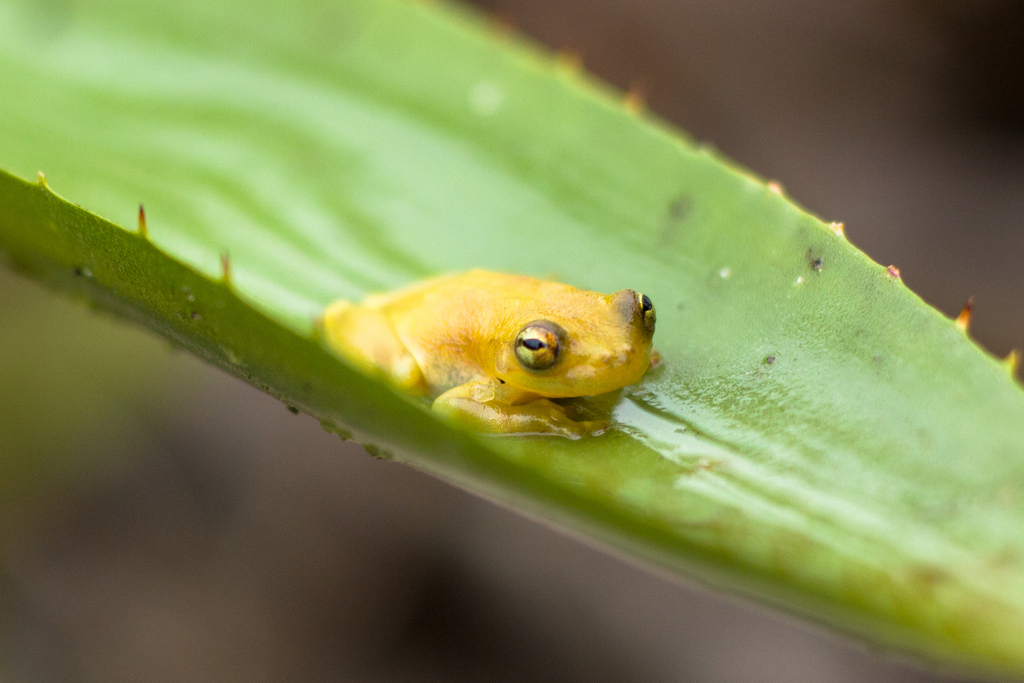
Yellow Heart-tongued Frog
Phyllodytes luteolus
Least Concern
Yellow Heart-tongued Frog (Phyllodytes luteolus) lives in atlantic forest bromeliads across Brazil. It feeds on not specified. Its conservation status is Least Concern.
The yellow heart-tongued frog, Phyllodytes luteolus, is a diminutive hylid that flits among the mist-laden bromeliads of Brazil’s Atlantic forest and the drier caatinga patches that fringe it. Its name hints at the vivid, lemon-yellow hue that stains the undersides of its tongue, a flash of color that becomes visible when the frog snaps its mouth shut to capture tiny insects. Adults cling to the water-filled leaf axils of bromeliads, where they sip the micro-fauna that drift in the miniature pools, and they are equally at home on the forest floor up to 650 m above sea level. Females lay only a few eggs per clutch, spreading them across multiple bromeliads throughout the breeding season, a strategy that reduces the risk of total loss if a single plant is disturbed. A surprising trait for a forest dweller is its tolerance of secondary growth; unlike many of its congeners, this species can persist in degraded habitats, colonising the regrowing understory of cut-over forest and thereby maintaining a foothold even as its primary homes shrink. The frog’s life is a delicate balance of arboreal specialization and opportunistic resilience, a narrative that continues to unfold in Brazil’s changing landscapes
Real recorded sounds, 11 nature games and a free Daily 5, 1v1 quiz duels, conservation wins and a safe Kids mode. Free on Feravox.