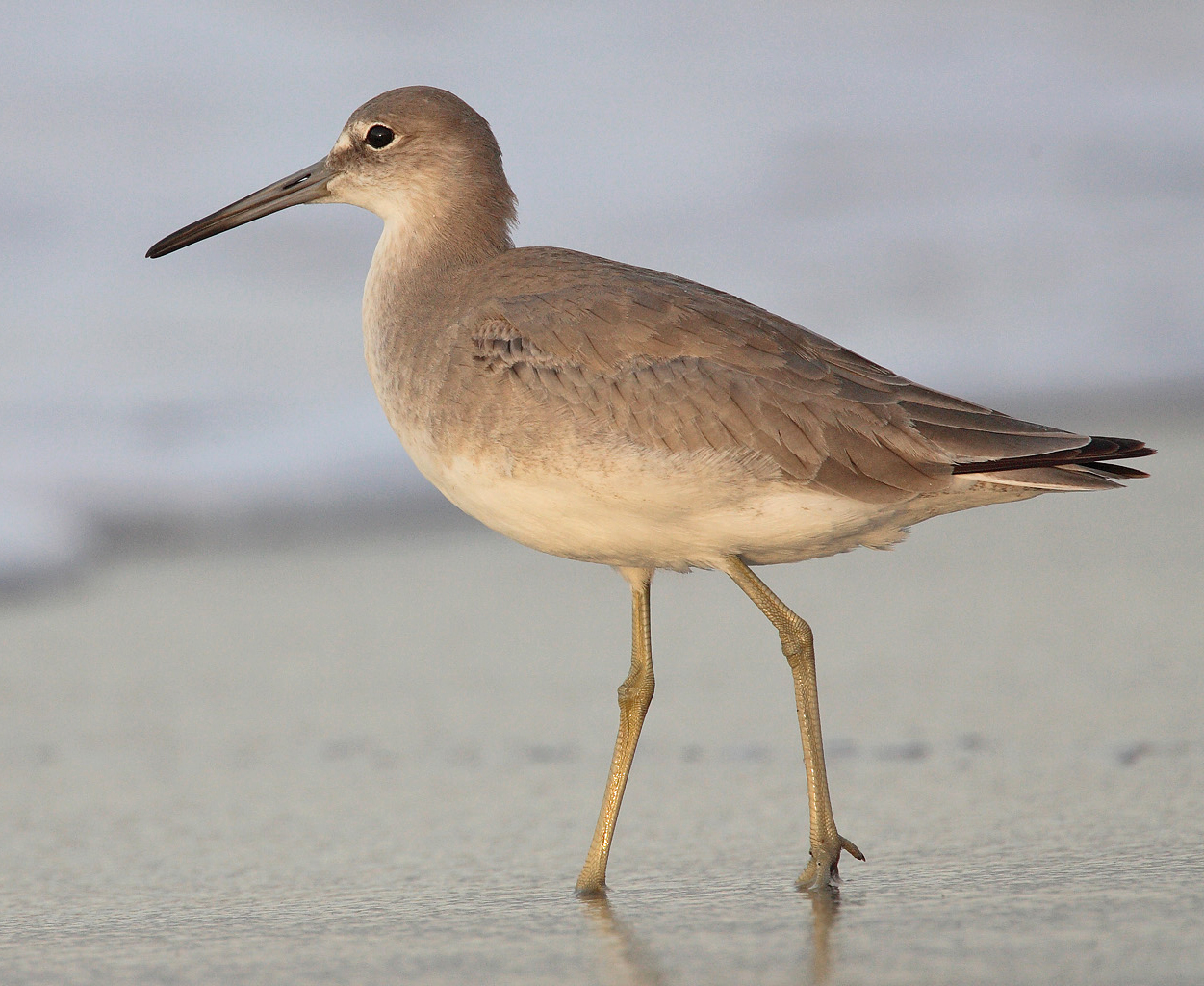
Willet (Tringa semipalmata) lives in coastal wetlands across North America. It feeds on crustaceans and insects. Its conservation status is Least Concern.
Fascinating facts about the Willet
- A single willet nest is a shallow bowl just 15 cm across and 5 cm deep, hidden among grass or salt-marsh vegetation. The male builds several trial scrapes before the female picks the final spot, then both line the depression with fine grass and tiny pebbles, sometimes hauling material from a distance. This modest construction protects the clutch while allowing the parents to stay close to water's edge.
- Willets sing a piercing "pill-will-willet" call that rings across marshes, a sound so distinctive it gave the bird its name. Eastern birds belt out the song at a higher pitch and faster rate than their western cousins. the first bird on the landward edge of a salt-marsh sound the warning.
- Across North America there are roughly 250 000 willets, but the western subspecies makes up more than half with about 150 000 birds, while the eastern group numbers only around 90 000. This imbalance matters because western birds spend the winter on the east coast, meaning the true eastern population is likely far lower than the count suggests. Such skewed numbers heighten the risk that habitat loss in either breeding or wintering zones could push one group toward rapid decline.
- The willet avoided extinction thanks to the 1918 Migratory Bird Treaty Act, which halted large-scale hunting and let numbers rebound to present levels. Yet today the bird still faces threats: western wetlands are being drained for agriculture, coastal development degrades winter habitats, and power lines sliced through breeding marshes kill birds on collision.
- At up to 41 cm long and 330 g heavy. Its hefty, straight bill and gray legs let it stride confidently through mud while probing for crabs, worms and even fish. This bulk lets the bird wade deep enough to chase mobile prey.
Sources
Every fact above was checked against these pages, and kept only where one of them states it.
At a glance
RangeNorth America
HabitatCoastal wetlands
DietCrustaceans and insects
About the Willet
As the tide ebbs and flows, the willet emerges, its distinctive black and white plumage a striking silhouette against the shimmering wetlands. With each deliberate stride, it probes the mudflats with its long, sensitive bill, uncovering a hidden world of crustaceans and mollusks that lie just beneath the surface. In its graceful, unhurried dance, the willet embodies the serene and timeless beauty of the coastal landscape, a true master of the intertidal realm.
Hear the Willet, and 4,400+ more
Real recorded sounds, 11 nature games and a free Daily 5, 1v1 quiz duels, conservation wins and a safe Kids mode. Free on Feravox.