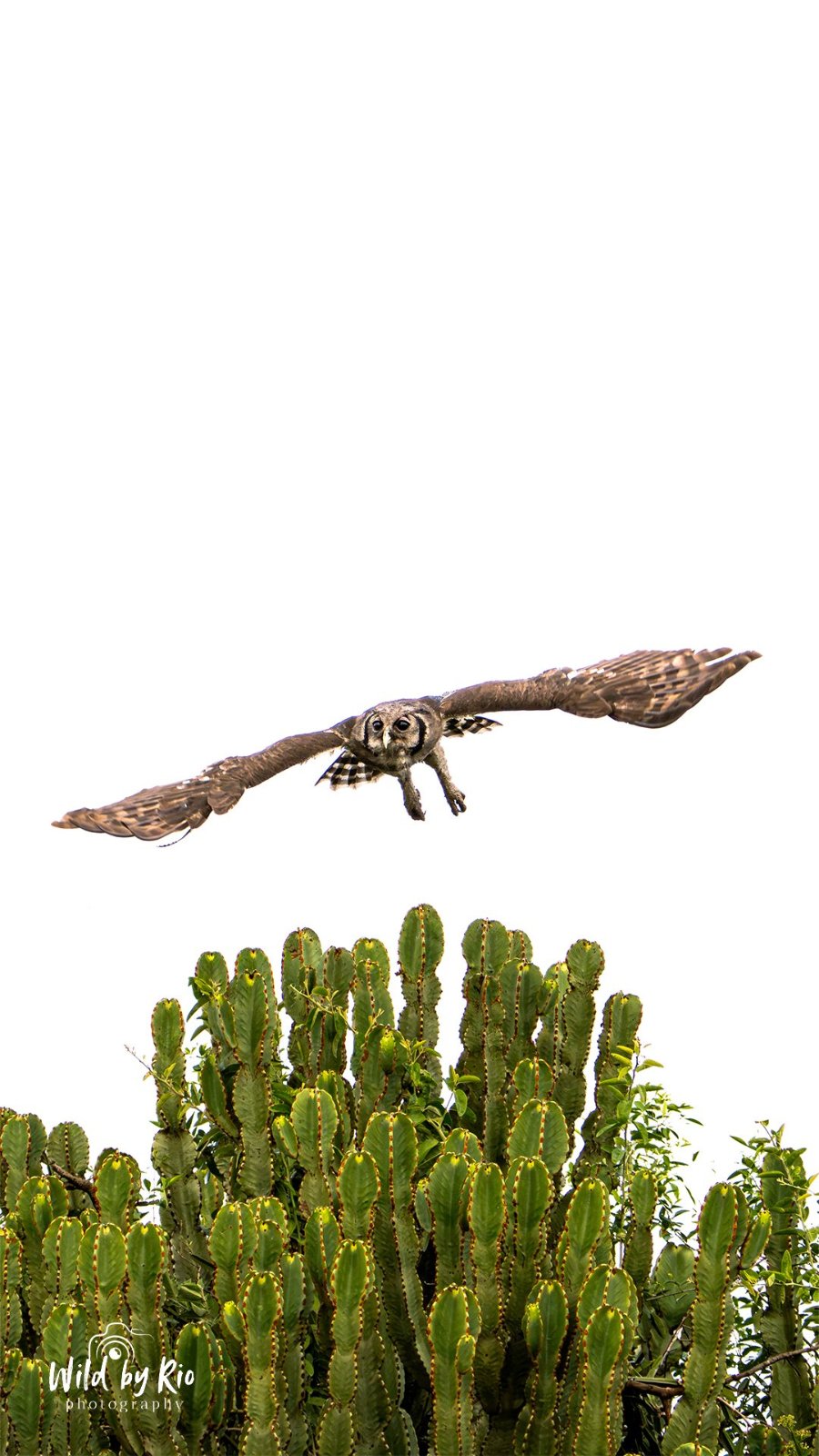
Photo: Feravox creator
Feravox · The Voice of the Wild
Verreaux's Eagle-owl
Bubo lacteus
Least Concern
Verreaux's Eagle-owl (Bubo lacteus) lives in savanna, woodland across Sub-Saharan Africa. It feeds on small mammals, birds, reptiles. Its conservation status is Least Concern.
Every fact above was checked against these pages, and kept only where one of them states it.
The Verreaux’s eagle‑owl (Bubo lacteus) is a strikingly large nocturnal raptor, rivaling the Eurasian eagle‑owl in size. Adults display a mottled tawny‑brown plumage punctuated by bold white patches on the shoulders and a broad, creamy facial disc that frames amber eyes like twin lanterns. Their massive, feathered legs end in powerful talons capable of crushing the bones of prey the size of small antelopes, while a deep, resonant hoot can travel for miles across the savanna night. This owl favors open grasslands, savannas and lightly wooded plateaus across sub‑Saharan Africa, often nesting in cliff crevices, abandoned nests of large birds, or even in the hollowed trunks of baobabs, where the cool interior provides a refuge from the scorching daytime heat. A consummate opportunist, the Verreaux’s eagle‑owl hunts from perches or in low, silent flight, preying on mammals ranging from rodents to hyraxes, and on birds as large as francolins. It also exhibits a surprising trait: occasional kleptoparasitism, stealing freshly killed prey from smaller owls and even from diurnal raptors that have dropped their catch. This boldness extends to its breeding behavior; both sexes share incubation duties, and the fledglings remain dependent for several months, learning the art of night‑time hunting under the watchful eyes of their parents, a mentorship that ensures the continuation of this apex nocturnal predator’s legacy…
Real recorded sounds, 11 nature games and a free Daily 5, 1v1 quiz duels, conservation wins and a safe Kids mode. Free on Feravox.