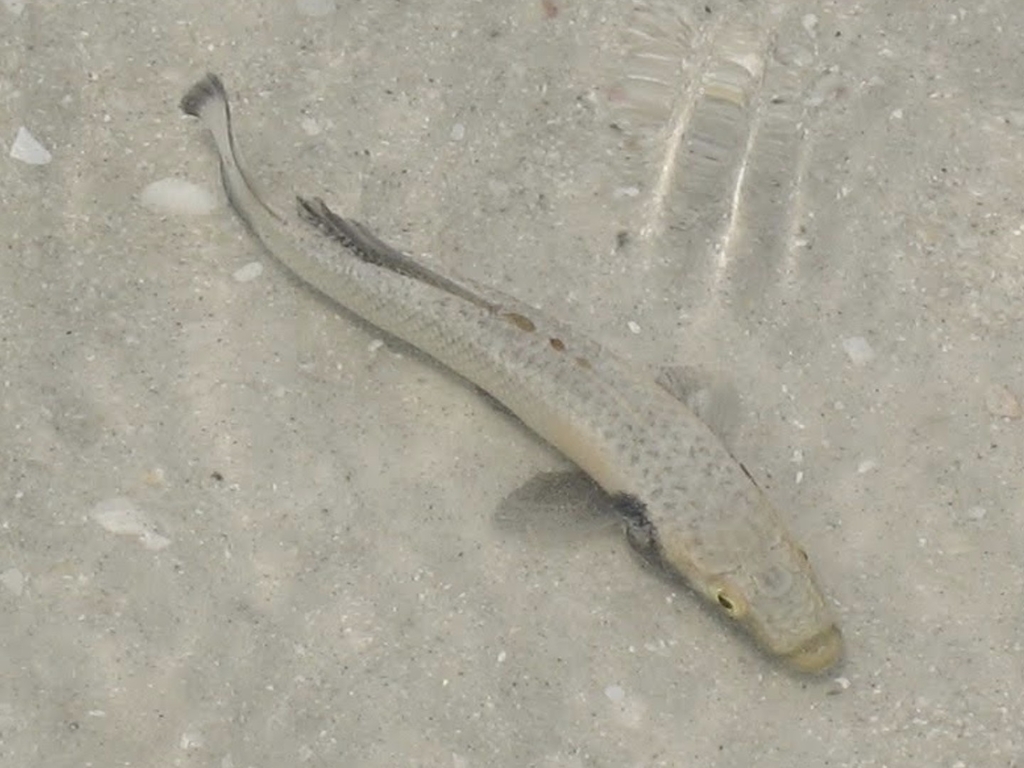
Photo: Zac Peterson
Feravox · The Voice of the Wild
Striped Killifish
Fundulus majalis
Least Concern
Striped Killifish (Fundulus majalis) lives in shallow coastal saltwater across New Hampshire to Florida. It feeds on not specified. Its conservation status is Least Concern.
The striped killifish (Fundulus majalis) glides through the shallow, brackish waters of the Atlantic coast from New Hampshire to Florida and into the northern Gulf of Mexico, its silver body marked by a striking pattern of black stripes. Males flaunt bold vertical bars, while mature females display horizontal stripes along their sides; juvenile females retain the vertical design, and even adult females keep one or two vertical marks at the tail’s edge. Growing to about six inches (15 cm) and occasionally reaching seven inches (18 cm), these modest fish blend camouflage with a flash of contrast that signals both sex and maturity. Beyond their everyday foraging, striped killifish exhibit an astonishing tide-pool survival strategy recorded in February 1916 by Professor S. O. Mast of Johns Hopkins University. When a tide pool began to drain, the fish would instinctively swim toward the ocean, and if the water’s exit closed, they would abandon the water entirely, flopping across sand bars up to twelve feet wide and six inches tall. In coordinated groups of about twelve, they left the pool on the side nearest the sea, moving straight toward it rather than wandering randomly.
Real recorded sounds, 11 nature games and a free Daily 5, 1v1 quiz duels, conservation wins and a safe Kids mode. Free on Feravox.