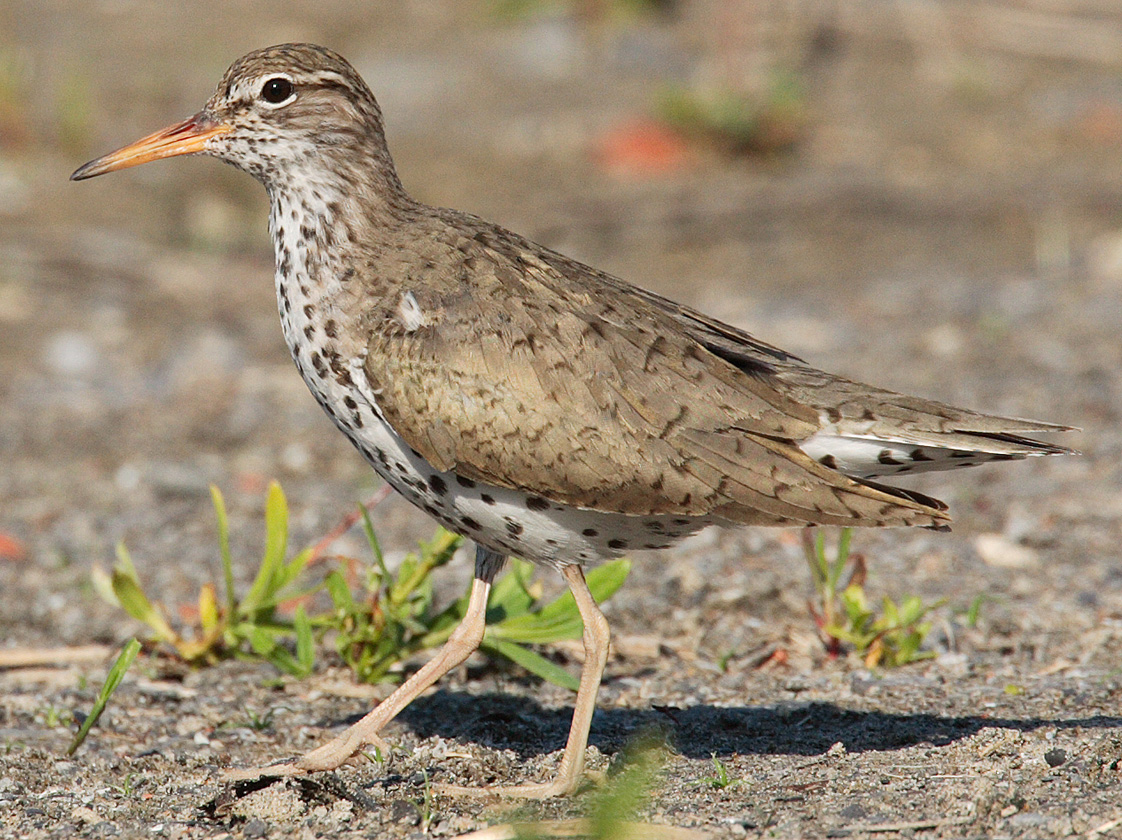
Spotted Sandpiper (Actitis macularius) lives in wet river shores across North America. It feeds on insects & crustaceans. Its conservation status is Least Concern.
Hear the Spotted Sandpiper
A real field recording of the Spotted Sandpiper, made in the wild.
During each summer breeding season, females may mate with and lay clutches for more than one male, leaving incubation to them. This polyandrous system allows a single female to spread her genes across several nests while the males assume all duties of incubation and chick rearing. Males then sit on the clutch for about three weeks, guarding the eggs and later feeding the hatchlings.
Male spotted sandpipers incubate their clutch for roughly three weeks, with the incubation period lasting about 20-23 days. While sitting on the eggs they also protect the nest from predators and, once the chicks hatch, they provide all feeding and care. This sole parental role includes keeping the young warm and teaching them to forage. Such dedicated male care is essential for the survival of the brood.
Before incubation begins, male blood plasma concentrations of testosterone and dihydrotestosterone are substantially higher than in females, but these hormone levels drop about twenty-five-fold as incubation proceeds. In contrast, females that have secured mates show testosterone concentrations roughly seven times higher than those of unmated females. These hormonal shifts reflect the differing reproductive roles of the sexes during the breeding season.
Female spotted sandpipers weigh noticeably more, about a fifth to a quarter heavier than their male counterparts. The disparity occurs even though the sexes have comparable body measurements.
In females, a greater number of black spots on the belly is associated with better health, suggesting spot density can serve as a visual health indicator for them. Thus, observers can infer a female's condition by the extent of her belly spotting.
Sources
Every fact above was checked against these pages, and kept only where one of them states it.
As the Spotted Sandpiper dances along the water's edge, its feet barely touching the ground, it embodies a carefree spirit, its brown plumage glistening with subtle hints of gold in the sunlight. With each swift, staccato step, it seems to be pulled by an invisible thread, its movements a mesmerizing blur of purpose and instinct as it searches for the tiny crustaceans and insects that sustain it. In its effortless, bobbing gait, we see a masterclass in adaptation, a testament to the remarkable resilience of this unassuming yet captivating shorebird.
Advertisement
Hear the Spotted Sandpiper, and 4,400+ more
Real recorded sounds, 11 nature games and a free Daily 5, 1v1 quiz duels, conservation wins and a safe Kids mode. Free on Feravox.