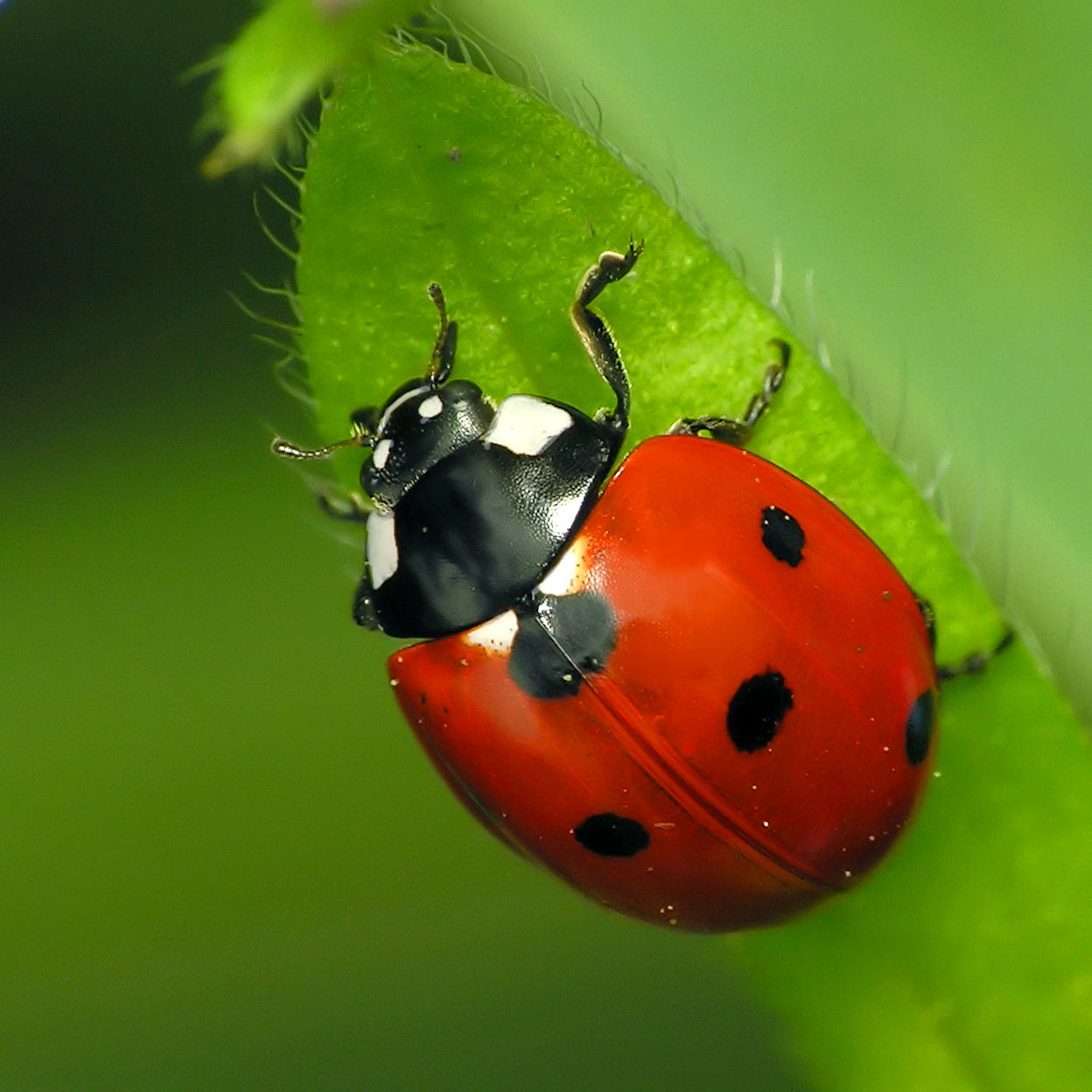
Seven-Spotted Lady Beetle (Coccinella septempunctata) lives in temperate grasslands across Europe. It feeds on aphids and insects.
Fascinating facts about the Seven-Spotted Lady Beetle
- A seven-spot ladybird fits on a fingertip: the adult measures just 6.5-7.8 mm long and about 4 mm wide, with an oval, convex shape and bright orange-red forewings marked by seven black spots. One spot bridges the two elytra, while two tiny white patches sit just ahead of it, and the remaining six spots are spread three per wing. The spots can fuse or vary, but such melanic forms are rare. This tiny, boldly patterned beetle uses its high-contrast colors as a warning signal that deters predators.
- From egg to adult, a seven-spot ladybird completes its life cycle in roughly six weeks and can squeeze up to five generations into a single year. Females lay between 250 and 500 eggs over their lifetime, depositing clusters of ten to thirty on leaves and stems while using scent cues to avoid laying near other eggs. After about four days the larvae hatch, eat their own shells and any infertile eggs, then pass through four instars that grow from 1-2 mm to about 8 mm before pupating for eight days. This rapid turnover lets the beetle surge when aphids bloom, keeping plant pests in check.
- When winter comes, seven-spot ladybirds gather in tight groups of 10-15, sometimes over 200, on sunny hilltops, under bark or in dense grass, and release the pheromone 2-isopropyl-3-methoxy-pyrazine to attract neighbors. This chemical cue not only builds a warm, protected huddle but also ensures that, once temperatures rise, a ready pool of mates is present for immediate breeding. By clustering, the beetles boost survival odds in cold weather and synchronize their emergence.
- A single ladybird can carry up to 20 % of its body weight in toxic alkaloids, which it squirts from leg joints when threatened. The chemicals, N-oxide coccinelline and precoccinelline, are toxic to birds and small mammals, making the beetle's bright orange-black pattern an honest warning.
- Introduced to North America in the 1950s-70s, the seven-spot ladybird finally established a wild population in June 1973 after an accidental release near New Jersey's JFK Airport. Since then it has spread across the United States and southern Canada, becoming one of the most common coccinellids in the Nearctic. Its success shows how a beetle that thrives in any temperate habitat with aphids can quickly become invasive, reshaping local insect communities and prompting concerns over native ladybird declines.
Sources
Every fact above was checked against these pages, and kept only where one of them states it.
At a glance
RangeEurope
HabitatTemperate grasslands
DietAphids and insects
About the Seven-Spotted Lady Beetle
In a whirl of crimson and black, the Seven-Spotted Lady Beetle dances across the sun-kissed landscape, its delicate wings beating at a hypnotic pace as it flits from bloom to bloom in search of sweet nectar and unsuspecting aphids. With an air of quiet confidence, this tiny, spotted sentinel patrols the garden's hidden corners, its voracious appetite for pests making it a cherished ally to the green-thumbed and a formidable foe to the unwanted invaders. As it moves, its shiny elytra glimmering like tiny jewels in the warm light, the Seven-Spotted Lady Beetle embodies a perfect blend of beauty and utility, its very existence a testament to the intricate, interconnected web of life.
Hear the Seven-Spotted Lady Beetle, and 4,400+ more
Real recorded sounds, 11 nature games and a free Daily 5, 1v1 quiz duels, conservation wins and a safe Kids mode. Free on Feravox.
More insects and spiders to discover