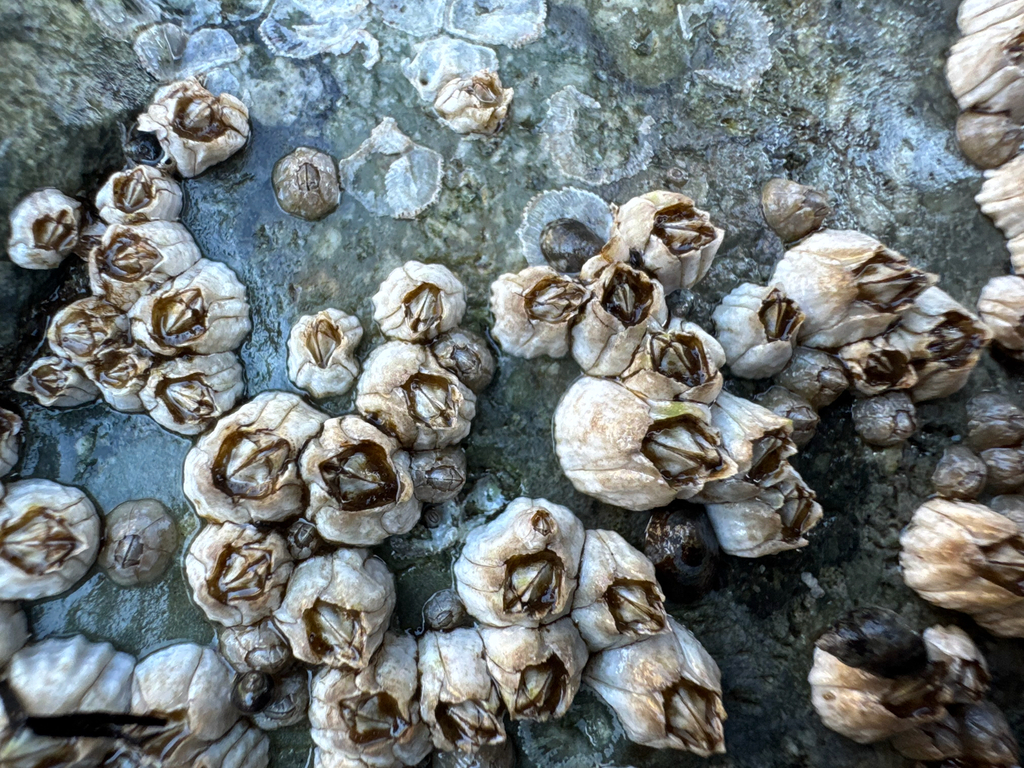
Pacific Acorn Barnacle (Balanus glandula) lives in rocky shores across Eastern Pacific coast. It feeds on plankton and algae.
Fascinating facts about the Pacific Acorn Barnacle
- It can obtain oxygen from both water and air. It is commonly found in the upper intertidal zone.
- In the 1960s the North American acorn barnacle was unintentionally introduced to the Argentine coastline, where it quickly established dense populations and began outcompeting native barnacles and mussels. Its prolific reproduction produces both sedentary adults and planktonic larvae, contributing to its status as one of the most abundant organisms in the local intertidal community.
- Sea stars are capable of prying open the overlapping plates of the Pacific acorn barnacle and everting their stomachs through the gaps to digest the animal inside. This method of feeding is shared with other predators such as dog whelks, which bore through the shell, and grazing limpets that can dislodge barnacles from their substrate. Specialized birds and humans also prey on these barnacles, adding to the range of natural and anthropogenic threats they face.
Sources
Every fact above was checked against these pages, and kept only where one of them states it.
At a glance
RangeEastern Pacific coast
HabitatRocky shores
DietPlankton and algae
About the Pacific Acorn Barnacle
In the tumultuous realm of the intertidal zone, the Pacific Acorn Barnacle clings tenaciously to the rocky shoreline, its calcified shell a testament to the unforgiving power of the sea. As the waves recede, these diminutive crustaceans emerge, their feathery legs wafting gently in the current like delicate ballerinas, filtering the water for the plankton and detritus that sustain them. In this precarious, ever-shifting world, the Pacific Acorn Barnacle has evolved to thrive, its remarkable adaptability allowing it to flourish in one of the most inhospitable environments on the planet.
Hear the Pacific Acorn Barnacle, and 4,400+ more
Real recorded sounds, 11 nature games and a free Daily 5, 1v1 quiz duels, conservation wins and a safe Kids mode. Free on Feravox.
More ocean life to discover