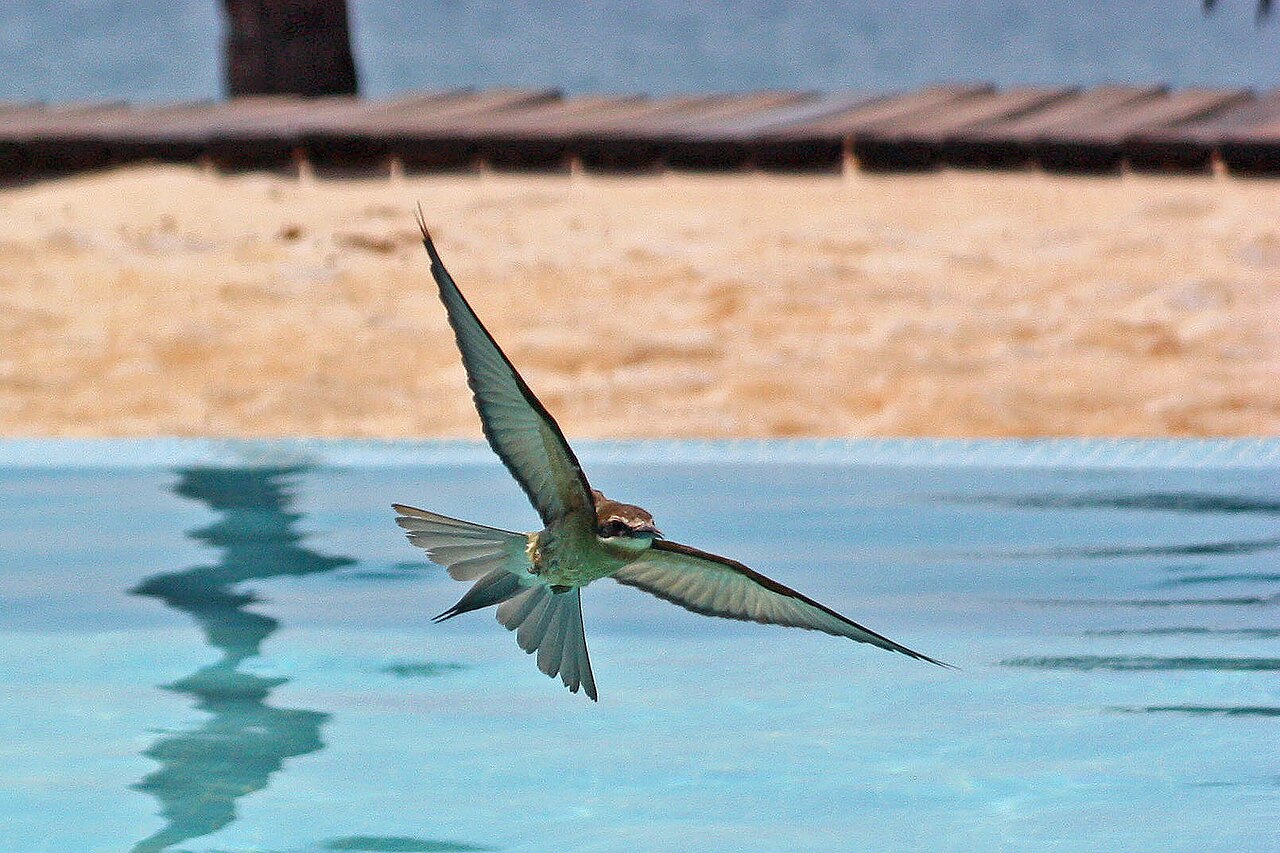
Photo: Charles J. Sharp
Feravox · The Voice of the Wild
Olive Bee-eater
Merops superciliosus
Least Concern
Olive Bee-eater (Merops superciliosus) lives in savannah woodland across Sub-Saharan Africa. It feeds on insects and bees. Its conservation status is Least Concern.
Every fact above was checked against these pages, and kept only where one of them states it.
The Olive Bee-eater (Merops superciliosus) is a strikingly beautiful bird, easily recognized by its vibrant green plumage accented with a rich, chestnut-brown throat and a delicate white supercilium that arches gracefully over its eye. This medium-sized bird, measuring about 25 to 30 centimeters in length, showcases a long, pointed tail that aids in its agile flight. Olive Bee-eaters inhabit a variety of open and semi-open environments, including savannas, grasslands, and woodland edges, often near water sources where they can hunt. Their nests are ingeniously constructed in sandy banks or cliffs, where they dig out tunnels to create safe breeding chambers, a behavior that reflects their adaptation to both terrestrial and arboreal habitats. As social creatures, they are often seen in small groups, engaging in aerial displays that showcase their acrobatic prowess and vibrant colors against the azure sky. Feeding primarily on insects, particularly bees and wasps, Olive Bee-eaters have developed remarkable hunting techniques, often catching their prey mid-flight with precision and grace. They exhibit a fascinating behavior where they will beat their captured prey against a hard surface to subdue it, showcasing their intelligence and adaptability. One surprising trait of these birds is their ability to tolerate mild stings from their prey, allowing them to feast on bees without significant harm. This unique adaptation not only highlights their resilience but also underscores their role in controlling insect populations within their ecosystems, making them vital players in the intricate web of life that sustains their habitats.
Real recorded sounds, 11 nature games and a free Daily 5, 1v1 quiz duels, conservation wins and a safe Kids mode. Free on Feravox.