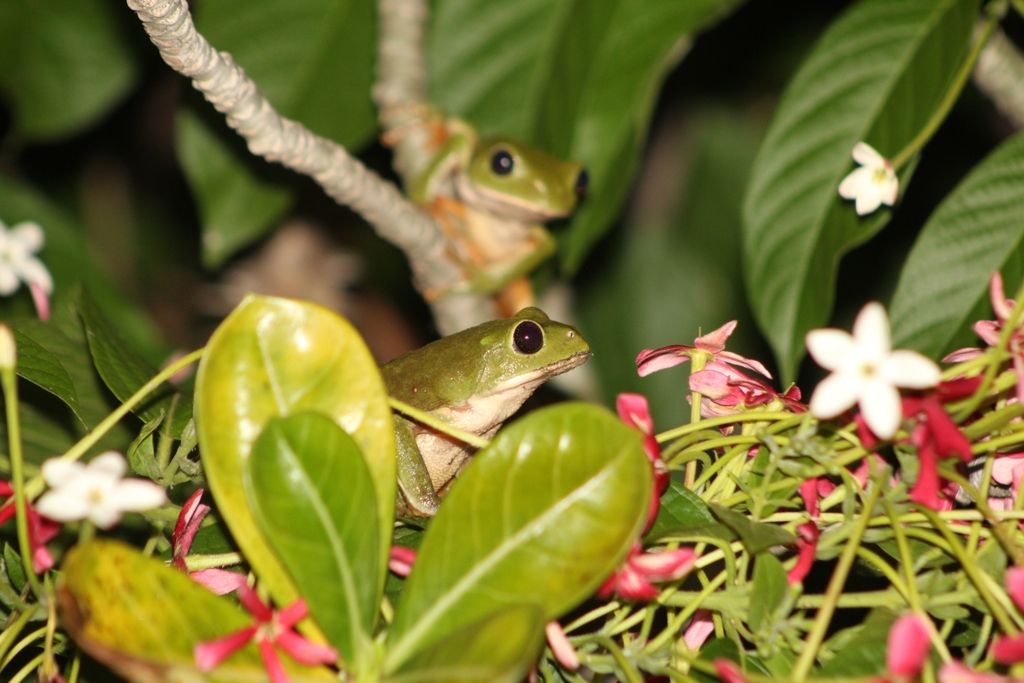
Photo: iNaturalist
Feravox · The Voice of the Wild
Mexican Giant Tree Frog
Agalychnis dacnicolor
Least Concern
Mexican Giant Tree Frog (Agalychnis dacnicolor) lives in tropical dry forest across Mexico. It feeds on mainly insects. Its conservation status is Least Concern.
The Mexican Giant Tree Frog, Agalychnis dacnicolor, commands attention with its striking palette: a vibrant green dorsum peppered with white speckles, a pristine white belly, and limbs tipped in vivid orange. Golden eyes peer from its head, while enlarged toe pads hint at its arboreal prowess. Females outsize males, reaching up to 100 mm in total length, a size that underscores their role in the species’ reproductive drama. By night, these amphibians emerge from concealed burrows beneath stones or logs, hunting a diet of insects that buzz through the subtropical dry forests and intermittent waterways they call home. Their nocturnal forays are punctuated by a surprising reproductive twist, females deposit egg clutches on overhanging foliage, allowing hatchlings to drop directly into the water below, where they continue their development as tadpoles in ponds and marshes. Agalychnis dacnicolor thrives in a mosaic of habitats across Mexico, from dry forest canopies to the edges of intermittent rivers and freshwater marshes, even exploiting human-made water storage areas. Their adaptability to both natural and altered landscapes reflects a resilience rarely seen in amphibians, yet their dependence on clean, temporary water bodies for breeding ties them inexorably to the health of these fleeting ecosystems, a connection that continues to shape their ecological narrative.
Real recorded sounds, 11 nature games and a free Daily 5, 1v1 quiz duels, conservation wins and a safe Kids mode. Free on Feravox.