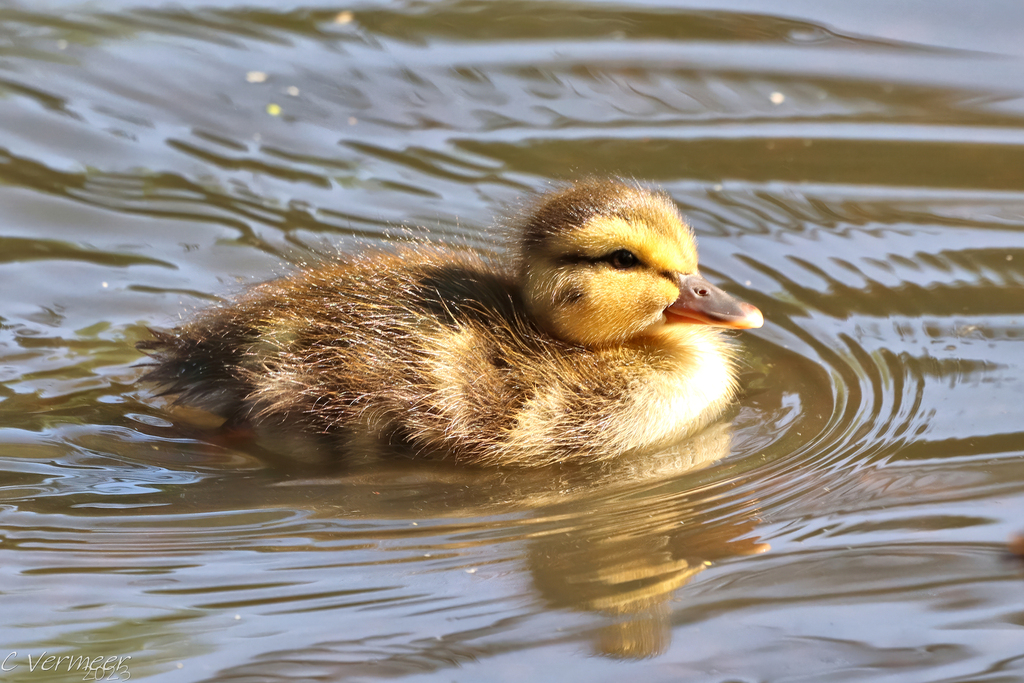
Mallard (Anas platyrhynchos) lives in freshwater wetlands across Europe, Asia, North America. It feeds on insects & plants. Its conservation status is Least Concern.
Hear the Mallard
A real field recording of the Mallard, made in the wild.
A single mallard can weigh as much as a newborn kitten, tipping the scales at up to 1.6 kg (3.5 lb). This heft makes it heavier than most dabbling ducks, giving it a stronger flap and longer glide over water. Its body length of 50-65 cm (20-26 in) and wingspan of up to 98 cm (39 in) let it cover a pond in a single beat, helping it escape predators and claim prime feeding spots. Bigger size also means more energy reserves for long migrations across continents.
When a mallard hen lays a clutch, she deposits 8-13 eggs on alternate days, each about 58 mm long and 32 mm wide. Incubation lasts 27-28 days, after which the precocial ducklings can swim within hours and fledge in 50-60 days. This rapid development lets the brood exploit abundant spring insects and plant seeds before competition peaks, boosting survival in the crowded wetlands where they breed.
Mallard quacks aren't uniform, urban birds in London shout up to twice as loudly as their rural cousins in Cornwall. Researchers found this vocal "accent" helps them cut through constant city noise, ensuring mates and ducklings hear each other. The louder call improves breeding success in noisy parks, showing how quickly the species can tweak behavior to thrive alongside humans.
A mallard can hybridise with over 40 wild duck species in the wild and another 20 in captivity, producing fertile offspring. This genetic mixing spreads mallard DNA far and wide, but it also risks "genetic pollution" that can erase the unique gene pools of native ducks, pushing some toward extinction. Understanding this interbreeding is key to protecting vulnerable waterfowl diversity.
Mallards follow Bergmann's and Allen's rules: birds from colder Arctic regions grow larger bodies and sport shorter bills than their tropical relatives. For example, the Greenland mallard is noticeably bulkier, while its bill is reduced to conserve heat. These subtle shape changes illustrate how the species fine-tunes its physiology to survive from icy tundra to subtropical wetlands.
Sources
Every fact above was checked against these pages, and kept only where one of them states it.
As the sun rises over the tranquil wetlands, the mallard emerges, its emerald feathers glistening like jewels in the morning light, as it glides effortlessly across the water, its webbed feet paddling in a slow, rhythmic motion. With a gentle quack, it navigates the lush vegetation, its bright orange bill probing the depths for hidden treasures, a true master of its aquatic realm. In its elegant, unhurried movements, we find a reflection of the serene and timeless beauty of the natural world.
Advertisement
Hear the Mallard, and 4,400+ more
Real recorded sounds, 11 nature games and a free Daily 5, 1v1 quiz duels, conservation wins and a safe Kids mode. Free on Feravox.