Photo: 胡正恆(Jackson Hu)
Feravox · The Voice of the Wild
Java Barb
Barbonymus gonionotus
Least Concern
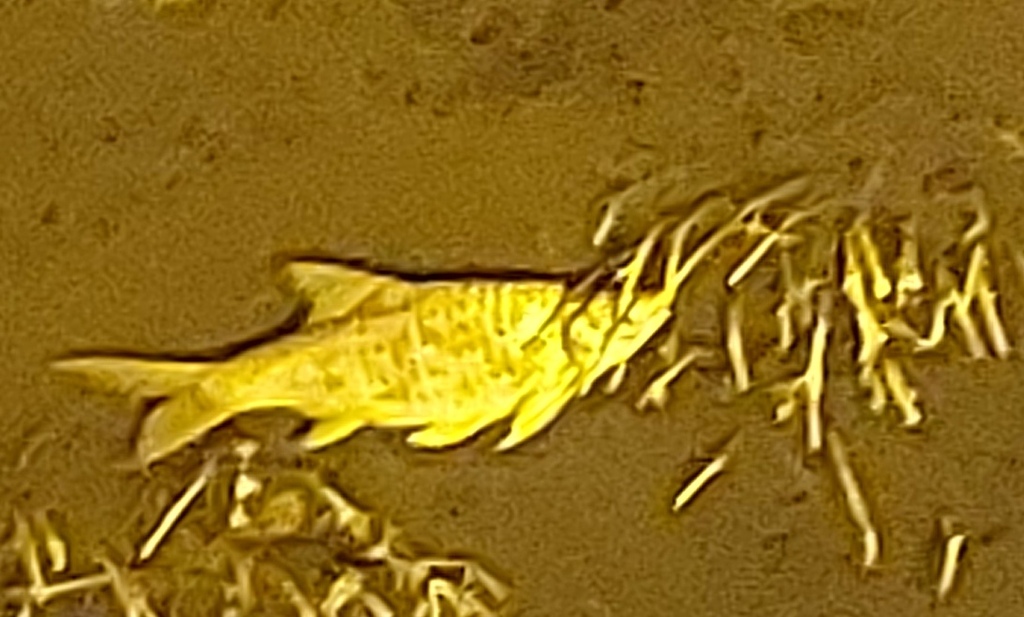
Java Barb (Barbonymus gonionotus) lives in still water habitats across Southeast Asia. It feeds on plant matter and invertebrates. Its conservation status is Least Concern.
The Java barb, Barbonymus gonionotus, glides through Southeast Asian waters with a sleek, strongly compressed body that arches into a pronounced dorsal hump. Its silvery-white scales sometimes catch a golden sheen, while the dorsal and caudal fins range from muted grey to grey-yellow. The anal and pelvic fins flash pale orange tipped with red, and the pectoral fins are a soft yellow, giving the fish a subtle yet striking palette. Males can reach up to 40.5 cm (15.9 in) in total length, their small heads crowned by a short, pointed snout that barely exceeds the eye’s diameter, and their barbels are so minute they often disappear entirely. In the wild, they inhabit the middle to lower water column of rivers, streams, floodplains, and occasionally reservoirs, showing a clear preference for still water over swift currents. During the rainy season, they become local migrants, moving from main river channels into flooded forests and small tributaries, a journey triggered by the first rains and rising water levels. Their diet is opportunistic, blending plant matter, leaves, weeds, Ipomoea reptans, Hydrilla, with occasional invertebrates, allowing them to thrive in varied habitats. A surprising trait is their role in aquaculture: the pituitary gland of the Java barb is harvested to induce artificial spawning in other fish species, making them an unexpected linchpin in fish-farming technology.
Real recorded sounds, 11 nature games and a free Daily 5, 1v1 quiz duels, conservation wins and a safe Kids mode. Free on Feravox.