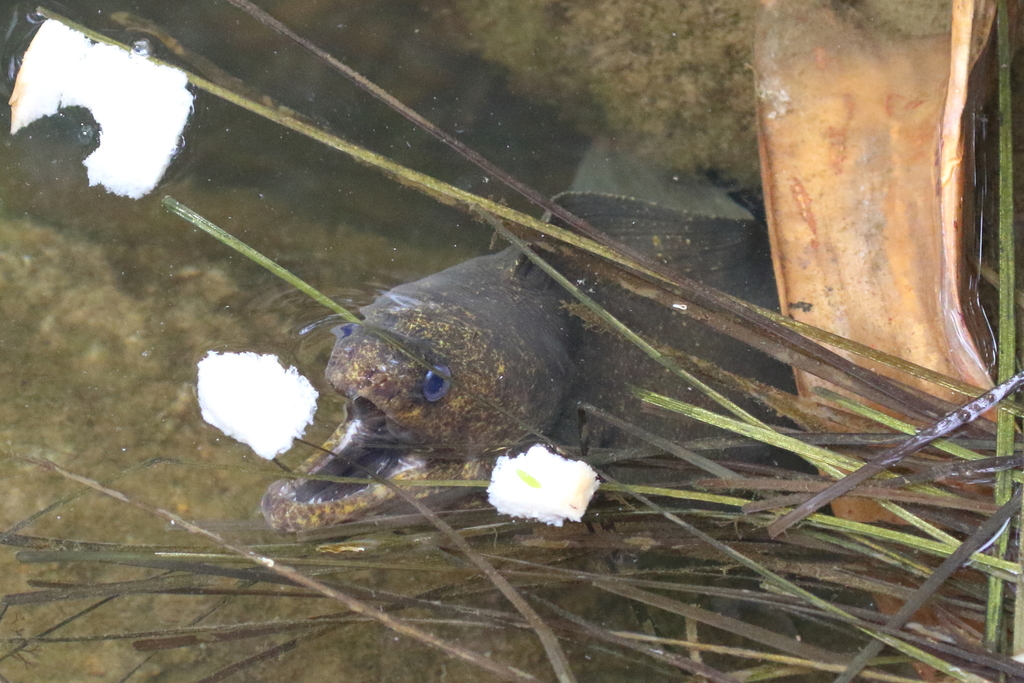
Highfin Moray (Gymnothorax pseudothyrsoideus) lives in reef habitat across Pacific, Indian Oceans. It feeds on not specified. Its conservation status is Least Concern.
Fascinating facts about the Highfin Moray
- In 1852, Dutch ichthyologist Pieter Bleeker gave this eel its first scientific name, anchoring its place in taxonomy over 170 years ago. That early record shows how long scientists have been cataloguing reef mysteries.
- At up to 80 cm long, the highfin moray lacks any visible dorsal fin.
- Juvenile individuals flash white along their fin edges, a bright border that fades as they age, leaving only a tiny white tip on the tail. This color shift marks their growth stages without any external tagging.
- The eel’s body is a pale yellow canvas dotted with irregular dark brown spots, a pattern that breaks up its outline among the reef’s sunlight-dappled sands. Such camouflage lets it ambush prey while staying hidden from predators.
- Because it isn’t hunted for food and poses no danger to people, the species faces little direct human pressure, even though sightings are rare across the Pacific and Indian Oceans.
At a glance
RangePacific, Indian Oceans
Habitatreef habitat
Dietnot specified
About the Highfin Moray
Gymnothorax pseudothyrsoideus, the highfin moray, lives in the Pacific and Indian Oceans. It can grow to about 80 cm in length, has no visible dorsal fin, and is pale-yellow with irregular dark brown spots. Juveniles have white along the margins of their fins, which fades to only the tip of the tail as they mature.
Hear the Highfin Moray, and 4,400+ more
Real recorded sounds, 11 nature games and a free Daily 5, 1v1 quiz duels, conservation wins and a safe Kids mode. Free on Feravox.