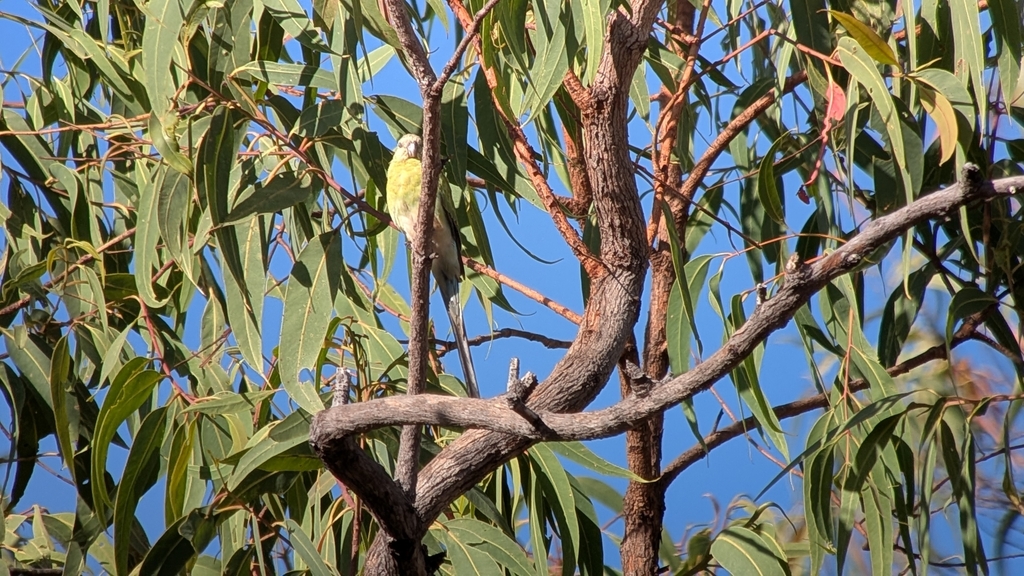
Photo: Laura Sewell
Feravox · The Voice of the Wild
Golden-shouldered Parrot
Psephotellus chrysopterygius
Endangered
Golden-shouldered Parrot (Psephotellus chrysopterygius) lives in open forested grassland across southern Cape York Peninsula. Its conservation status is Endangered.
The golden-shouldered parrot (Psephotellus chrysopterygius) is a strikingly coloured bird of the southern Cape York Peninsula, measuring 25–27 cm in length and weighing 54–56 g. The adult male dazzles with a vivid blue plumage, a black cap, and a bold yellow shoulder patch that gives the species its name, while his lower belly, thighs and undertail-coverts blaze in dark salmon-pink. Females are more subdued, cloaked in dull greenish-yellow with a broad cream bar on the wing underside and, in older birds, a charcoal-grey cap. Juveniles resemble females, though fledgling males already display a brighter blue cheek patch. These parrots inhabit open forested grasslands dotted with termite mounds every few metres, relying on the mounds both as nesting sites and as a keystone of their ecosystem. Their diet centers on the tiny seeds of firegrass (Schizachyrium fragile) and other small grasses, especially in the months preceding the wet season, making the presence of abundant grass and open understory essential. A surprising trait is their symbiotic relationship with the ant-bed moth Trisyntopa scatophaga: the moth deposits eggs in freshly dug nest tunnels, and its larvae consume the nestlings’ faeces, helping keep the chamber clean, a partnership found in roughly half of all nests.
Real recorded sounds, 11 nature games and a free Daily 5, 1v1 quiz duels, conservation wins and a safe Kids mode. Free on Feravox.