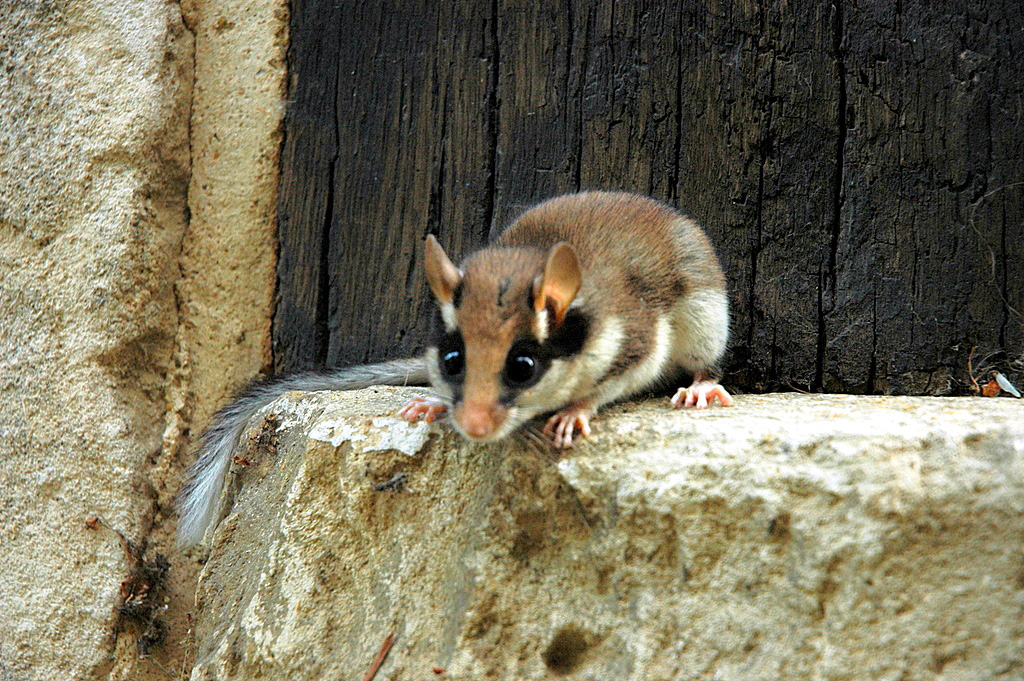
European Garden Dormouse (Eliomys quercinus) lives in temperate deciduous forests across Western and Central Europe. Its conservation status is Vulnerable.
Hear the European Garden Dormouse
A real field recording of the European Garden Dormouse, made in the wild.
Fascinating facts about the European Garden Dormouse
Camera traps and a specialised ink-footprint tunnel finally confirmed the garden dormouse in Büsserach in 2022. The devices captured the first recorded sightings of the species in more than a century, ending a long gap in observations. This breakthrough shows the animal still persists in isolated Alpine valleys despite its rarity.
A 2007 survey in the Dutch province of Limburg found only nine garden dormice across two woods, indicating the species is almost extirpated there. Researchers linked the decline to increasingly monotonous landscapes and climate-driven disruptions to hibernation. The tiny population highlights how fragile its northern range has become.
The garden dormouse ranks among the most carnivorous dormice, regularly eating adult birds, reptiles, amphibians and small mammals, sometimes scavenging. It also supplements its diet with insects, millipedes, snails, slugs, fruit and seeds according to the season. This varied feeding habit allows it to thrive in both forest and fruit-growing habitats.
Garden dormice sometimes turn on members of their own species, with cannibalism recorded in wild populations. This extreme behaviour fits with their generally carnivorous habits, as they regularly prey on adult birds, reptiles, amphibians and small mammals. Their diet also includes insects, millipedes and gastropods, giving them flexibility in forest and fruit-growing habitats. Such opportunistic feeding helps them survive where prey availability varies seasonally.
The Formentera Island subspecies of garden dormouse is larger than its mainland relatives and has an all-black tail. All of the Mediterranean island subspecies of garden dormouse are very rare.
Sources
Every fact above was checked against these pages, and kept only where one of them states it.
In the dappled shadows of the European woodland, the garden dormouse stirs, its large, round eyes blinking slowly as it emerges from a day of torpor, its soft, grey-brown fur fluffed against the chill of the evening air. With a gentle, almost languid pace, it pads through the underbrush, its long, hairless tail twitching like a metronome as it navigates the intricate network of twigs and leaves, searching for the ripe fruits and nuts that sustain it. As it moves, the dormouse embodies a quiet, unassuming elegance, its very existence a poignant reminder of the beauty and fragility of the natural world.
Advertisement
Hear the European Garden Dormouse, and 4,400+ more
Real recorded sounds, 11 nature games and a free Daily 5, 1v1 quiz duels, conservation wins and a safe Kids mode. Free on Feravox.