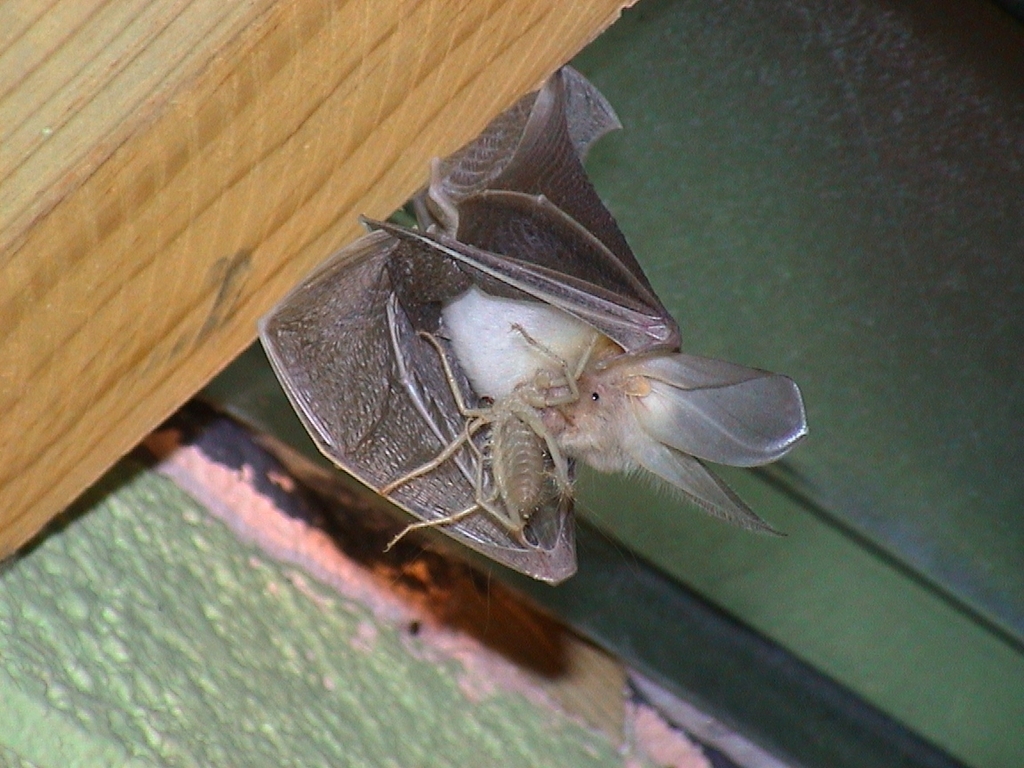
Egyptian Slit-faced Bat (Nycteris thebaica) lives in african savanna across Sub-Saharan Africa. It feeds on insects and spiders. Its conservation status is Least Concern.
Fascinating facts about the Egyptian Slit-faced Bat
- The Egyptian slit-faced bat is named for a deep facial groove that extends from the base of its ears to the nostrils, sitting between the nose leaves. This slit is a striking characteristic that sets it apart from other microbats. The species also has a lighter-coloured dorsal fur, ranging from dusky to reddish-brown, with a whitish underside, reinforcing its distinctive appearance.
- A single Egyptian slit-faced bat was captured on the island of Corfu in Greece, providing the first confirmed European record for the species. This isolated find pushes the known distribution of the bat beyond its usual African and Arabian range. The discovery highlights the animal's ability to appear far from its typical habitats, even on Mediterranean islands.
- Unlike most bat species, the Egyptian slit-faced bat does not enter hibernation or torpor and maintains a stable body temperature year-round. Researchers have found no evidence of heterothermy in this species, setting it apart from many temperate bats that lower their metabolism in winter. This constant temperature may make it vulnerable to predators that hunt during periods of inactivity.
- The larger slit-faced bat is known to prey on roosting Egyptian slit-faced bats, creating a direct intra-genus threat. This predation pressure is heightened because N. thebaica does not enter hibernation or torpor, leaving it active and exposed year-round. Researchers suggest that the lack of a dormant period makes the species especially vulnerable to such attacks. Consequently, individuals must remain alert even while resting in colonies.
- Its wingspan measures 283 mm and the low aspect ratio gives the bat a low wing loading that lets it hover and swipe prey from the ground or tree tops. This wing design provides exceptional manoeuvrability, allowing the bat to navigate tight, cluttered habitats that other species cannot enter. Because of this agility it can occupy caves and narrow holes inaccessible to most bats, expanding its foraging options.
Sources
Every fact above was checked against these pages, and kept only where one of them states it.
At a glance
RangeSub-Saharan Africa
HabitatAfrican savanna
DietInsects and spiders
About the Egyptian Slit-faced Bat
In the sweltering twilight of the African savannah, the Egyptian Slit-faced Bat emerges, its tattered wings beating with a slow, deliberate rhythm as it navigates the dense thorn scrub with eerie precision. With eyes aglow like lanterns in the dark, this enigmatic creature flits and weaves, its long, pointed ears twitching to the faintest whispers of insect life, as it embarks on a nocturnal hunt that has been perfected over millennia. As it dances through the shadows, its very presence seems to embody the mystical, unseen world that unfolds beneath the star-studded African night sky.
Hear the Egyptian Slit-faced Bat, and 4,400+ more
Real recorded sounds, 11 nature games and a free Daily 5, 1v1 quiz duels, conservation wins and a safe Kids mode. Free on Feravox.