Photo: iNaturalist
Feravox · The Voice of the Wild
Cuckoo Ray
Leucoraja naevus
Near Threatened
Cuckoo Ray (Leucoraja naevus) lives in sandy rocky cobble seabed across Northern Atlantic, Mediterranean. Its conservation status is Near Threatened.
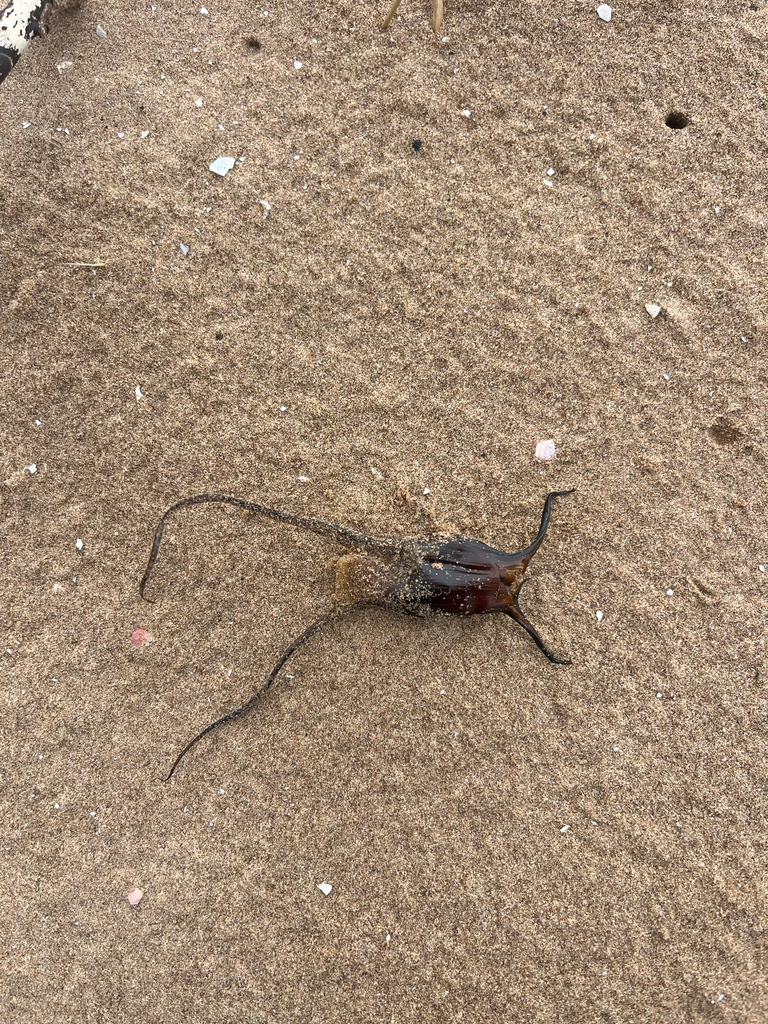
The cuckoo ray, Leucoraja naevus, is a sleek member of the Rajidae family, reaching a maximum total length of 81 cm (32 in). Its short, blunt-angled snout ends in a subtly pronounced tip, while the tail extends beyond the disc and tapers to a fine point. The dorsal surface shimmers in shades of light grey to brown, contrasted by a stark white ventral side edged with greyish margins along the disc and pelvic fin lobes. Distinctive circular ocelli with a blackish background punctuate its back, and a series of 9–13 orbital thorns, absent interdorsal thorns, add a rugged texture; males also bear alar and malar thorns. Inside, the upper and lower jaws are lined with 50–60 rows of tiny teeth, ready to snap up prey. In the cold waters of the Northern Atlantic, and occasionally the Mediterranean, the cuckoo skate inhabits sandy, rocky, and cobble seabeds from 10 m to 900 m depth, favouring the 50–200 m range. It is oviparous, with females laying up to 100 egg cases a year, each a compact 5–7 cm by 3–5 cm capsule. Juveniles feed on crustaceans and polychaetes, but as they mature, reaching sexual maturity at 7.4 years for females and 6.8 years for males, they shift to a diet of bony fishes, a surprising dietary pivot that underscores their adaptability in the deep-sea pantry.
Real recorded sounds, 11 nature games and a free Daily 5, 1v1 quiz duels, conservation wins and a safe Kids mode. Free on Feravox.