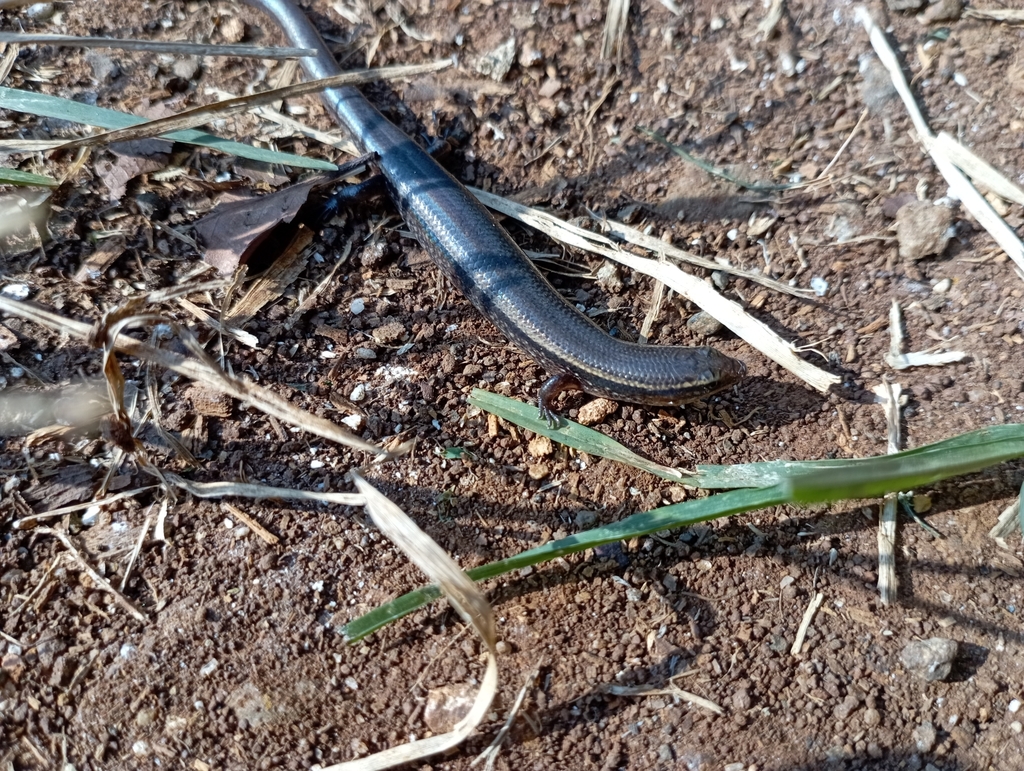
Christmas Island Grass-skink (Subdoluseps bowringii) lives in not specified across Southeast Asia. It feeds on not documented. Its conservation status is Least Concern.
Fascinating facts about the Christmas Island Grass-skink
- The species was first described in 1864 by Albert Günther, who named it Eumeces bowringii before it was shuffled through several genera and finally placed in Subdoluseps in a 2019 multilocus phylogeny.
- Its name honors the Bowring family – either John Charles Bowring, a Hong-Kong naturalist, or his father John Bowring, a British diplomat and governor of Hong Kong – linking the skink to 19th-century colonial history.
- Despite being called the Christmas Island grass-skink, it inhabits a vast stretch of Southeast Asia, from West Malaysia and Singapore to the Andaman Islands, the Philippines’ Sulu Archipelago, Borneo, Sumatra, Java, Sulawesi, Myanmar, Vietnam, Thailand, Laos, Cambodia, Bangladesh, and even the Cook Islands.
- The original type specimen came from Hong Kong, anchoring the species’ scientific identity to that bustling port city even as its modern range spans dozens of islands and mainland territories.
- Early literature like Boulenger’s 1887 catalogue listed the skink as Lygosoma bowringii, showing how taxonomists have re-examined its relationships for over a century, reflecting the evolving nature of reptile classification.
At a glance
RangeSoutheast Asia
Habitatnot specified
Dietnot documented
About the Christmas Island Grass-skink
The Christmas Island grass-skink, Subdoluseps bowringii, is a species of lizard native to Southeast Asia, with a range that includes West Malaysia, the Andaman Islands, the Cook Islands and Christmas Island.
Hear the Christmas Island Grass-skink, and 4,400+ more
Real recorded sounds, 11 nature games and a free Daily 5, 1v1 quiz duels, conservation wins and a safe Kids mode. Free on Feravox.
More reptiles to discover