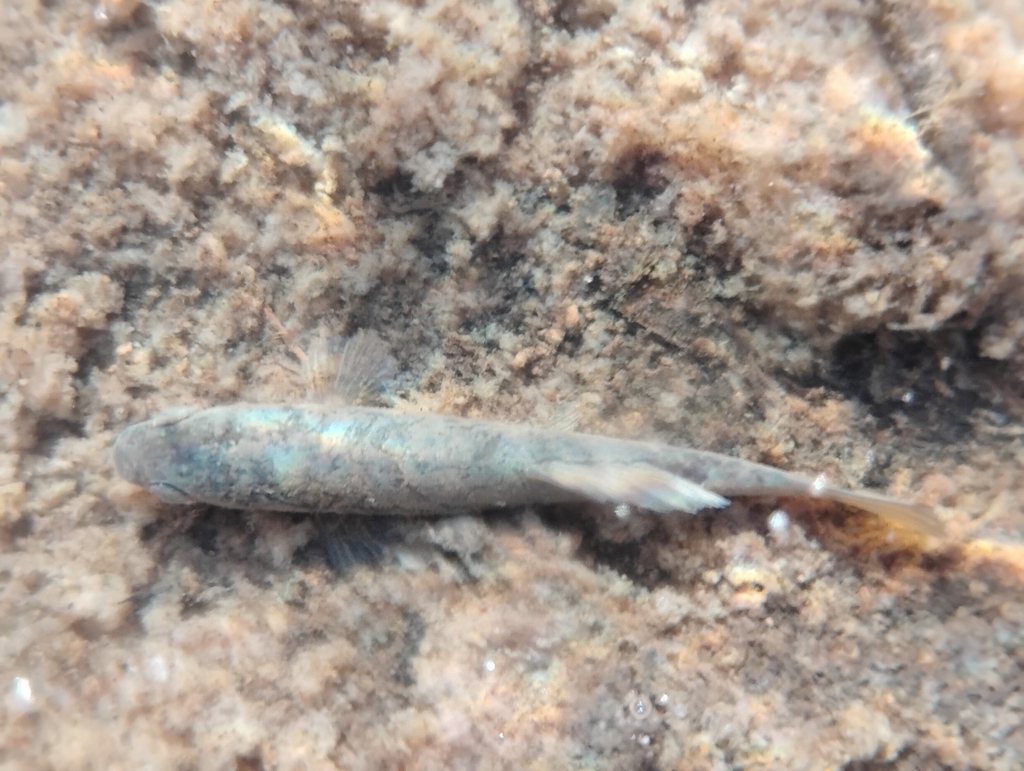
Photo: Bryce
Feravox · The Voice of the Wild
Central Mudminnow
Umbra limi
Least Concern
Central Mudminnow (Umbra limi) lives in slow-moving freshwater across central North America. It feeds on benthic macroinvertebrates. Its conservation status is Least Concern.
The central mudminnow (Umbra limi) is a diminutive, brown-tinged fish that slips through the slow-moving waters of central North America, measuring just 51–102 mm in length. Its mottled sides and pale belly blend seamlessly with the silty substrates of ponds, lakes, and streams, where it burrows tail-first into mud to escape predators. A master of low-oxygen habitats, this esociform marvel possesses a modified gas bladder that lets it gulp trapped air beneath ice, enabling it to stay active even when winter temperatures dip to 1.1 °C. Its diet is a benthic banquet: amphipods, coleopterans, anisopterans, chironoids, and gastropods dominate its stomachs, while zooplankton make up a mere fraction, just 0.7% of 511 items in one study, highlighting its preference for the muck-laden bottom. Beyond its hardy physiology, the mudminnow displays surprising social behavior. Though often solitary, it forms shoals with conspecifics, a strategy that reduces predation risk from grass pickerel, sunfishes, northern pike, catfishes, birds, foxes, and snakes. Spawning in mid-April at about 13 °C, a single female can lay up to 2,500 eggs, with the eggs hatching in six days before the larvae begin their brief, three-year average lifespan. This combination of physiological resilience, benthic foraging, and seasonal breeding makes the central mudminnow a subtle yet tenacious thread in the tapestry of North American freshwater ecosystems
Real recorded sounds, 11 nature games and a free Daily 5, 1v1 quiz duels, conservation wins and a safe Kids mode. Free on Feravox.