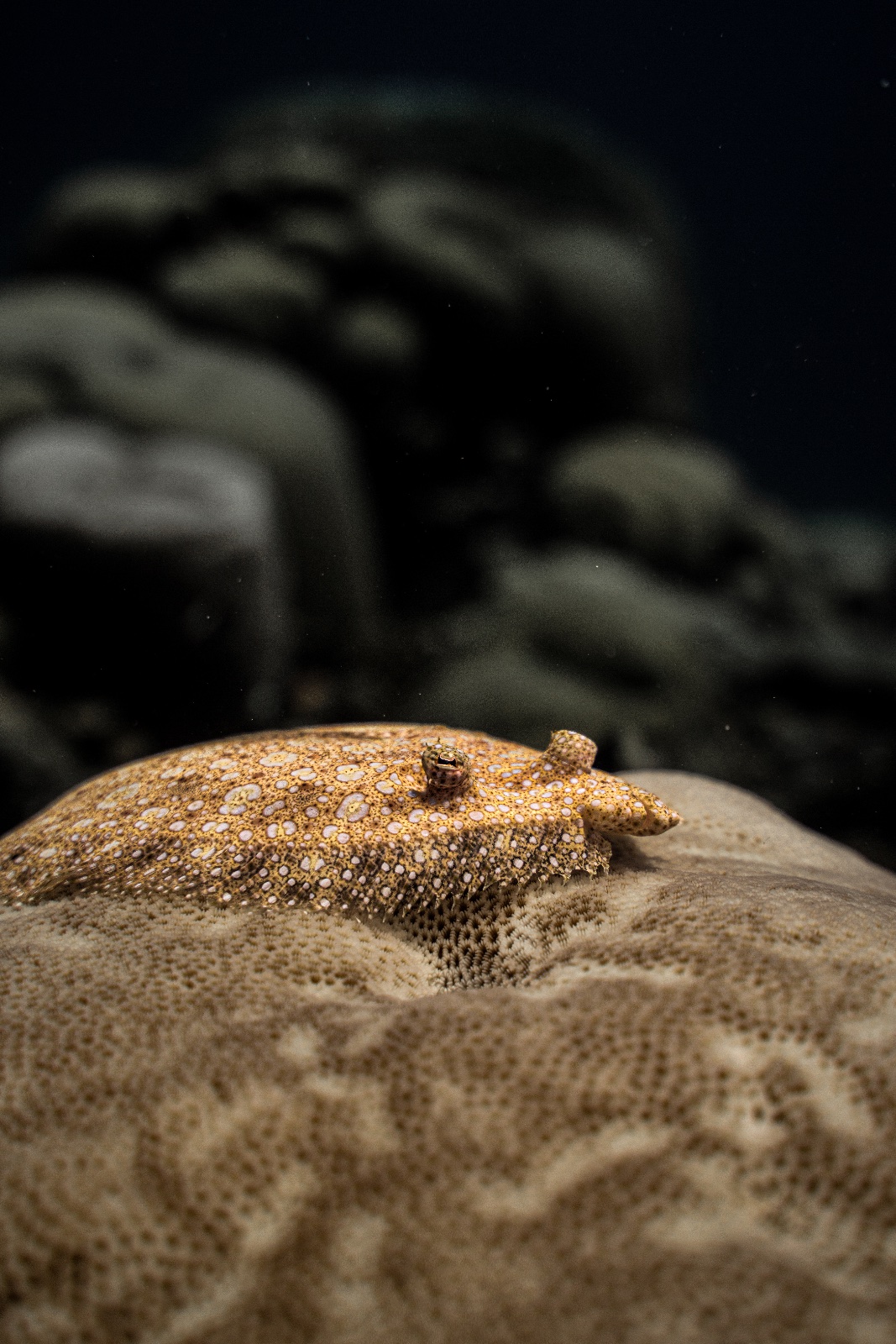
A two‑second color shift lets a flat fish disappear on a sandy patch like a living paint chip. Bothus sp. expands tiny pigment cells called chromatophores to copy the exact grain pattern of the sea floor, and it can reverse the change in under five seconds. This instant camouflage means a hungry shrimp never sees the predator coming, showing how evolution can turn skin into a living cloak for a perfect ambush tool.
When the larvae hatch, their eyes stare forward like any other fish. Over the next six weeks the right eye crawls across the skull and settles on the left side, so the adult rests on its blind side. This eye migration rewires the brain for a life spent flat on the bottom, proving that even a fish can rewrite its own map.
A sudden flick of its tail can catapult a Bothus up to half a meter off the sand in a flash of 0.2 seconds. The burst reaches speeds of about 0.3 meters per second, just fast enough to surprise a nearby predator or snag a fleeing crab. That quick jump turns a quiet floor‑dweller into a surprise attacker.
During the dusk feeding rush a single Bothus can gulp as much as 20 percent of its own weight in shrimp, tiny fish, and crustaceans. Its mouth opens like a vacuum, creating suction that pulls prey from a radius of 10 cm. This feeding power lets the fish keep growing while staying hidden.
A 2022 reef survey showed that the number of Bothus sightings in the Caribbean fell from 120 per 100 km² in 1995 to just 70 per 100 km² today – a 40 percent drop. The loss matches the shrinking of sandy patches caused by coastal construction and tourism. It warns that even well‑camouflaged species can disappear when their hideouts vanish.
At a glance
RangeIndo-Pacific tropics
HabitatSandy/muddy coastal bottoms
DietSmall fish and crustaceans
Hear the Bothus sp. — and 4,000+ more
Real sounds, daily wild facts, games and good news from nature. Free on Feravox.