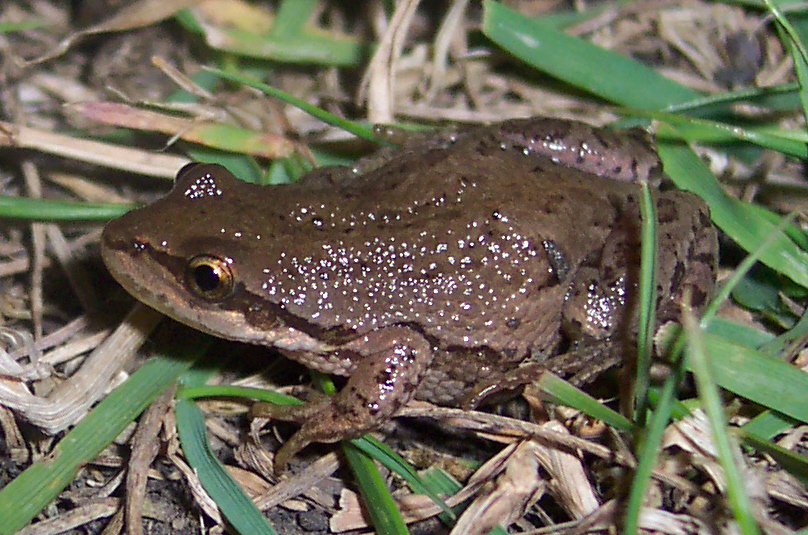
Boreal Chorus Frog (Pseudacris maculata) lives in wet grasslands across North America. It feeds on insects and crustaceans. Its conservation status is Least Concern.
Fascinating facts about the Boreal Chorus Frog
- Only about the size of a paperclip, the boreal chorus frog tops out at roughly 30 mm long, yet it can sprint across the tundra in spring while snow still clings to the ground. Males launch a distinctive "reeeek static" group of the trilling frog clade, meaning their calls lack the pitch-shifting seen in relatives. This early-season chorus anchoring their life cycle to the melt-water pulse that fills their habitats.
- When a new salamander predator invades a pond, boreal chorus frog tadpines can learn to avoid it by watching experienced peers, a process scientists call cultural learning. Experiments showed that naïve tadpoles copied the avoidance behavior of those that had experience with the predator. This social transmission gives the frogs a rare, behavior-based tool to cope with invasive threats.
- The deadly fungus Batrachochytrium dendrobatidis (Bd) can wipe out up to 80 % of infected boreal chorus frogs, yet some populations persist despite the pathogen's ability to linger in water and even hitch rides on bird feathers. Because Bd can survive without amphibian hosts, ponds that also house Bd-carrying tiger salamanders become reservoirs.
- Climate change is drying out the shallow ponds that boreal chorus frogs depend on, lowering water levels and exposing eggs to hotter temperatures and stronger UV radiation. As water recedes, the frogs' breeding sites become shallower, making embryos more vulnerable to temperature spikes and sunburn, hatch rates already hovering between 37 % and 87 %. This double stress, less water and more UV, tightens the squeeze on a species already juggling wide survival ranges.
- A single female can dump anywhere from 500 to 1,500 eggs into a shallow pond, but only 37 % to 87 % of those embryos ever hatch, and of the tadpoles that emerge, just 10 % to 100 % survive to become frogs.
Sources
Every fact above was checked against these pages, and kept only where one of them states it.
At a glance
RangeNorth America
HabitatWet grasslands
DietInsects and crustaceans
About the Boreal Chorus Frog
In the ephemeral wetlands of North America, the boreal chorus frog emerges as a diminutive yet resilient sentinel, its melodic serenade echoing through the landscape as it navigates the precarious balance between aquatic and terrestrial realms. With an uncanny ability to thrive in a world of fluctuating temperatures and humidity, this tiny amphibian weaves a remarkable tale of adaptability, its life cycle a testament to the enduring power of nature's rhythms. As the frog's haunting chorus rises and falls with the seasons, it reminds us of the beauty and fragility that exists at the edge of our perception, waiting to be discovered in the hidden corners of the natural world.
Hear the Boreal Chorus Frog, and 4,400+ more
Real recorded sounds, 11 nature games and a free Daily 5, 1v1 quiz duels, conservation wins and a safe Kids mode. Free on Feravox.
More amphibians to discover