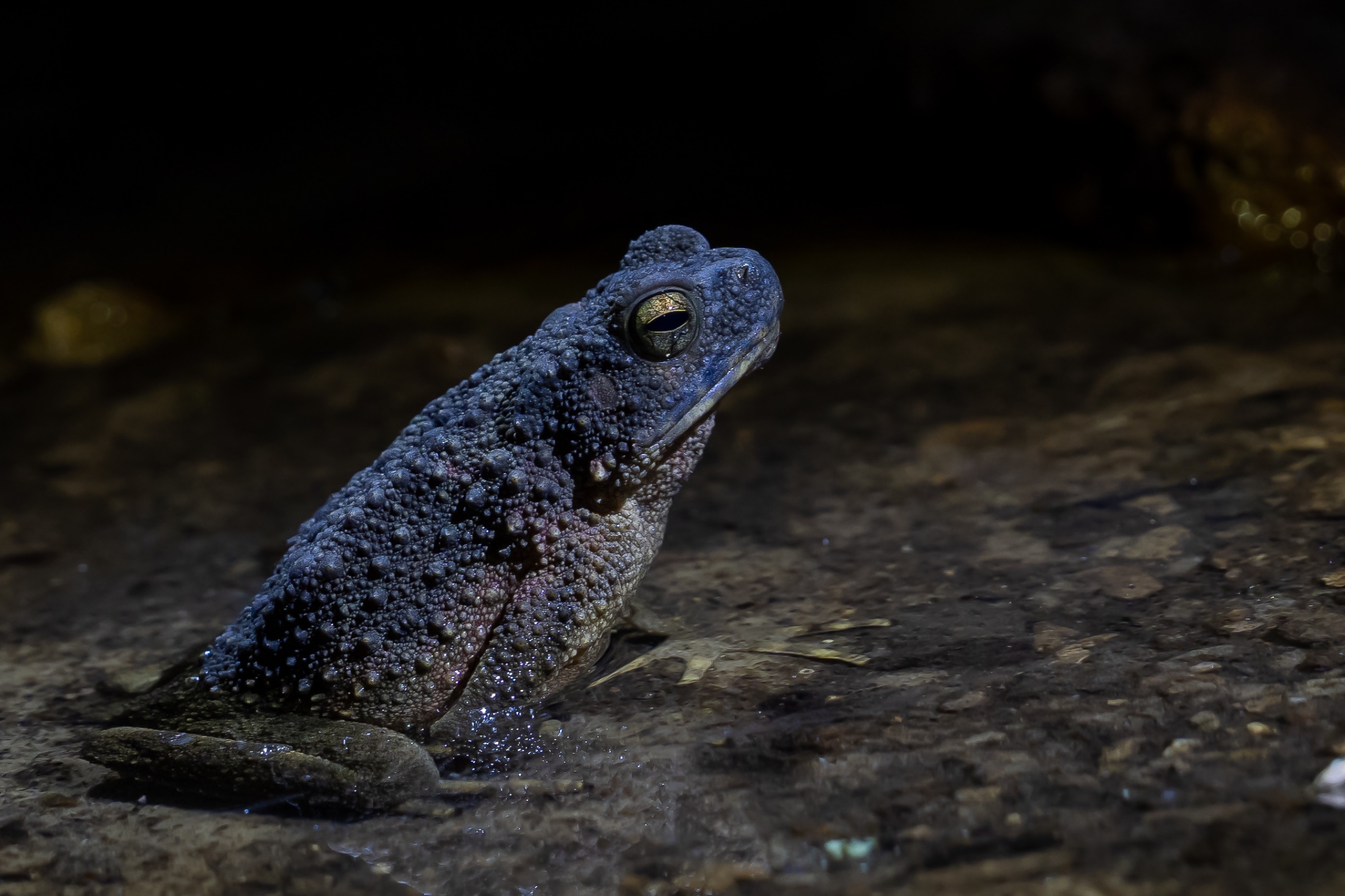
Photo: Deniz Dalkılıç
Feravox · The Voice of the Wild
Blue Toad
Duttaphrynus melanostictus
Least Concern
The Black-spined Toad — known to naturalists as Duttaphrynus melanostictus and to almost everyone else simply as the Asian Common Toad — is the most widespread toad in South and Southeast Asia, found from Pakistan and India through the entire mainland and archipelagos as far as the Philippines and the Lesser Sunda Islands. In Sumatra, it inhabits stream edges, forest clearings, and the mossy wet rocks of the island's interior highlands, where individuals can develop the deep indigo-blue coloration that makes photographs of them so arresting. The toad is heavily built, warty, and equipped with prominent parotoid glands behind the eyes that produce powerful bufadienolide toxins — a chemical defence refined over 50 million years of amphibian evolution. Despite its modest size and unassuming habits, this species has managed something extraordinary: it thrives in the Anthropocene. Where deforestation, urbanisation, and agricultural intensification have eliminated hundreds of amphibian species across Asia, the Black-spined Toad expands into every disturbed edge habitat and colonises urban greenspace with ease. It is, in its own quiet way, one of the continent's most resilient animals.
Real sounds, daily wild facts, games and good news from nature. Free on Feravox.