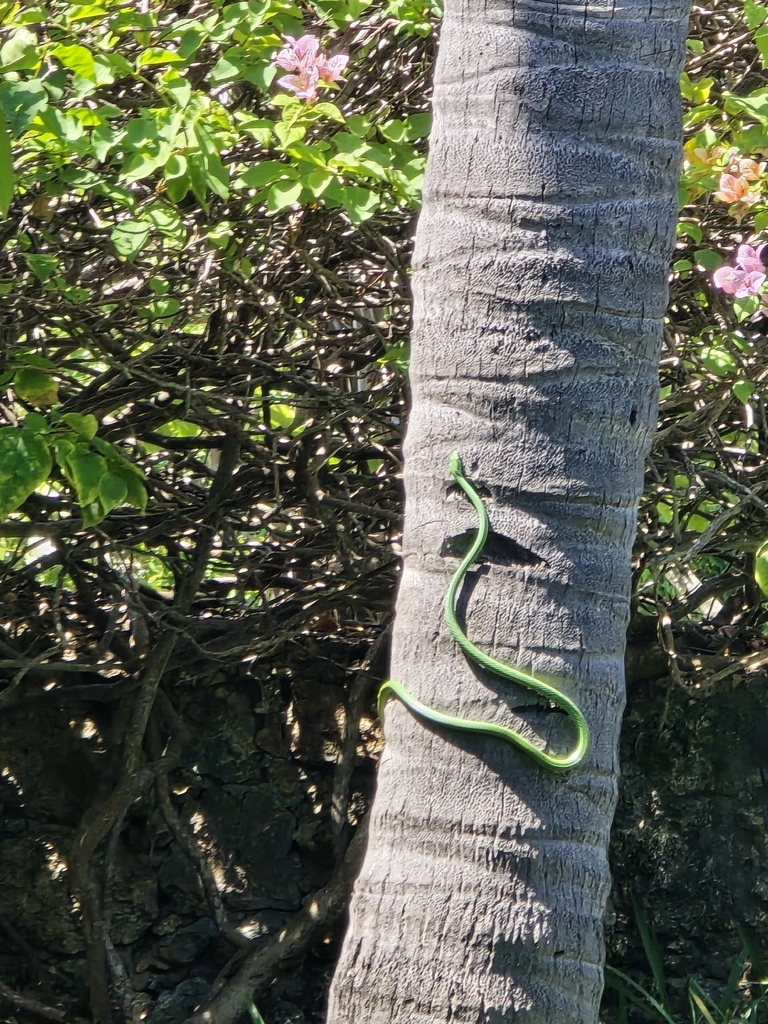
Photo: Robert Hoehndorf
Feravox · The Voice of the Wild
Battersby's Green Snake
Philothamnus battersbyi
Least Concern
Battersby's Green Snake (Philothamnus battersbyi) lives in forest, savanna, wetlands across East Africa. It feeds on amphibians (frogs, toads). Its conservation status is Least Concern.
Battersby's green snake, Philothamnus battersbyi, glides through the verdant canopies of northeastern Africa with a sleek, emerald-tinged body that belies its modest size. The holotype, an adult female, measured 76.2 cm from snout to vent with a 28.3 cm tail, a proportion that gives the species a balanced, agile silhouette ideal for arboreal life. Its diurnal habits mean it basks in the early sun, eyes scanning the foliage for the soft, slippery silhouettes of amphibians, frogs, toads, and even elusive caecilians, that constitute its primary diet. This snake’s preferred haunts span a mosaic of habitats: from lowland forests and savannas to grasslands and freshwater wetlands, stretching from sea level up to 2,600 m. Remarkably, it also tolerates human-altered environments, having been recorded in polluted streams coursing through major cities, a testament to its adaptability. Reproduction in P. battersbyi is a communal affair; females lay clutches of three to eleven eggs, and on rare occasions, up to forty females have been observed sharing a single nest, depositing over a hundred eggs together. This social nesting behavior hints at a complex reproductive strategy that may enhance hatchling survival in the variable African landscapes it inhabits, a surprising trait that invites further study as researchers watch these emerald ribbons of life coil through the trees, ever-watchful for the next amphibian splash that signals a meal,
Real recorded sounds, 11 nature games and a free Daily 5, 1v1 quiz duels, conservation wins and a safe Kids mode. Free on Feravox.