Photo: iNaturalist
Feravox · The Voice of the Wild
Barking Treefrog
Dryophytes gratiosus
Least Concern
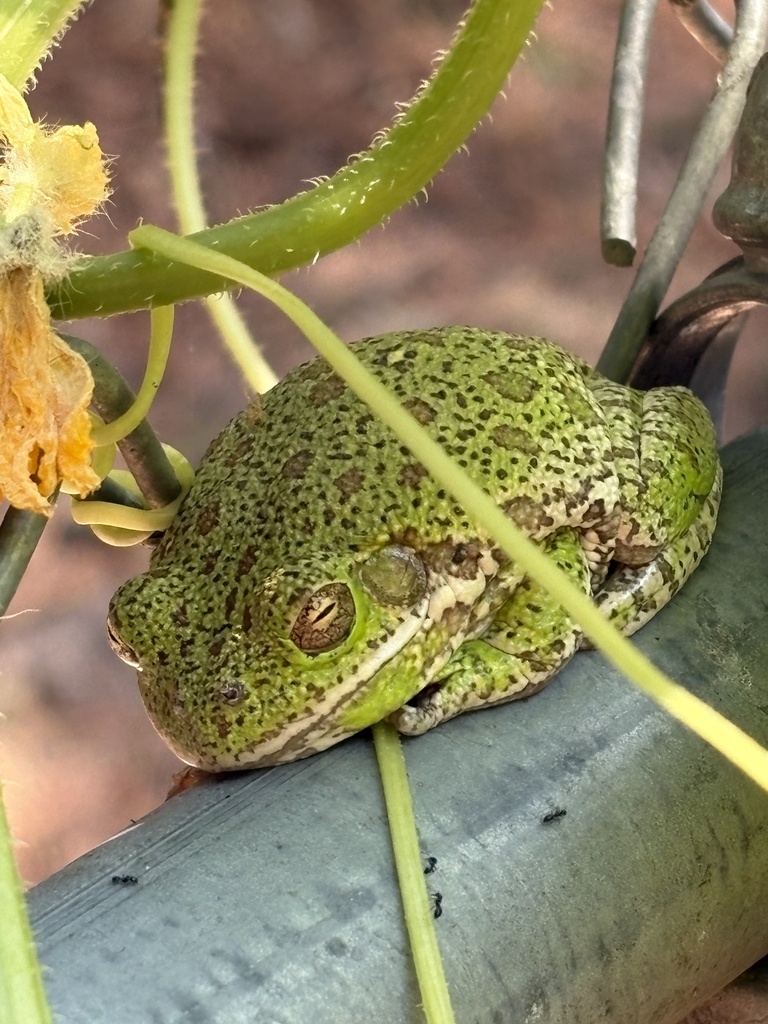
Barking Treefrog (Dryophytes gratiosus) lives in forested wetlands across Southeastern United States. It feeds on diet not specified. Its conservation status is Least Concern.
The barking treefrog, Dryophytes gratiosus, is the largest native tree frog in the United States, measuring 5 to 7 cm from snout to vent. Its skin is a unique thick, leathery texture that shifts hue with light, temperature, and surroundings, flashing from bright or dull greens to browns, yellows, or grays, each speckled with tiny grey-green spots. Dark, round dorsal markings and prominent, round toe pads make it unmistakable, while the male’s expansive vocal sac inflates each night as he emits the species’ signature bark, an explosive “tonk” or “doonk” that rings like a church bell across shallow wetlands. By day the frogs perch high in trees or bushes, retreating to sand burrows when the sun scorches, and they spend evenings descending to semi-permanent pools where breeding choruses echo through the canopy.
Real recorded sounds, 11 nature games and a free Daily 5, 1v1 quiz duels, conservation wins and a safe Kids mode. Free on Feravox.