Feravox · The Voice of the Wild
Ring-Necked Pheasant: a two-minute wildlife lesson
Its scientific name means pheasant from Colchis, an old name for western Georgia. The ancient Greeks called it the bird of the river Phasis.
Birds That Walk · day 6 of 7
Five facts
- Its scientific name means pheasant from Colchis, an old name for western Georgia. The ancient Greeks called it the bird of the river Phasis.
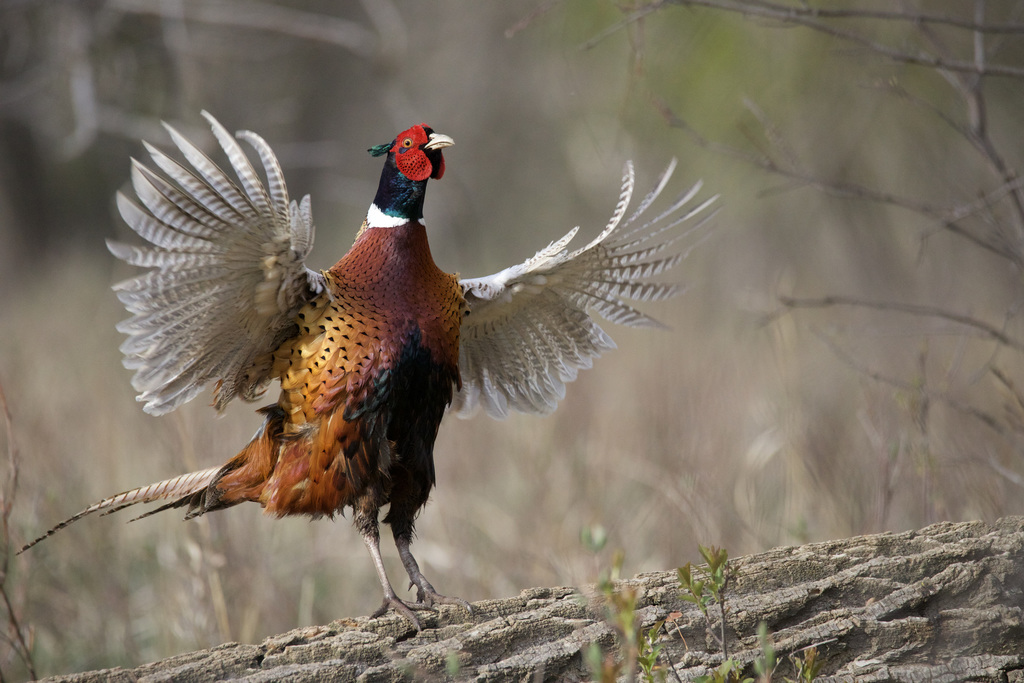
- It would rather run than fly. But if startled, it bursts into the air with whirring wings, and when chased it can fly at up to 90 km/h.
- Chicks leave the nest when just a few hours old. They can fly after 12 to 14 days and look like adults by 15 weeks.
- A male has a bottle-green head, a bright red wattle and two little ear tufts that make him look extra alert.
- Hens often lay eggs in other birds' nests. Chicks raised by another species may copy their foster parent and act unlike a pheasant.
The quiz
1. What does the pheasant's scientific name colchicus refer to?
- A Roman emperor
- Colchis, in today's Georgia (correct)
- A type of corn
- The colour gold
Colchicus means from Colchis, in the west of modern Georgia.
2. How fast can a pheasant fly when it is chased?
- Up to 90 km/h (correct)
- No more than 10 km/h
- Over 300 km/h
- It cannot fly at all
When chased, pheasants can reach 90 km/h in flight.
3. When do pheasant chicks leave the nest?
- After one year
- After six months
- When only a few hours old (correct)
- Only once they can fly
Chicks leave the nest at just a few hours old.
4. What makes a male pheasant look extra alert?
- A white tail
- Big yellow eyes
- A tall blue crest
- Two ear tufts (correct)
Two ear tufts behind the face make him look alert.
5. What can happen to pheasant chicks raised in another bird's nest?
- They lose their feathers
- They copy their foster parent (correct)
- They never learn to walk
- They turn bright blue
They often imprint on their caretaker and act unlike pheasants.
More about the Ring-Necked Pheasant
Same week
Today’s lesson is waiting
Two minutes a day, a new wild animal. Free on iPhone, Android and the web.
Hear them, don't just read about them
Feravox is a free wildlife app: 4,400+ species with real recorded sounds, 11 nature games and a free Daily 5, 1v1 quiz duels, conservation wins, and a safe Kids mode.
Nature documentaries
Blue Planet III2026 · BBC OnePlanet Earth III2023 · BBC OneBlue Planet II2017 · BBC OnePlanet Earth II2016 · BBC OneFrozen Planet II2022 · BBC OneSeven Worlds, One Planet2019 · BBC OneMammals2024 · BBC OneSecret Garden2026 · BBC OneWild Isles2023 · BBC OneOur Planet2019 · NetflixOur Planet II2023 · NetflixThe Blue Planet2001 · BBC One