Feravox · The Voice of the Wild
Red Knot: a two-minute wildlife lesson
Some red knots fly more than 14,000 km each year, from the Arctic to the tip of South America, then all the way back.
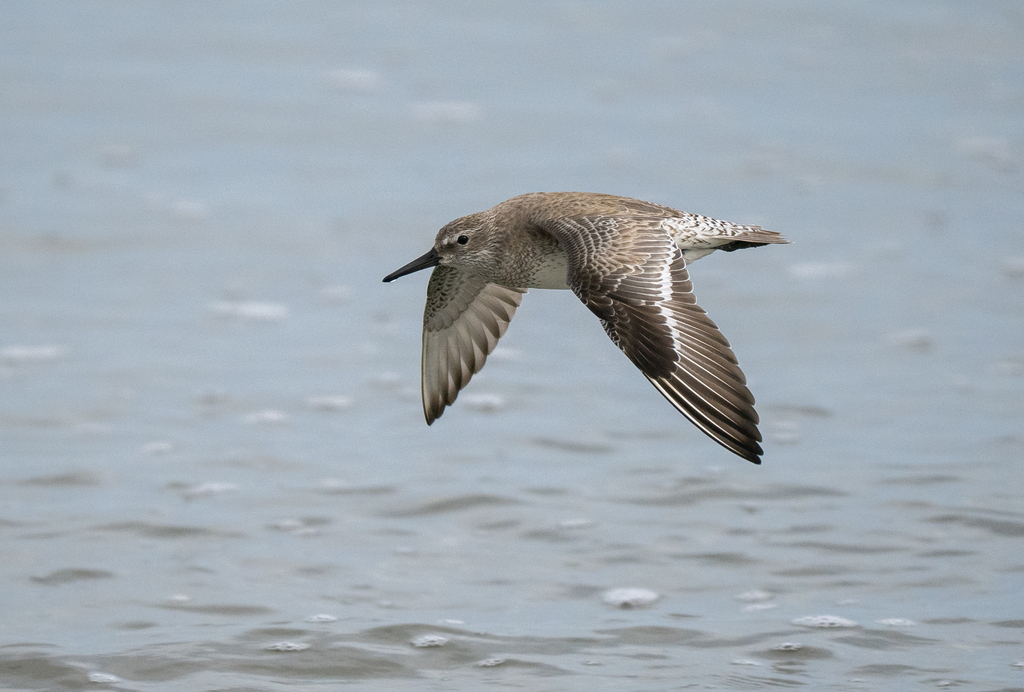
Shorebirds · day 3 of 7
Five facts
- Some red knots fly more than 14,000 km each year, from the Arctic to the tip of South America, then all the way back.
- Its bill can feel tiny changes in water pressure, so it finds clams hidden under wet sand without seeing them.
- Its muscular stomach thickens for hard shellfish in winter and shrinks for soft Arctic food. The switch can take just six days.
- On their spring stopovers, knots eat almost nonstop and can double their body weight in about 10 to 14 days.
- One knot, tagged B95 and nicknamed Moonbird, was still flying when last seen in 2014, at 20 years old or more.
The quiz
1. How far do some red knots fly each year, one way?
- About 500 km
- About 2,000 km
- More than 14,000 km (correct)
- About 5,000 km
Some travel more than 14,000 km from the Arctic to South America.
2. How does a red knot find clams buried in wet sand?
- It senses changes in water pressure with its bill (correct)
- It listens for them tapping
- It smells them from the air
- It waits for them to surface
Sensors in its bill pick up changes in water pressure.
3. How fast can a red knot's gizzard change size?
- In 2 years
- In as little as six days (correct)
- It never changes
- In about 6 months
The changes can happen in as little as six days.
4. What can a red knot do during a spring stopover of 10 to 14 days?
- Grow new flight feathers
- Raise a family
- Lose half its weight
- Double its body weight (correct)
Eating almost nonstop, it can double its weight in about 10 to 14 days.
5. What was the nickname of the red knot tagged B95?
- Starbird
- Moonbird (correct)
- Sunwing
- Captain Knot
B95 was nicknamed Moonbird and was at least 20 years old.
Same week
Today’s lesson is waiting
Two minutes a day, a new wild animal. Free on iPhone, Android and the web.
Hear them, don't just read about them
Feravox is a free wildlife app: 4,400+ species with real recorded sounds, 11 nature games and a free Daily 5, 1v1 quiz duels, conservation wins, and a safe Kids mode.
Nature documentaries
Blue Planet III2026 · BBC OnePlanet Earth III2023 · BBC OneBlue Planet II2017 · BBC OnePlanet Earth II2016 · BBC OneFrozen Planet II2022 · BBC OneSeven Worlds, One Planet2019 · BBC OneMammals2024 · BBC OneSecret Garden2026 · BBC OneWild Isles2023 · BBC OneOur Planet2019 · NetflixOur Planet II2023 · NetflixThe Blue Planet2001 · BBC One