Feravox · The Voice of the Wild
Northern Bald Ibis: a two-minute wildlife lesson
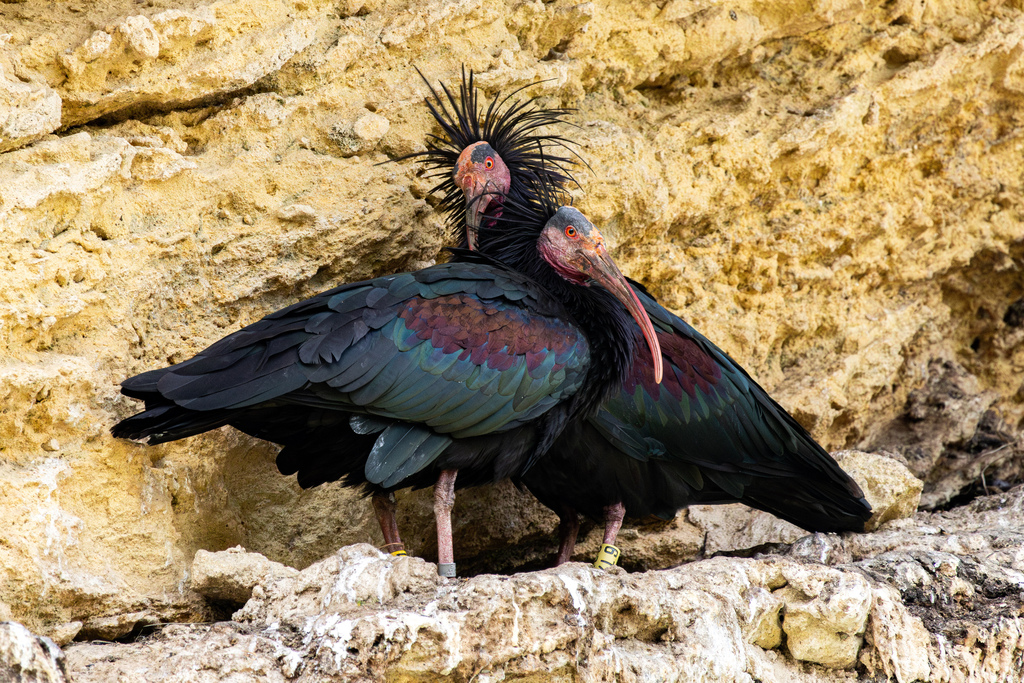
Its scientific name, Geronticus, comes from the Greek word for old man, a nod to its bald, wrinkly-looking head.
Storks and Ibises · day 1 of 7
Five facts
- Its scientific name, Geronticus, comes from the Greek word for old man, a nod to its bald, wrinkly-looking head.
- In one Turkish colony, people believed this ibis guided pilgrims to Mecca. So it was protected, and a yearly festival marked its return.
- In 1504, an archbishop of Salzburg made it one of the first officially protected species in the world. Sadly, it still vanished from Austria.
- To learn a migration route, young ibises in Europe follow human foster-mothers flying ultralight planes over the Alps to winter in Tuscany.
- Pairs stay together for life. The male picks a cliff ledge, tidies it, then waves his crest and gives low rumbling calls to win a female.
The quiz
1. What does its scientific name Geronticus refer to?
- Its red legs
- Its cliff nests
- An old man's bald head (correct)
- Its glossy black feathers
Geronticus comes from the Greek for old man, for its bald head.
2. Why was the ibis protected in one Turkish colony?
- People believed it guided pilgrims to Mecca (correct)
- It was the king's favourite bird
- It kept snakes away from houses
- Its feathers were used in weddings
It was believed to guide Hajj pilgrims to Mecca each year.
3. In which year did a Salzburg decree protect the ibis?
- 1855
- 1704
- 1950
- 1504 (correct)
The 1504 decree made it one of the earliest protected species.
4. How do young ibises in Europe learn to cross the Alps?
- By following trains
- By following ultralight planes (correct)
- By following boats
- By riding in cars all the way
They follow human foster-mothers seated in ultralight aircraft.
5. What does the male do to attract a female?
- He builds a nest in a tree
- He brings her a fish
- He waves his crest and gives low rumbling calls (correct)
- He dances in shallow water
After cleaning a nest site, he waves his crest and rumbles.
Same week
Today’s lesson is waiting
Two minutes a day, a new wild animal. Free on iPhone, Android and the web.
Hear them, don't just read about them
Feravox is a free wildlife app: 4,400+ species with real recorded sounds, 11 nature games and a free Daily 5, 1v1 quiz duels, conservation wins, and a safe Kids mode.
Nature documentaries
Blue Planet III2026 · BBC OnePlanet Earth III2023 · BBC OneBlue Planet II2017 · BBC OnePlanet Earth II2016 · BBC OneFrozen Planet II2022 · BBC OneSeven Worlds, One Planet2019 · BBC OneMammals2024 · BBC OneSecret Garden2026 · BBC OneWild Isles2023 · BBC OneOur Planet2019 · NetflixOur Planet II2023 · NetflixThe Blue Planet2001 · BBC One