Moor Macaque: a two-minute wildlife lesson
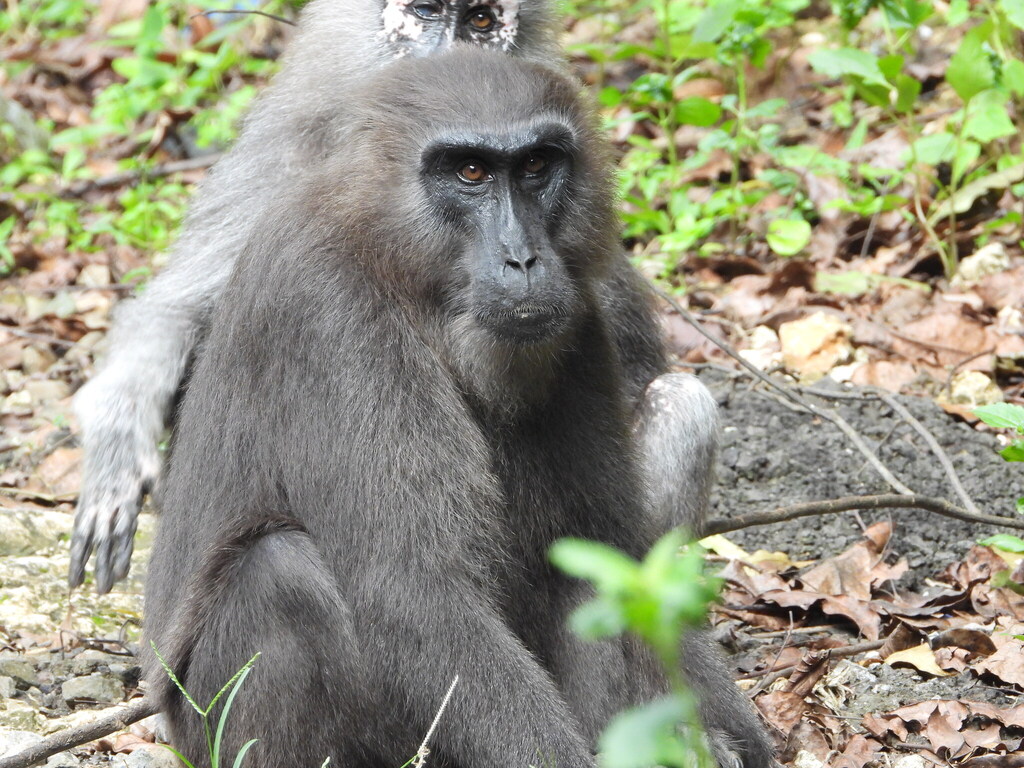
Found only on the Indonesian island of Sulawesi, it is nicknamed the dog-ape for its dog-like muzzle. It is a monkey, not an ape.
Monkeys of Africa and Asia · day 6 of 7
Five facts
- Found only on the Indonesian island of Sulawesi, it is nicknamed the dog-ape for its dog-like muzzle. It is a monkey, not an ape.
- Malkoha birds often tag along with the troop. As the monkeys move through the trees, grasshoppers jump out, and the birds snap them up.
- In most macaques, quietly baring the teeth means giving in. In moor macaques, it is thought to be a friendly sign of peace.
- These monkeys love to play. They spend more of their time playing, alone or together, than grooming one another.
- As fruit eaters, they help lots of young trees take root. This helps damaged forests grow back.
The quiz
1. Why is the moor macaque sometimes called the dog-ape?
- It barks to guard its troop
- It lives alongside village dogs
- It has a dog-like muzzle (correct)
- It walks only on all fours
The nickname comes from its muzzle, which looks like a dog's.
2. Why do Malkoha birds stay close to moor macaques?
- To catch grasshoppers the monkeys disturb (correct)
- To eat the monkeys' leftover fruit
- To pick ticks off their fur
- To sleep in their nests
The macaques' movements push grasshoppers out of the trees for the birds.
3. What does a quiet bared-teeth display mean in moor macaques?
- I give in to you
- I am hungry
- I am about to attack
- I come in peace (correct)
Unlike in most macaques, it signals peaceful intentions rather than submission.
4. What do moor macaques spend more time doing than grooming?
- Building nests
- Playing (correct)
- Swimming
- Digging burrows
They spend more time in solo and group play than in grooming.
5. How do moor macaques help their forests?
- They water young plants
- They clear away dead branches
- Their fruit eating helps young trees grow (correct)
- They chase off woodcutters
As fruit eaters, they support many seedlings, helping damaged forests recover.
Same week
Today’s lesson is waiting
Two minutes a day, a new wild animal. Free on iPhone, Android and the web.
Hear them, don't just read about them
Feravox is a free wildlife app: 4,400+ species with real recorded sounds, 11 nature games and a free Daily 5, 1v1 quiz duels, conservation wins, and a safe Kids mode.