Feravox · The Voice of the Wild
Great Spotted Woodpecker: a two-minute wildlife lesson
Its drumming is faster than any other woodpecker in its range: around 10-16 strikes per second, in one-second bursts.
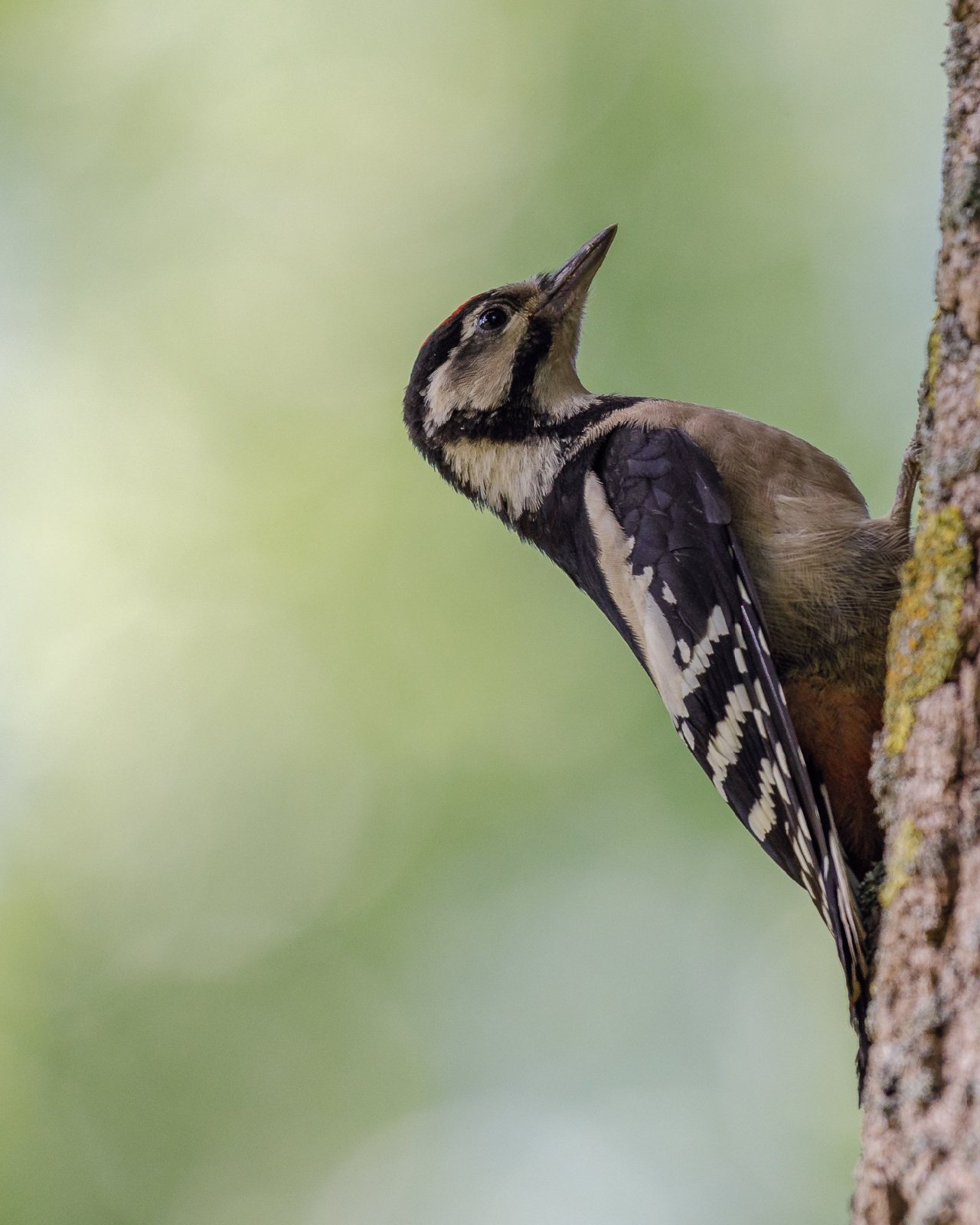
Clever Birds · day 5 of 7
Five facts
- Its drumming is faster than any other woodpecker in its range: around 10-16 strikes per second, in one-second bursts.
- Until the early 1900s, people thought drumming might be a call made with the voice. Only in 1943 was it proved to be purely mechanical.
- Wiped out in Ireland in the seventeenth century, the great spotted woodpecker recolonised it naturally. First nest: County Down, 2007.
- Young woodpeckers often wander 100-600 km from home, sometimes up to 3,000 km. Vagrants have reached Iceland and Hong Kong.
- Hammering wood is tough on the head. The long outer layer of the upper bill soaks up much of the jolt, and slim nostrils keep wood chips out.
The quiz
1. How many strikes per second does its drumming reach?
- 1-2
- 10-16 (correct)
- 30-40
- 100
Its drumming reaches around 10-16 strikes per second.
2. In which year was drumming proved to be purely mechanical?
- 1843
- 1923
- 1943 (correct)
- 1963
It was proved purely mechanical in 1943.
3. Where in Ireland was the first nest found after the woodpecker's return?
- County Down (correct)
- County Cork
- County Kerry
- County Galway
The first nest was found in County Down in 2007.
4. How far do young woodpeckers sometimes wander?
- Up to 3 km
- Up to 30 km
- Up to 30,000 km
- Up to 3,000 km (correct)
Young woodpeckers sometimes wander up to 3,000 km.
5. What keeps wood chips out of a woodpecker's nose while it hammers?
- A third eyelid
- Narrow nostrils (correct)
- Thick eyebrows
- A bony visor
Its slim nostrils keep flying wood chips out.
More about the Great Spotted Woodpecker
Same week
Today’s lesson is waiting
Two minutes a day, a new wild animal. Free on iPhone, Android and the web.
Hear them, don't just read about them
Feravox is a free wildlife app: 4,400+ species with real recorded sounds, 11 nature games and a free Daily 5, 1v1 quiz duels, conservation wins, and a safe Kids mode.
Nature documentaries
Blue Planet III2026 · BBC OnePlanet Earth III2023 · BBC OneBlue Planet II2017 · BBC OnePlanet Earth II2016 · BBC OneFrozen Planet II2022 · BBC OneSeven Worlds, One Planet2019 · BBC OneMammals2024 · BBC OneSecret Garden2026 · BBC OneWild Isles2023 · BBC OneOur Planet2019 · NetflixOur Planet II2023 · NetflixThe Blue Planet2001 · BBC One