Feravox · The Voice of the Wild
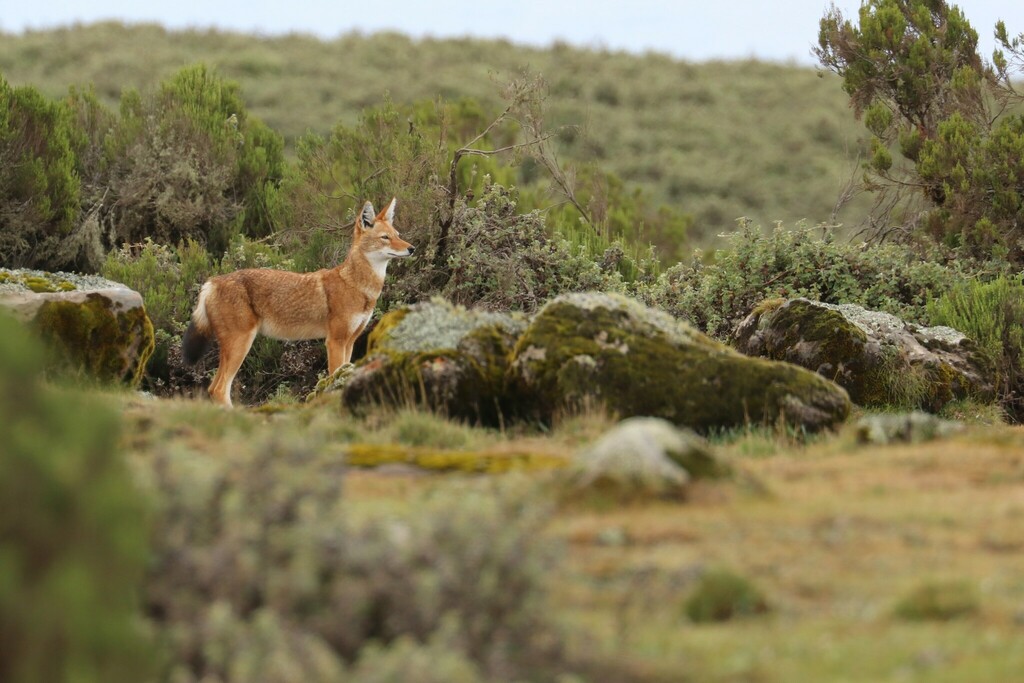
Ethiopian Wolf: a two-minute wildlife lesson
An Ethiopian wolf may hunt rats right in the middle of a troop of gelada monkeys. The monkeys mostly ignore it, and it catches more rodents there.
Wild Hunters · day 3 of 7
Five facts
- An Ethiopian wolf may hunt rats right in the middle of a troop of gelada monkeys. The monkeys mostly ignore it, and it catches more rodents there.
- This wolf laps nectar from red-hot poker flowers. Researchers say it is the only large carnivore known to do so, and it may help pollinate them.
- In the Bale Mountains, wolves walk among herds of cattle. Hidden by the cows, they can surprise rodents near their holes.
- Ethiopian wolves never sleep in dens. The pack rests together out in the open at night, and dens are only for nursing pups.
- The whole pack protects and feeds the pups. Sometimes another female even helps the mother by nursing them.
The quiz
1. Which monkeys does the Ethiopian wolf sometimes hunt among?
- Mandrills
- Geladas (correct)
- Chimpanzees
- Gorillas
Lone wolves hunt rodents inside gelada troops, and catch more of them there.
2. What unusual food does the Ethiopian wolf take from flowers?
- Petals
- Seeds
- Nectar (correct)
- Roots
It drinks nectar from Kniphofia flowers, rare for a large carnivore.
3. In the Bale Mountains, what do wolves use to hide while hunting rodents?
- Herds of cattle (correct)
- Thick forest
- Snowdrifts
- Rivers
They forage among cattle, which hide them from rodents.
4. Where do Ethiopian wolves sleep at night?
- Deep in a den
- Up in trees
- Inside caves near water
- Together out in the open (correct)
They rest together in the open and use dens only for nursing pups.
5. Who helps take care of Ethiopian wolf pups?
- Only the mother
- Every member of the pack (correct)
- Only the father
- Nobody, they look after themselves
All pack members protect and feed the pups.
Same week
Today’s lesson is waiting
Two minutes a day, a new wild animal. Free on iPhone, Android and the web.
Hear them, don't just read about them
Feravox is a free wildlife app: 4,400+ species with real recorded sounds, 11 nature games and a free Daily 5, 1v1 quiz duels, conservation wins, and a safe Kids mode.
Nature documentaries
Blue Planet III2026 · BBC OnePlanet Earth III2023 · BBC OneBlue Planet II2017 · BBC OnePlanet Earth II2016 · BBC OneFrozen Planet II2022 · BBC OneSeven Worlds, One Planet2019 · BBC OneMammals2024 · BBC OneSecret Garden2026 · BBC OneWild Isles2023 · BBC OneOur Planet2019 · NetflixOur Planet II2023 · NetflixThe Blue Planet2001 · BBC One