Feravox · The Voice of the Wild
Common Blackbird: a two-minute wildlife lesson
In winter, blackbirds sing softly to themselves. September and October are the only months when their song goes quiet.
Birds of Europe · day 4 of 7
Five facts
- In winter, blackbirds sing softly to themselves. September and October are the only months when their song goes quiet.
- It tugs earthworms out of the ground. It usually spots them by eye, but sometimes it finds them by listening.
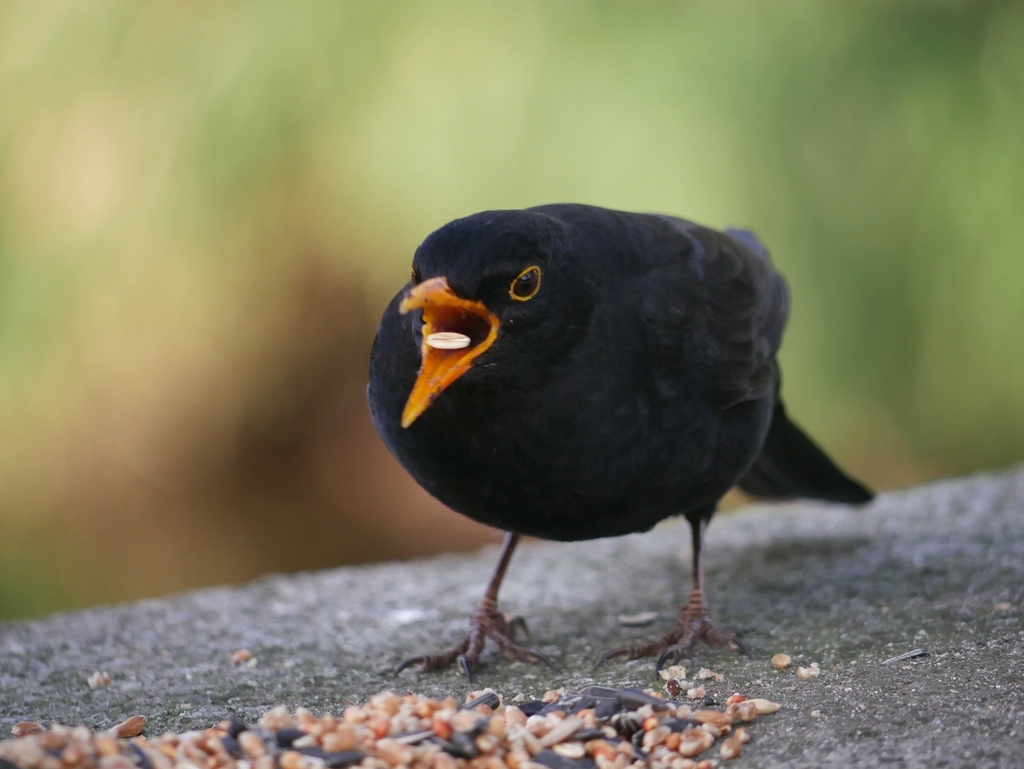
- Bill colour matters. A male guarding his patch reacts most fiercely to orange bills, less to yellow, and least to brown.
- Each evening, a male calls chink-chink to stop other blackbirds sleeping on his patch. It usually does not work.
- The four calling birds of an English Christmas song may first have been four colly birds, an old blackbird nickname meaning black as coal.
The quiz
1. In which months can the blackbird's song NOT be heard?
- December and January
- April and May
- September and October (correct)
- June and July
It even sings quietly in winter, so only September and October are silent.
2. How does a blackbird usually find earthworms?
- By sight, and sometimes by hearing (correct)
- By smell only
- By tapping on tree trunks
- By digging deep tunnels
It finds worms mostly by sight, sometimes by hearing.
3. Which bill colour makes a territorial male react most fiercely?
- Yellow
- Brown
- Pale pink
- Orange (correct)
Males react most to orange bills, less to yellow and least to brown.
4. Why does a male give chink-chink calls in the evening?
- To call his chicks home
- To keep other blackbirds from roosting on his patch (correct)
- To warn of rain
- To scare away bats
He tries, usually in vain, to stop others roosting in his territory.
5. What does the old nickname colly bird mean?
- Sweet singer
- Early riser
- Black as coal (correct)
- Garden friend
Colly is an old word meaning black as coal.
Same week
Today’s lesson is waiting
Two minutes a day, a new wild animal. Free on iPhone, Android and the web.
Hear them, don't just read about them
Feravox is a free wildlife app: 4,400+ species with real recorded sounds, 11 nature games and a free Daily 5, 1v1 quiz duels, conservation wins, and a safe Kids mode.
Nature documentaries
Blue Planet III2026 · BBC OnePlanet Earth III2023 · BBC OneBlue Planet II2017 · BBC OnePlanet Earth II2016 · BBC OneFrozen Planet II2022 · BBC OneSeven Worlds, One Planet2019 · BBC OneMammals2024 · BBC OneSecret Garden2026 · BBC OneWild Isles2023 · BBC OneOur Planet2019 · NetflixOur Planet II2023 · NetflixThe Blue Planet2001 · BBC One