Feravox · The Voice of the Wild
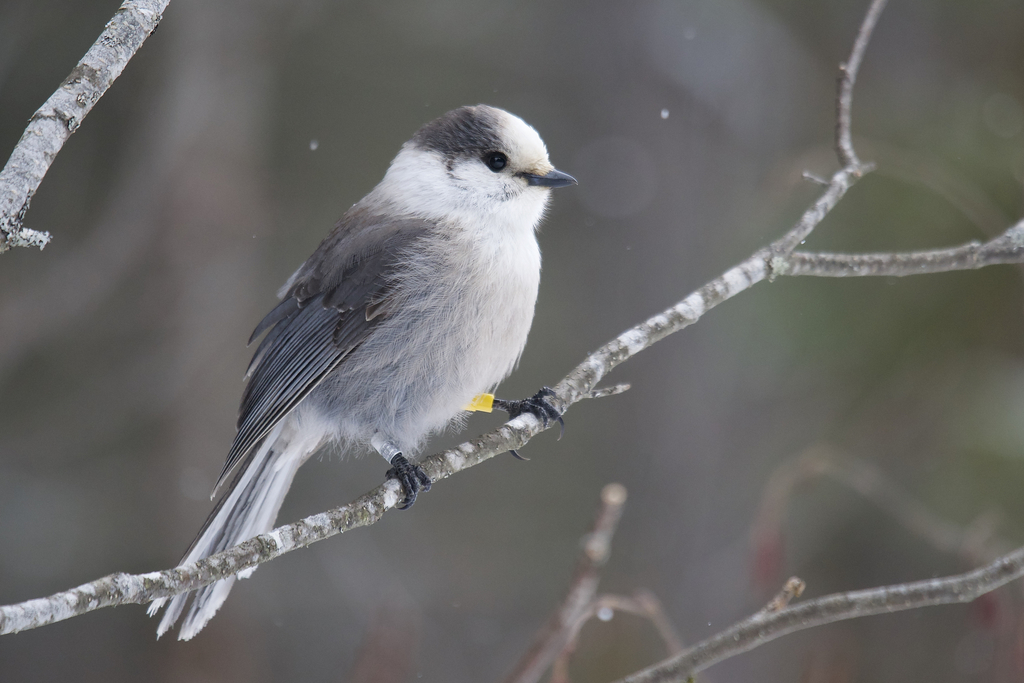
Canada Jay: a two-minute wildlife lesson
Each summer, a Canada jay hides thousands of food bits in bark, glued with sticky spit. Months later, it finds them again from memory.
Crows and Clever Birds · day 3 of 7
Five facts
- Each summer, a Canada jay hides thousands of food bits in bark, glued with sticky spit. Months later, it finds them again from memory.
- A pair is often joined by a young bird from the year before. Later, this helper brings food to its younger brothers and sisters.
- A great mimic, it can copy the calls of at least 40 bird species, and even red squirrels and pet cats.
- Its alarms carry details: harsh clicks mean danger on the ground, repeated whistles mean a predator in the sky.
- Canada jays build nests and lay eggs as early as February or March, while deep snow still covers the forest.
The quiz
1. How does a Canada jay make its stored food stick in place?
- It mixes it with mud
- It coats it in sticky saliva (correct)
- It freezes it in ice
- It ties it with grass
Each food ball is covered in sticky spit that clings to bark.
2. What does the young helper bird do for the family?
- It builds a second nest
- It sings to the eggs
- It chases the parents away
- It brings food to its younger siblings (correct)
Last year's juvenile helps by feeding the new young.
3. Which mammal sounds can Canada jays imitate?
- Red squirrels and domestic cats (correct)
- Wolves and bears
- Moose and deer
- Bats and mice
Besides 40 bird species, it copies red squirrels and cats.
4. What does a Canada jay's series of repeated whistles warn about?
- Rain coming
- A predator on the ground
- Food nearby
- A predator in the air (correct)
Whistles flag a flying predator; harsh clicks flag one on the ground.
5. When do Canada jays start nesting?
- In February or March, in deep snow (correct)
- In late summer
- Only in autumn
- In December, then again in July
They nest in late winter while snow is still deep.
Same week
Today’s lesson is waiting
Two minutes a day, a new wild animal. Free on iPhone, Android and the web.
Hear them, don't just read about them
Feravox is a free wildlife app: 4,400+ species with real recorded sounds, 11 nature games and a free Daily 5, 1v1 quiz duels, conservation wins, and a safe Kids mode.
Nature documentaries
Blue Planet III2026 · BBC OnePlanet Earth III2023 · BBC OneBlue Planet II2017 · BBC OnePlanet Earth II2016 · BBC OneFrozen Planet II2022 · BBC OneSeven Worlds, One Planet2019 · BBC OneMammals2024 · BBC OneSecret Garden2026 · BBC OneWild Isles2023 · BBC OneOur Planet2019 · NetflixOur Planet II2023 · NetflixThe Blue Planet2001 · BBC One