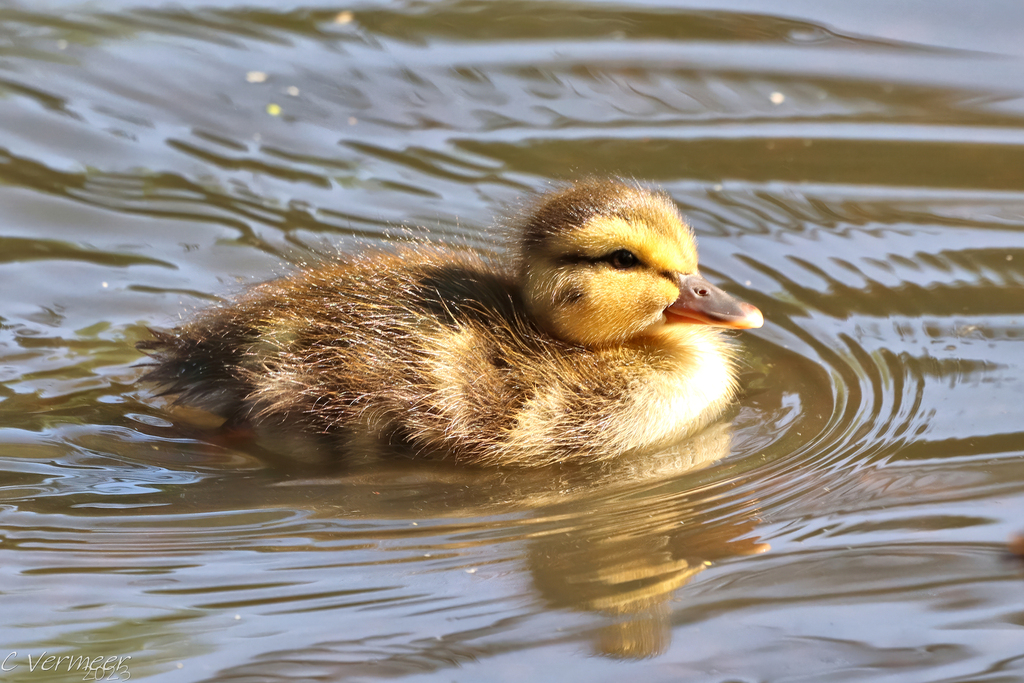
Wild duck (Anas platyrhynchos) lives in wetlands across Every continent except Antarctica. It feeds on aquatic plants, insects, small crustaceans, grains. Its conservation status is Least Concern.
Hear the Wild duck
A real field recording of the Wild duck, made in the wild.
At just over half a meter long, a mallard stretches 50-65 cm (20-26 in) with a wingspan of 81-98 cm (32-39 in) and tips a bill of 4.4-6.1 cm (1.7-2.4 in). Weighing 0.7-1.6 kg (1.5-3.5 lb), it is often slightly heavier than most other dabbling ducks. the species thrives from Arctic tundra to bustling city parks.
A single female can lay a clutch of 8-13 eggs, each about 58 mm long and 32 mm wide, laying them on alternate days. Incubation lasts 27-28 days, and the precocial ducklings are swimming-ready the moment they hatch, then fledge in 50-60 days. Though most live only three years, some reach twenty, and they become sexually mature at fourteen months,.
Mallards are genetic chameleons: they have hybridised with more than 40 wild species in the wild and another 20 in captivity, and they freely interbreed with domestic ducks, producing fertile offspring. This massive gene flow threatens native waterfowl through genetic pollution, yet it also gave scientists a complete genome sequence in 2013.
Mallard quacks aren't all the same. A Middlesex University study found urban birds in London shout louder and more vociferously than their rural cousins in Cornwall, an adaptation to constant city noise. The female's "decrescendo call" can be heard for miles.
While usually dabblers, mallards can turn predator. In 2017 a Romanian flock was filmed hunting fledgling waders such as grey wagtails and black redstarts, the first recorded attack on large vertebrates. The same bold behaviour re-appeared in 2026 on New Zealand's Lake Alexandrina, where mallards preyed on pūteketeke chicks. This opportunistic hunting expands their diet beyond insects and seeds, underscoring their extreme ecological flexibility.
Sources
Every fact above was checked against these pages, and kept only where one of them states it.
DietAquatic plants, insects, small crustaceans, grains
About the Wild duck
Despite their adaptability, wild ducks are vulnerable to habitat loss and degradation, as well as hunting and pollution. However, conservation efforts, such as the creation of protected wetlands and the regulation of hunting practices, have helped to maintain healthy populations of wild ducks in many parts of the world.
Common questions
What does the Wild duck eat?
Diet: aquatic plants, insects, small crustaceans, grains.
Where does the Wild duck live?
Habitat: wetlands.
Is the Wild duck endangered?
The Wild duck is listed as Least Concern on the IUCN Red List.
How can I learn about the Wild duck?
Feravox has a two-minute lesson on the Wild duck: five facts and five questions. See the lesson
Advertisement
Hear the Wild duck, and 4,400+ more
Real recorded sounds, 11 nature games and a free Daily 5, 1v1 quiz duels, conservation wins and a safe Kids mode. Free on Feravox.