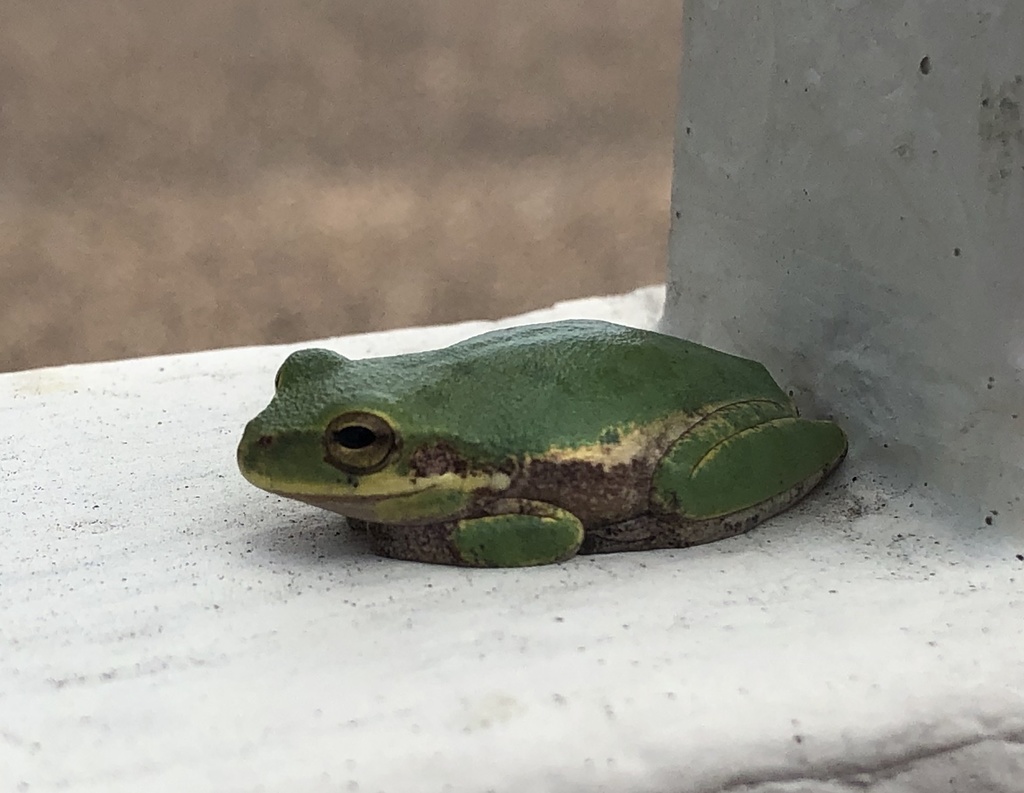
Squirrel tree frogs can spot prey in dim ambient light as low as 6 × 10⁻⁵ lx, which is far brighter than the 10⁻⁶ lx they normally need at night. They have been recorded detecting insects when the illumination is between 6 × 10⁻⁵ and 1 × 10⁻³ lx, yet their usual nocturnal activity occurs in light levels from 10⁻⁶ to 10⁻¹ lx.
Male squirrel tree frogs often display a broad lateral stripe, and females show a clear preference for males with thicker, more conspicuous bands. The stripe acts as a visual cue that influences mate choice, complementing acoustic signals during the breeding season. Studies have shown that visual information such as a large stripe plays a role in nocturnal frogs' mate selection, making stripe size a key sexual signal for these amphibians.
When not feeding, a squirrel tree frog reduces activity and hides in a retreat, then forages within a limited radius of that shelter. Observations show that individuals feed no farther than 28 m from their chosen retreat site, keeping them close to safety while they hunt. This behaviour balances the need for food with protection from predators, allowing the frog to remain near cover throughout its active periods.
Adult squirrel tree frogs hunt aggressively, targeting insects and other invertebrates with a bold foraging style. They are frequently seen at porch lights after dark, catching the insects drawn to the illumination, and they will circle fresh cow-dung piles to eat the midges attracted to the waste. Stomach analyses have revealed a varied diet that can include beetles, crayfish, spiders, crickets and ants, confirming their opportunistic predation on many small prey.
The invasive Cuban tree frog poses a serious threat to native squirrel tree frogs in Florida, where its numbers have risen sharply. The Cuban species preys on adult squirrel tree frogs, and field observations link its spread to a noticeable decline in the native frog's populations.
Sources
Every fact above was checked against these pages, and kept only where one of them states it.
In the lush, vibrant wetlands of eastern North America, the Squirrel Tree Frog embarks on a life of arboreal adventure, its slender limbs and sticky pads propelling it with ease through the dense canopy above. With a mottled coat of brown and green, this tiny, unassuming amphibian blends seamlessly into its surroundings, yet its bright, inquisitive eyes sparkle like jewels in the dappled light filtering through the leaves. As it leaps from branch to branch, its sweet, bird-like song echoes through the forest, a melodic testament to the simple joys of life in this sun-dappled world.
Advertisement
Hear the Squirrel Tree Frog, and 4,400+ more
Real recorded sounds, 11 nature games and a free Daily 5, 1v1 quiz duels, conservation wins and a safe Kids mode. Free on Feravox.