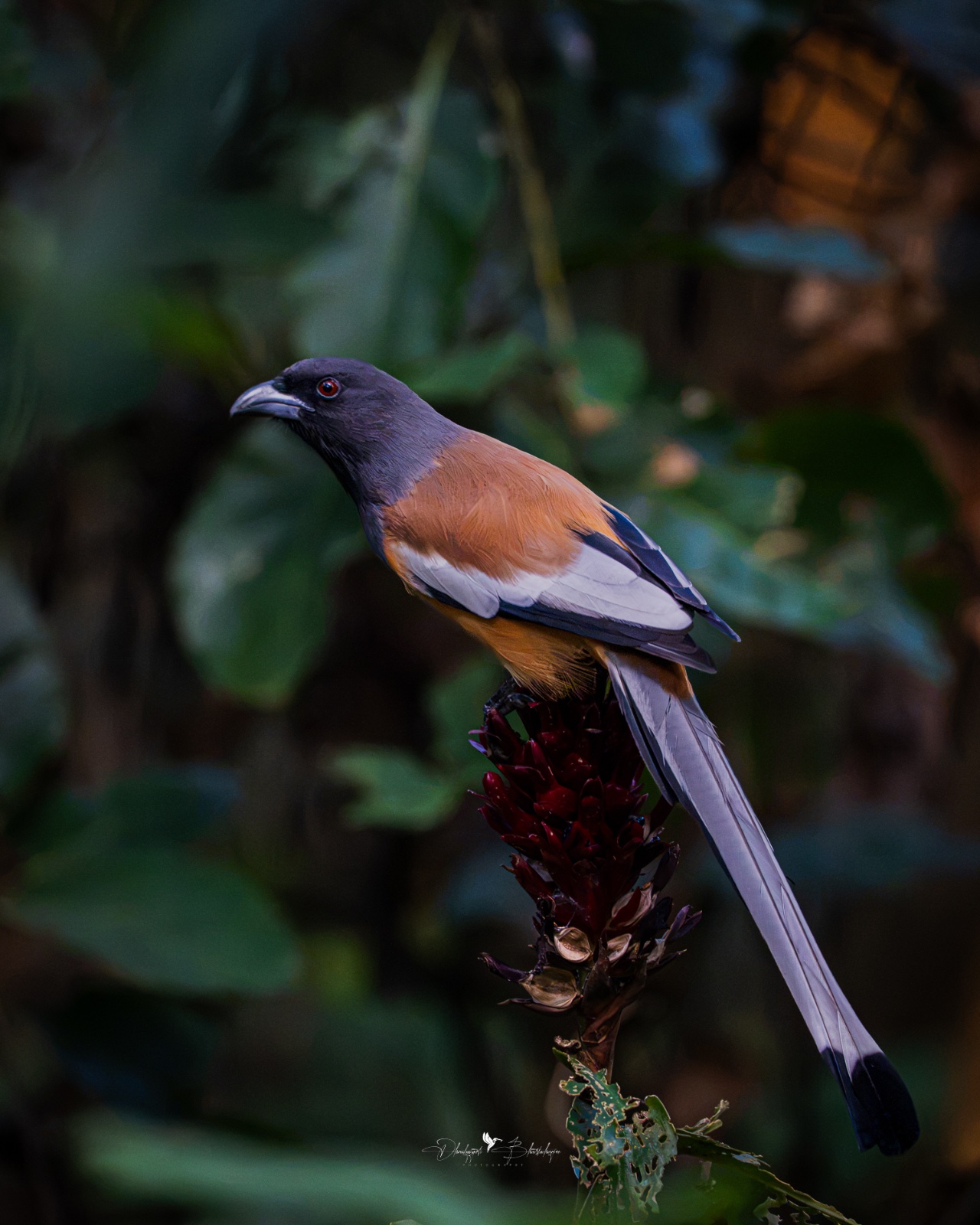
Photo: Feravox creator
Feravox · The Voice of the Wild
Rufous Treepie
Dendrocitta vagabunda
Least Concern
Rufous Treepie (Dendrocitta vagabunda) lives in open forest scrub across South Asia. It feeds on arboreal omnivore of insects and fruit. Its conservation status is Least Concern.
The rufous treepie (Dendrocitta vagabunda) is a striking member of the crow family, its cinnamon-rich mantle contrasting sharply with a glossy black head and a long, graduated tail tipped in black and shaded bluish-grey. A stout, hooked bill and black legs complete its bold appearance, while a white wing patch and bright rufous underparts set it apart from the similar grey treepie. Across its vast range, from the deserts of Pakistan to the lush hills of the Western Ghats, subspecies reveal subtle shifts in hue and size, yet the bird’s unmistakable silhouette and loud, musical calls make it a conspicuous presence in open scrub, agricultural fields, forest edges, and even urban gardens. An opportunistic arboreal omnivore, the rufous treepie darts through branches to snatch insects, small reptiles, bird eggs, and a surprising array of fruits, including the toxic berries of Trichosanthes tricuspidata, which it tolerates without harm. It also frequents mixed-species feeding flocks, acts as a cleaning symbiont for sambar deer by removing ectoparasites, and caches food like its corvid cousins. In southern India, its habit of hunting the larvae of the destructive palm weevil Rhynchophorus ferrugineus makes it an unexpected ally to palm cultivators, illustrating the bird’s remarkable ecological versatility.
Diet: arboreal omnivore of insects and fruit.
Range: South Asia.
The Rufous Treepie is listed as Least Concern on the IUCN Red List.
Real recorded sounds, 11 nature games and a free Daily 5, 1v1 quiz duels, conservation wins and a safe Kids mode. Free on Feravox.